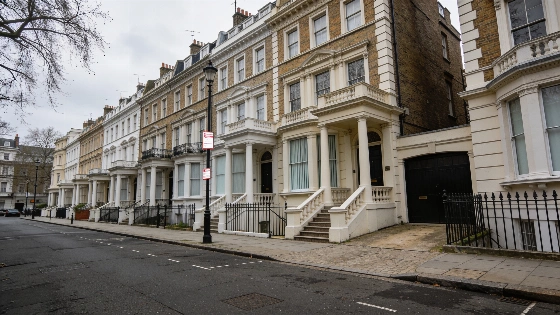
High-end properties in London’s most exclusive neighborhoods are sitting unsold for months, signaling a shift in demand and raising questions about the future of the city’s luxury real estate market
London’s luxury real estate market is showing clear signs of strain as high-end homes in some of the city’s most prestigious neighborhoods remain unsold for extended periods. Despite their prime locations and historic appeal, many mansions and upscale apartments are lingering on the market, reflecting a broader slowdown in demand for ultra-premium properties.
Why London’s Luxury Homes Are Taking Longer to Sell
Several factors are contributing to the sluggish pace of sales. International buyers, who have traditionally driven demand for London’s luxury homes, are facing higher transaction costs due to increased stamp duty and a stronger British pound. At the same time, domestic buyers are contending with elevated mortgage rates and economic uncertainty, making large property purchases less attractive. As a result, sellers are increasingly forced to lower asking prices or offer incentives to attract interest.
According to reporting by the Financial Times, the number of luxury homes listed for sale in central London has risen steadily over the past year, while the average time on market has lengthened. Some properties have remained unsold for more than six months, a notable shift from the brisk sales seen in previous years. Real estate agents report that even well-maintained homes in sought-after areas are struggling to find buyers willing to meet sellers’ expectations.
Prime Central London Prices and Sales Decline
Data from Savills, a leading real estate consultancy, shows that the average price of prime central London homes fell by 1.6% in 2023, with transaction volumes down 12% compared to the previous year. The slowdown is most pronounced at the very top of the market, where properties priced above £5 million are seeing the longest delays.
While some buyers are waiting for further price reductions, others are turning their attention to alternative investments or overseas markets. The limited pool of potential buyers at the top end of the market means that even small changes in demand can have a significant effect on selling times and prices.
What the Slowdown Means for Buyers and Investors
For U.S. investors and homeowners, the London luxury market’s challenges offer both cautionary lessons and potential opportunities. Currency fluctuations, shifting tax policies, and changing buyer preferences can all impact the value and liquidity of high-end real estate.
Those considering international property purchases should weigh the risks of holding illiquid assets in volatile markets and factor in transaction costs, local regulations, legal fees, insurance, property management, and ongoing maintenance expenses.
For buyers, patience and careful due diligence are essential. The current environment may create opportunities to negotiate better prices, particularly on properties that have remained listed for several months. However, lower asking prices do not eliminate the risk of further declines or longer-than-expected holding periods.
Why Luxury Real Estate Can Be More Volatile
Luxury real estate markets are often more volatile than broader housing sectors, especially in global cities like London, where international capital plays a significant role. High-end properties tend to be less sensitive to local wage growth and more exposed to global economic shifts, currency movements, tax changes, and regulatory developments.
Luxury homes also have a smaller pool of potential buyers, which can result in longer selling times and larger price reductions during downturns. For investors, these properties can offer diversification, but they also come with unique risks, including limited liquidity, high maintenance costs, and greater price swings.
As the market adjusts, sellers may need to lower expectations and adopt more flexible pricing strategies. Buyers, meanwhile, should focus on long-term value, total ownership costs, and the possibility that a luxury property may take much longer to resell than a conventional home.