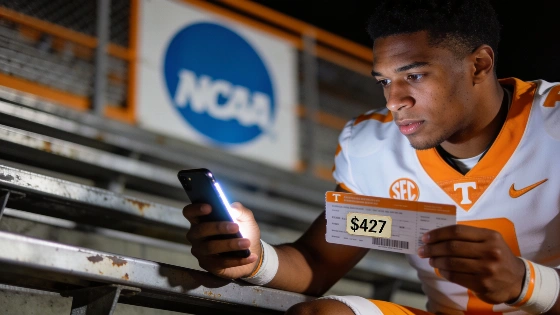
Tennessee linebacker Arion Carter faces a two-game NCAA suspension after accepting a $427 flight from an agent post-draft declaration, raising questions about compliance risks and the financial realities for student-athletes navigating pro ambitions
The NCAA has suspended Tennessee linebacker Arion Carter for the first two games of the upcoming football season after he accepted a $427 flight from an agent following his NFL draft declaration. The penalty, which was initially set at three games before being reduced on appeal, highlights the ongoing tension between longstanding NCAA amateurism rules and the financial pressures facing college athletes as they weigh professional opportunities.
Carter, a senior who played through a foot injury late in the 2025 season, declared for the NFL draft but later aggravated his injury and required surgery. After surgery, he chose to return to Tennessee for another season rather than pursue a professional contract. According to reporting by ESPN, Carter repaid the agent for the flight in January and ended his relationship with the agent, but the NCAA determined that the violation still warranted a suspension under its rules prohibiting student-athletes from accepting benefits from agents.
The University of Tennessee self-reported the infraction as a Level III violation in February, and the NCAA enforcement staff did not pursue further action beyond the suspension. Carter will miss the Volunteers' season opener against Furman on September 5 and a road game at Georgia Tech on September 12. He is expected to return for the September 19 matchup against Kennesaw State. Tennessee's coaching staff has publicly supported Carter, emphasizing his academic achievements and leadership within the program, but the NCAA has maintained that its rules are clear regarding agent involvement and impermissible benefits.
For context, NCAA rules prohibit student-athletes from signing with agents or accepting benefits related to professional sports opportunities while maintaining college eligibility. Even when benefits are repaid, violations can result in suspensions or other penalties. The NCAA's approach is intended to preserve the distinction between amateur and professional status, but critics argue that the rules can be out of step with the realities faced by athletes who must navigate complex decisions about their health, education, and future earnings potential.
According to NCAA data, more than 16,000 student-athletes across all divisions were involved in self-reported rules violations in the 2024-25 academic year, with impermissible benefits and agent-related infractions among the most common. The NCAA has faced increasing scrutiny over its enforcement policies as the landscape of college athletics shifts, particularly with the rise of name, image, and likeness (NIL) deals and growing calls for reform of amateurism rules.
Linebacker remains a position of depth for Tennessee, with the addition of former Penn State transfer Amare Campbell and the emergence of Edwin Spillman, who led the team with 81 tackles as a freshman in 2025. Carter contributed 76 tackles, 1.5 sacks, and a fumble recovery last season, and is expected to play a key role upon his return.
The NCAA's rules on agent involvement are designed to prevent conflicts of interest and protect the eligibility of student-athletes, but enforcement can be complicated by the evolving financial landscape of college sports. As NIL opportunities expand and more athletes consider early entry into professional leagues, the line between permissible and impermissible benefits has become increasingly blurred. For student-athletes, even minor infractions can carry significant consequences, affecting not only playing time but also future earning potential and career trajectory. Navigating these rules often requires careful attention to compliance and, in many cases, professional legal or financial guidance.