
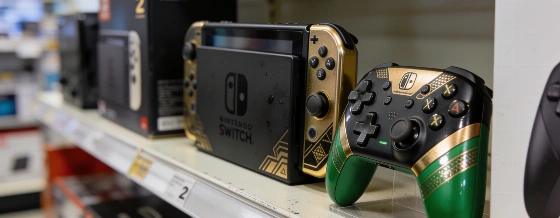
Nintendo's upcoming Zelda: Ocarina of Time remake is driving demand for a newly leaked Switch 2 system and Pro Controller, raising questions about limited-edition hardware pricing and resale value for U.S. gamers and collectors
Nintendo is preparing to launch a Zelda-themed version of its anticipated Switch 2 console, along with a matching Pro Controller, as part of the marketing push for the upcoming remake of The Legend of Zelda: Ocarina of Time. According to reporting by Nintendo Everything, images of the new hardware surfaced online ahead of any official announcement, fueling speculation about pricing, availability, and the potential impact on the secondary market for limited-edition gaming devices.
The leaked images show a Switch 2 dock finished in black and gold, prominently featuring the Triforce symbol, a recurring icon in the Zelda franchise. The accompanying Joy-Con 2 controllers are styled in green with their own Triforce design, while the Pro Controller incorporates black, gold, and green elements, with the Hylian Crest at its center. The hardware also displays a 40th anniversary logo for The Legend of Zelda, referencing the franchise's origins and appealing to long-time fans and collectors.
For U.S. consumers, the arrival of a special-edition console tied to a major franchise remake often leads to rapid sellouts and significant markups on resale platforms. Past limited-edition Nintendo hardware, such as the Animal Crossing and Pokémon-themed Switch models, have seen aftermarket prices climb well above retail, especially in the weeks following launch. The combination of collector demand and constrained supply can create a volatile pricing environment, with some buyers paying premiums to secure early access or to complete their collections.
While Nintendo has not yet confirmed a release date or suggested retail price for the Zelda Switch 2 bundle, the company's previous special editions have typically carried a modest premium over standard models. The Ocarina of Time remake itself is expected to arrive before the end of the year, with only a teaser trailer released so far. The game recently received its ESRB rating, indicating that development is nearing completion. Nintendo's strategy of pairing major software launches with themed hardware has historically boosted both hardware and software sales, but also intensified competition among buyers seeking limited-run products.
According to NPD Group data, U.S. video game hardware spending reached $6.6 billion in 2023, with Nintendo Switch accounting for a significant share of unit sales. Special-edition consoles have contributed to periodic spikes in demand, particularly when tied to high-profile game releases. For collectors and resellers, the timing of preorders and the scale of initial shipments can determine whether a product becomes a long-term investment or a short-lived trend.
In addition to the hardware news, reports suggest that new actors will appear in the upcoming live-action Zelda movie, further expanding the franchise's reach and potentially driving renewed interest in related merchandise. For U.S. consumers considering a purchase, the key questions will be availability, pricing, and whether the limited-edition hardware offers lasting value beyond its initial hype cycle.
Special-edition gaming hardware often appeals to both dedicated fans and speculative buyers, but the financial risks can be significant. While some limited releases appreciate in value, others lose their premium once supply catches up or consumer interest shifts. Buyers should weigh the potential for resale gains against the risk of overpaying in a crowded secondary market. For those purchasing to play rather than collect, the practical benefits may be limited to aesthetics and brand loyalty rather than functional improvements. As with any collectible, scarcity, condition, and timing are critical factors in determining long-term value.