Rising oil prices and surging AI infrastructure costs are forcing the Federal Reserve to rethink its inflation strategy, with potential consequences for investors in Nvidia and the broader stock market
For years, the Federal Reserve has relied on a familiar playbook to manage inflation: raise interest rates when demand overheats, and wait out supply shocks when disruptions hit energy or goods. But in 2026, the central bank faces a new challenge as inflationary pressures emerge from unexpected sources-most notably, the rapid expansion of artificial intelligence infrastructure.
Traditionally, the Fed distinguishes between demand-driven inflation, which can be cooled by higher rates, and supply-driven inflation, such as oil shocks, which often require patience rather than policy intervention. When oil prices spike due to geopolitical turmoil or shipping disruptions, raising rates in the U.S. does little to resolve the underlying supply problem. This year, oil has been a textbook example: Brent crude closed above $100 a barrel on July 23 for the first time since May, and West Texas Intermediate finished at $92.19, according to CNBC. The ongoing conflict in Iran has kept a risk premium embedded in global oil prices, with crude up roughly 40% in July alone as disruptions spread beyond the Strait of Hormuz.
Headline inflation in the U.S. is now running at 3.7%, well above the Fed's 2% target, based on data from Forbes. This marks the fifth consecutive year of above-target inflation, testing the central bank's patience and credibility. As a result, market expectations for a rate hike at the July 29 meeting have climbed sharply, with CME Group's FedWatch tool showing odds rising from 10.7% on July 15 to 34.7% by July 22. Nearly half of Fed policymakers have signaled support for a hike later this year, according to CBS News.
AI Buildout Enters the Inflation Debate
What's different this year is the Fed's growing focus on the inflationary impact of AI infrastructure. In July, Cleveland Fed President Beth Hammack cited pressures from insurance and the AI data center buildout as key drivers of business input costs, placing them alongside energy and supply chain issues. This marks a significant shift: for the first time, policymakers are treating the construction of AI data centers as a distinct source of inflation, not just a tech sector story.
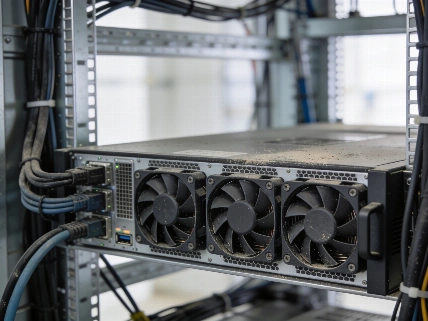
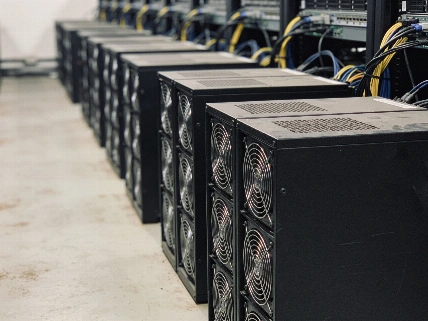
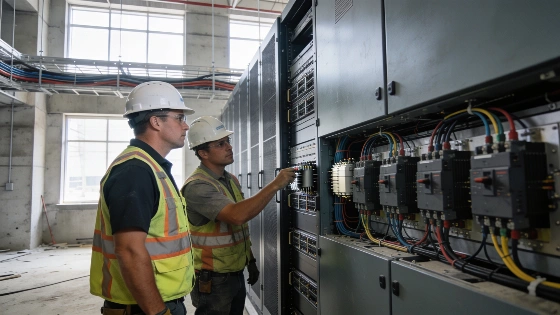
Building out AI capacity requires massive investments in electricity, transformers, copper, concrete, skilled labor, and land-resources that are also in demand by households and traditional businesses. As the AI boom accelerates, these overlapping needs are pushing up prices in regional markets, complicating the Fed's inflation calculus. Governor Christopher Waller has warned that inflation is up this year and that further tightening may be necessary if these pressures persist.
The interplay between AI infrastructure and inflation is now a central concern for investors. Nvidia, the world's most valuable company at roughly $5 trillion, has seen its stock gain only about 9% in 2026, lagging Apple's 20% rise, according to CNBC. The company's market cap remains below its all-time high near $5.73 trillion, reflecting investor uncertainty as the AI buildout both drives demand and risks triggering tighter monetary policy. Capital spending on AI hardware is now large enough to influence the discount rate applied to growth stocks, creating a feedback loop: higher input costs raise the odds of Fed action, which in turn could compress valuations for companies like Nvidia.
Market Stakes and Investor Risks
For retail investors, the stakes are tangible. Many S&P 500 index funds have significant exposure to AI infrastructure leaders, and their valuations often assume that interest rates will fall or remain stable. A rate hike would not only reduce the multiples investors are willing to pay for long-duration growth stocks, but also increase the cost of financing the very data centers that underpin AI revenue growth. Nvidia CEO Jensen Huang has projected that computing costs could double from $50 billion to $100 billion per gigawatt, a figure that signals both robust demand and sustained pressure on industrial inputs.
The July 29 Fed decision is set to be a pivotal moment. With no updated dot plot at this meeting, investors will be parsing every word from Chair Kevin Warsh's press conference for clues on whether the Fed views energy and AI buildout costs as temporary or structural. If both are treated as transitory, the AI trade may get breathing room ahead of Nvidia's August 26 earnings report. But if the Fed signals that AI spending is now a structural inflation driver, the sector's cost of capital could rise, with no quick fix from chip cycles or export policy shifts.
This evolving dynamic means that AI exposure and rate exposure are no longer separate bets. Investors who treat them as independent risks may be overlooking a key vulnerability in their portfolios. As the AI buildout grows large enough to move the macroeconomic needle, the feedback loop between technology investment and monetary policy is becoming a defining feature of the current market environment.
For readers interested in how consistent investing in tech-heavy funds can impact long-term results, a related analysis on the compounding effects of ETF contributions is available at this in-depth look at ETF investing strategies.
Understanding the New Inflation Drivers
The Federal Reserve's challenge in 2026 is not just about recognizing inflation, but about adapting to its changing sources. As AI infrastructure spending rivals traditional drivers like energy, the central bank's policy tools may need to evolve. For investors, the key takeaway is that the lines between technology growth, input costs, and monetary policy are blurring. Staying alert to these shifts-and understanding how they affect both company valuations and the broader economy-will be critical as the market navigates this new landscape.
According to CME Group data, the probability of a July rate hike tripled in the week leading up to the meeting, reflecting heightened sensitivity to both oil and AI-driven inflation. With headline inflation at 3.7% and the Fed's target at 2%, the central bank faces mounting pressure to act, even as the sources of inflation become more complex and intertwined.
AI infrastructure spending is a relatively new factor in the inflation debate, but its impact is already being felt across markets. Unlike traditional supply shocks, which often fade after a year, the scale and persistence of AI-related demand could keep upward pressure on prices for longer. This complicates the Fed's task and raises new questions for investors about how to price risk in a rapidly changing environment.