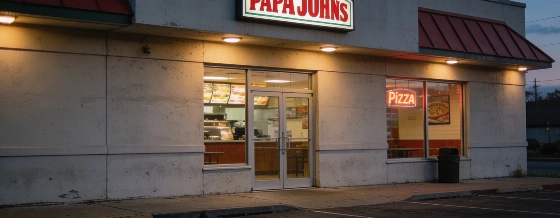
Papa Johns shares dropped more than 17 percent after the company cut its 2026 sales forecast and stopped its dividend, leaving investors exposed to lawsuits and showing the cost of missed turnaround goals.
Papa Johns International stunned investors by halting its dividend and slashing its 2026 sales forecast. The news wiped out over 17 percent of the company's market value in one day. On August 6, 2026, shares fell from $29.75 to $24.64. The company admitted that both customer demand and its own turnaround plan had fallen short.
The financial hit was sharp. Legal filings show North American comparable sales dropped 8.3 percent in the latest period. Management had to lower its full-year 2026 outlook from a 3 percent decline at the midpoint to a 7 percent annual drop. That four-point slide showed demand was falling fast. Papa Johns said its new products and marketing had not brought in enough new customers.
The class period for the Papa Johns securities lawsuit covers purchases made between August 7, 2025 and August 5, 2026, focusing on statements issued during this timeframe.
Dividend-focused investors took a direct hit. The payout was stopped to keep more cash on hand and reinvest in the business. Shareholders lost their regular income. Instead, Papa Johns is trying to bring back customers with deals like buy-one-get-one offers and a $12.99 Ultimate Pepperoni Pizza for National Pepperoni Pizza Day. KHOU reports these deals have cut the real price of promo items, giving a short-term boost but raising doubts about long-term profits if discounts go too far.
The fallout didn't stop with the stock price. By mid-September 2026, several law firms had filed class action lawsuits against Papa Johns International and some executives. The lead plaintiff deadline is November 2, 2026. As Stockhouse reporting details, the lawsuits claim the company broke securities laws with statements made between August 7, 2025 and August 5, 2026. This legal threat adds more uncertainty for investors already dealing with weak sales and missed targets.
Franchisees and store operators are also feeling the pain. The 8.3 percent drop in North American comparable sales and the expected 7 percent annual decline could squeeze profits for months. Management says it will focus on improving the menu and sharpening marketing to win back customers, but the near-term outlook is tough. Papa Johns is not in major indexes like the S&P 500, so it doesn't get the support from passive investors that bigger stocks enjoy.
Papa Johns revised its fiscal 2026 outlook to project a 2%-4% year-over-year decline in global system-wide sales and expects adjusted EBITDA to fall within the $180 million to $190 million range.
The market backdrop is rough. By late September 2026, Papa Johns stock was still trading on Nasdaq under the ticker PZZA. The August 6 price crash showed how quickly investors can turn when a company cuts guidance and stops its dividend. Other consumer companies have seen the same pattern: missed goals and payout changes spark sharp selloffs and lawsuits, as reported earlier.
Recent legal complaints say Papa Johns leaders have admitted to gaps in their turnaround plan and to missing shifts in what customers want. Management said the company had "not met the consumer as much as [they] should have" and that its new products were "not bringing in as many new customers" as hoped. Promotions might help for now, but if traffic doesn't recover, margins and franchisees could be under more pressure. The class action lawsuit adds headline risk and the chance of costly settlements.
The U.S. restaurant industry has struggled in 2026. Consumer spending has been tight as inflation stays high and household budgets shift. The Bureau of Labor Statistics says the Consumer Price Index for food away from home rose 4.2 percent year-over-year as of August 2026. That's faster than wage growth for many, making it harder for restaurant chains to keep demand steady.
When a company stops its dividend, it's a clear sign that cash is being kept for the business, not for shareholders. For investors, losing a regular payout means rethinking risk and reward, especially when sales are falling and lawsuits are in play. At Papa Johns, the deep guidance cut, dividend halt, and legal risk leave little room for mistakes. Unless management can turn things around and get sales growing again, the stock will likely stay sensitive to bad news-and so will the risk for anyone hoping for a quick rebound.
Dividend policy is a key tool for public companies, especially in restaurants where cash flow can swing. When management suspends the dividend, it usually means they see more value in keeping cash for reinvestment, paying down debt, or keeping the business stable. This can help the balance sheet over time, but it also takes away steady income for investors and may prompt selling by funds or individuals who count on dividends. The trade-off between paying shareholders now and building for the future is rarely simple. The market's reaction to these moves can be fast and harsh.