Pentair shares tumbled after the company warned of sharply lower pool equipment sales, slashed its full-year outlook, and announced a sudden CFO exit, raising questions about industry demand and company-specific risks
Pentair, a major supplier of pool equipment, saw its stock tumble after the company warned investors of a steep drop in second-quarter sales and earnings, cut its full-year forecast, and disclosed the abrupt departure of its chief financial officer. The news sent Pentair shares down about 15% in a single day, pushing the stock to a new 52-week low and intensifying scrutiny of both the pool industry and the company's internal management.
Sales Shock and Guidance Cut
The company now expects second-quarter revenue of roughly $930 million, a 17% decline from its previous guidance of modest growth. Adjusted earnings per share are projected to come in near $1.12, well below the earlier range of $1.47 to $1.50. For the full year, Pentair slashed its sales outlook, now anticipating a 4% to 7% decline instead of the previously forecasted 2% to 4% growth. Adjusted earnings guidance was also lowered to $4.60-$4.80 per share, down from $5.30-$5.40. The company will release full results before the market opens on July 28.
The sharp reversal comes after Pentair benefited from a pandemic-driven surge in backyard pool installations, which had fueled years of growth. But as distributors work through excess inventory, new orders have slowed dramatically, hitting Pentair's top and bottom lines harder than a simple drop in consumer demand would suggest.
Inventory Overhang and Industry Pressures
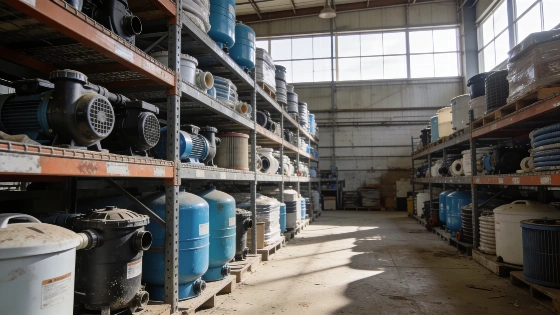
Pentair attributes much of the sales shortfall to "destocking"-distributors holding large inventories of pumps and filters, reducing the need for new purchases even if end-user demand remains steady. This inventory correction cut pool equipment sales by about $170 million and operating income by roughly $105 million in the quarter. The company expects the full-year drag to reach $250 million in sales and $155 million in income.
Several factors are compounding the pressure: distributors are resetting inventory ahead of the 2027 pool season, elevated interest rates are making backyard projects more expensive for homeowners, and persistent inflation is pushing discretionary spending further down household budgets. According to Stifel, Pentair's pool equipment revenue fell 40% to 42% year-over-year, a far steeper drop than management had previously indicated.
CFO Exit and Market Confidence
The timing of the financial warning was complicated by the resignation of CFO Nicholas Brazis, who left after just four months in the role. Pentair disclosed his departure alongside the guidance cut, naming former CFO Bob Fishman as interim replacement while it searches for a permanent successor. The abrupt leadership change raised concerns among analysts about the company's credibility and internal stability. RBC Capital Markets downgraded the stock and cut its price target, citing both the surprise CFO exit and the severity of the pool segment's destocking problem.
While the pool business is under severe strain, Pentair's Flow and Water Solutions segments are performing in line with expectations, providing some cushion. The company also received $35 million to $50 million in tariff refunds during the quarter and repurchased about 2 million shares for $150 million, moves that partly offset the impact of the pool division's slump.
Customer Concentration and Competitive Risks
Pentair's troubles are magnified by its reliance on a small number of large distributors, particularly Pool Corp, which can amplify the effects of inventory swings. When a single distributor controls a significant share of a segment's volume, its inventory decisions can have an outsized impact on the manufacturer's reported revenue. The warning from Pentair also triggered concerns for Pool Corp and rival Hayward Holdings, as reported by Reuters.
Some analysts believe the current pain is not just about inventory but also about market share. Wolfe Research recently downgraded Pentair, arguing that its pool revenue is lagging competitors and that aggressive cost-cutting may have hurt volumes. Stifel has suggested that Hayward could gain share while Pentair struggles to stabilize its business. This dynamic echoes concerns raised in other sectors, such as when analysts warned that AMD's rapid gains might not be sustainable if competitors catch up or market conditions shift.
Legal Scrutiny and Investor Outlook
Adding to the uncertainty, several law firms have launched investigations into whether Pentair's earlier sales practices with distributors may have inflated revenue in prior periods. These are preliminary reviews, not formal lawsuits, but they can keep pressure on a stock while they play out. The gap between what management said on its April earnings call and the July pre-announcement has become a focal point for these inquiries.
Pentair closed at $65.69 on July 16, down nearly 38% year-to-date and 12% over the past week. The stock hit a new 52-week low of $57.60, far below its high of $113.95. Pentair currently trades at about 16 times earnings and offers a dividend yield near 1.64%, or $0.27 per share quarterly. CEO John L. Stauch maintains that the problems are temporary and expects the pool division to recover by 2027, but investors remain cautious.
For those holding Pentair shares, the upcoming July 28 earnings report will be critical in assessing whether distributor orders are stabilizing and if the company is losing permanent market share to rivals. New buyers considering the dip should weigh whether the inventory correction is truly cyclical or if competitive pressures will have a lasting impact. The company's ability to hire a permanent CFO and maintain stability in its other business segments will also be closely watched.
According to Pentair's most recent filings, the company repurchased approximately 2 million shares for $150 million during the quarter, and expects to receive $35 million to $50 million in tariff refunds tied to duties previously collected under the International Emergency Economic Powers Act. These actions provided some support to earnings, but did not offset the sharp decline in pool equipment sales.
When a company relies heavily on a single product line or customer segment, it can be especially vulnerable to sudden shifts in demand or inventory cycles. In Pentair's case, the pool equipment business had driven years of growth, but its current downturn is now dragging on the entire company's results. Investors should be aware that while inventory corrections are often temporary, competitive losses and management instability can have longer-lasting effects. Understanding the difference between a cyclical slowdown and a structural shift is key when evaluating companies with concentrated revenue streams.