Prada Group will shutter additional Versace locations through 2027, joining other luxury brands scaling back retail footprints as global demand cools and economic uncertainty weighs on high-end spending
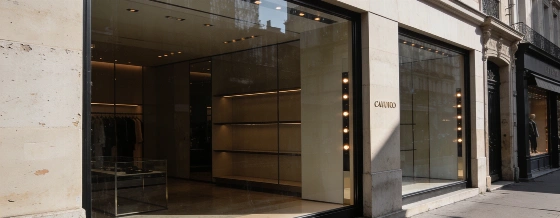
Luxury fashion retailers are scaling back their physical presence as global demand for high-end goods softens and economic uncertainty persists. The Prada Group, owner of brands including Prada, Miu Miu, and Versace, has confirmed it will close more Versace stores in 2026 and 2027, continuing a trend among major luxury houses to consolidate their retail networks and focus on stronger-performing locations.
Prada Reshapes Versace’s Retail Network
According to the company's latest earnings call, the planned closures are part of a broader strategy to eliminate underperforming or non-strategic stores and reposition Versace for long-term growth. The Prada Group has already closed 10 Versace stores since late 2025 and expects to shutter about 10 more, while relocating select boutiques to higher-traffic markets. This move follows Prada's acquisition of Versace from Capri Holdings in December 2025 for €1.25 billion (about $1.44 billion), a deal that also marked the end of Donatella Versace's nearly three-decade creative leadership.
Versace's retail downsizing comes as other luxury brands also retrench. Kering, the French conglomerate behind Gucci and Saint Laurent, closed 133 stores in 2025 and plans to close another 100 locations, with further reductions under review. Ferragamo expects to shutter around 70 stores between 2025 and 2026, and Burberry closed 21 stores in fiscal 2026. Industry analysts do not anticipate a quick rebound for the sector, with the McKinsey & Company State of Fashion 2026 Report projecting global fashion industry growth in the low single digits for 2026, citing ongoing macroeconomic volatility, tariff pressures, and subdued consumer sentiment, especially in the U.S.
Strong Prada Results Offset Luxury Market Pressure
Despite the store closures, the Prada Group reported continued financial strength. In the first half of fiscal 2026, net revenue rose 16% year over year, with retail sales up 12%. Versace contributed roughly 10% of group net revenue, totaling €305 million for the period. Management emphasized that Versace's performance met expectations as the brand began a creative transition under new chief creative officer Pieter Mulier, whose first collection is set to debut in May 2027. By the second half of 2028, all Versace stores are expected to carry only Mulier's collections.
The Prada Group's approach reflects a shift in luxury retail strategy: rather than maintaining expansive store portfolios, companies are concentrating resources on fewer, more profitable locations and investing in brand repositioning. This trend is not unique to luxury fashion. As Best Buy's recent move toward smaller-format stores demonstrates, even mass-market retailers are rethinking their physical footprints in response to changing consumer behavior and cost pressures.
As of June 30, 2026, the Prada Group operated 832 stores across more than 70 countries. The company's leadership has signaled that the Versace network will be slightly smaller in 2027, with further opportunities for relocation and optimization under review for 2028 and beyond. Executives say the focus remains on improving retail execution, strengthening sales quality, and leveraging synergies across the group's portfolio as the luxury market adapts to a more challenging environment.
Luxury Retail Shifts Toward Fewer, Stronger Locations
For U.S. investors and consumers, these developments highlight the risks facing discretionary spending categories as higher interest rates, inflation, and global uncertainty persist. While luxury brands have historically weathered downturns better than mass-market retailers, the current environment is forcing even the most established names to make tough decisions about where and how they operate.
Luxury retail's contraction is part of a broader recalibration in the sector. As companies like Prada Group and Kering streamline their store networks, they are also investing in digital channels, exclusive experiences, and creative leadership to maintain brand relevance and profitability. The pace and scale of these changes will depend on how quickly consumer demand recovers and whether macroeconomic headwinds ease in the coming years.
Luxury brands often rely on a mix of flagship stores in major cities and smaller boutiques in secondary markets. When demand weakens or costs rise, companies may close less profitable locations to protect margins and focus on core markets. This strategy can help preserve brand exclusivity and financial stability, but it also reduces physical access for some customers and may shift more sales online. For investors, store closures can signal both operational discipline and the challenges of sustaining growth in a volatile global economy.