Samsung Electronics and SK Hynix are finalizing significant chip supply agreements with leading U.S. tech firms during President Lee Jae Myung's Silicon Valley visit, signaling a new phase in global semiconductor competition and investment
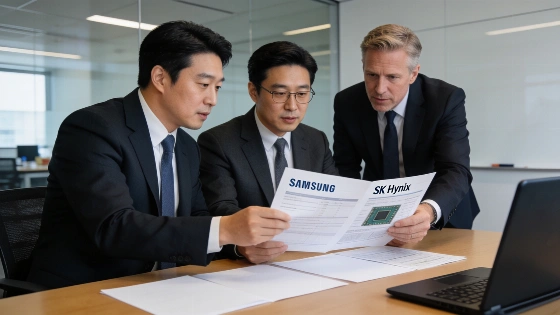
Samsung Electronics and SK Hynix are preparing to announce substantial new chip supply agreements with major U.S. technology companies, timed to coincide with South Korean President Lee Jae Myung's visit to Silicon Valley. The deals, which have been under negotiation for months, are expected to include long-term memory chip supply contracts, strategic investment partnerships, and formal memorandums of understanding, according to Bloomberg. While the companies have not disclosed the financial terms ahead of their official announcements, the agreements are seen as a pivotal step in deepening the integration of South Korea's chipmakers into the U.S. technology supply chain.
Silicon Valley Visit Strengthens U.S.–Korea Chip Cooperation
The timing of these announcements is notable. President Lee's trip, which began in San Francisco on July 24, included meetings with executives from Nvidia, OpenAI, Anthropic, and Broadcom, as well as an AI summit attended by top leaders from Samsung, SK Group, Hyundai Motor, and Naver. According to reporting by TheStreet, the deals build on a previously announced $880 billion investment initiative, backed by Samsung, SK Group, and Naver, aimed at expanding South Korea's domestic chip manufacturing and AI data center infrastructure. U.S. technology companies already account for the vast majority of orders driving this expansion, with estimates ranging from 80% to 90% of underlying demand.
For U.S. investors, the impact of these deals is amplified by SK Hynix's recent debut on the Nasdaq. Just two weeks before the Silicon Valley trip, SK Hynix completed a $26.5 billion American depositary receipt offering, the largest first-time U.S. share sale by a foreign company. This listing gives American investors direct access to the world's leading producer of high-bandwidth memory chips, a key component in AI and data center applications. Previously, SK Hynix shares could only be traded on the Korea Exchange during Seoul hours, but now U.S. fund managers can react instantly to news affecting the company.
Samsung and SK Hynix Shares Reverse Early Losses
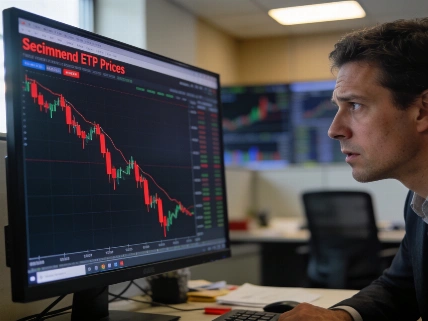
Market reaction to the news was swift. On July 24, both Samsung and SK Hynix shares opened lower following a Wall Street sell-off linked to renewed Middle East tensions, which dragged the Kospi index down nearly 5% and triggered a temporary halt on program selling, according to Seoul Economic Daily. However, as details of the chip supply deals emerged, Samsung closed up 7.51% and SK Hynix gained 8.53%, based on Bloomberg market data. This sharp reversal highlights how Korean memory stocks are now increasingly sensitive to both domestic policy moves and U.S. market sentiment, especially with a growing share of ownership in American hands.
Washington has been pressing Samsung and SK Hynix to expand their manufacturing footprint in the U.S., while Seoul has emphasized that its chip sector growth is driven by global demand rather than political pressure. The formalization of these supply agreements during a high-profile diplomatic visit narrows the gap between policy and market reality. For the first time, developments in Korean chip diplomacy and U.S. equity markets are converging, meaning future announcements could move stocks in both Seoul and New York simultaneously.
Global Competition for Advanced Chip Capacity Intensifies
These developments echo broader shifts in the global semiconductor landscape, where supply chain security, technological leadership, and cross-border investment are increasingly intertwined. As seen in other recent moves—such as AMD's push into AI infrastructure with Microsoft's Azure, covered in this analysis—the competition for advanced chip capacity is reshaping both corporate strategy and national policy.
According to the Semiconductor Industry Association, the U.S. accounted for roughly 12% of global semiconductor manufacturing capacity in 2025, down from 37% in 1990, while South Korea and Taiwan have become dominant players in memory and logic chips. The U.S. CHIPS Act, signed into law in 2022, provides $52 billion in incentives to boost domestic chip production and research, but building new fabs remains a multi-year, capital-intensive process. For investors, the evolving relationship between Korean chipmakers and U.S. tech giants may influence not only stock prices but also the broader competitive landscape for AI, cloud computing, and advanced manufacturing.
Long-Term Supply Deals Bring Opportunities and Risks
As the semiconductor industry becomes more globalized and politically sensitive, the interplay between supply agreements, investment flows, and regulatory policy will likely remain a key driver of market volatility and strategic decision-making for both companies and investors.
Semiconductor supply agreements are more than just sales contracts—they often include commitments to joint research, technology sharing, and long-term capacity planning. For companies like Samsung and SK Hynix, securing multi-year deals with U.S. tech leaders can provide revenue stability and justify large-scale capital investments in new fabrication plants. For U.S. firms, reliable access to advanced memory chips is critical for powering AI, cloud, and data center growth.
However, these arrangements also expose both sides to geopolitical risk, regulatory scrutiny, and the challenge of balancing national security with commercial interests. As chip supply chains become more complex and interconnected, investors should pay close attention to how these agreements shape the industry's future direction and risk profile.