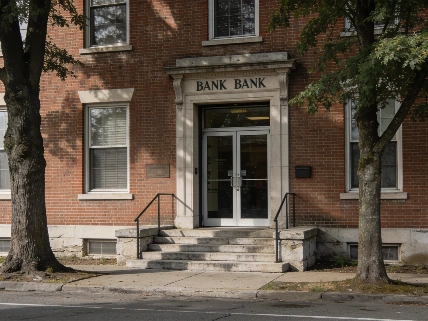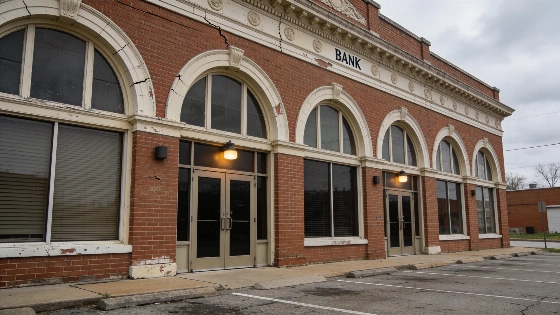
Simmons Bank will shutter 26 branches across Arkansas and neighboring states by December 2026 after missing Wall Street revenue targets, reducing banking access in smaller towns and putting nearly 100 jobs in jeopardy.
Simmons Bank will close 26 branches across six states by December 2026, implementing its largest network reduction to date in response to a revenue shortfall. This move places nearly 100 jobs and dozens of communities at risk. The 123-year-old Arkansas-based lender reported $248.6 million in revenue for the latest quarter, missing analyst expectations despite a 12.5% year-over-year increase. The closures are intended to restore profitability and address rising operational pressures.
Simmons Bank's closure plan includes branches in Fort Smith, Hot Springs, Jonesboro, North Little Rock, and Pine Bluff in Arkansas, as well as multiple locations in Texas, Tennessee, Missouri, and Oklahoma.
Simmons Bank intends to rehire at least 70% of affected staff at other locations, but many employees will face either a forced transition or longer commutes. For customers-particularly those in rural and smaller towns-the loss of a local branch reduces options for in-person banking and increases reliance on digital channels. While the company states that customers will be transferred to the nearest open branch, for some this will require significant travel or adaptation to online banking platforms.
Simmons Bank described the 26 branch closures as part of a broader efficiency initiative that also includes simplifying the organization, streamlining processes, and increasing technology and automation. According to company filings, these efforts could generate $37 million to $42 million in annual pre-provision net revenue once fully implemented.
Simmons Bank's rapid expansion in the 2010s, driven by acquisitions of smaller Arkansas lenders, led to significant growth but also higher operating costs and integration challenges. The current round of closures directly responds to these pressures and to evolving customer preferences. Federal Reserve data as of August 2026 indicates a 9% year-over-year increase in digital transaction volume, while in-person branch visits continue to decline. However, digital adoption remains uneven, especially among older and rural customers who rely on physical branches for essential services.
The impact on affected communities is immediate. Local businesses and homeowners who depend on relationship-based lending and personalized service face reduced access, while employees must navigate uncertain job prospects. Although Simmons Bank's digital banking initiatives may help retain some clients, the transition risks excluding those for whom technology cannot replace face-to-face interaction.
As reported earlier, the pursuit of efficiency and scale is reshaping industries beyond banking. For Simmons Bank, the decision to close branches is a calculated effort to balance cost savings and digital adoption against the risks of customer attrition and community backlash. This move highlights the economic challenges facing regional lenders: as compliance and technology costs rise, even longstanding institutions must choose between reducing their physical presence or facing further financial strain. Ultimately, Simmons Bank's retrenchment signals that for many Main Street communities, access to traditional banking is no longer assured as financial imperatives take precedence over local needs.