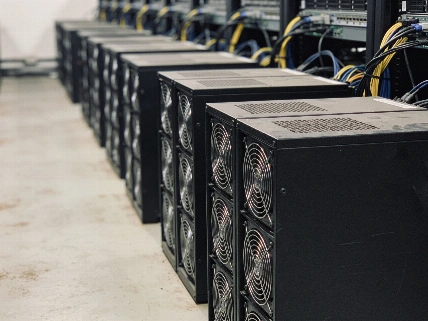
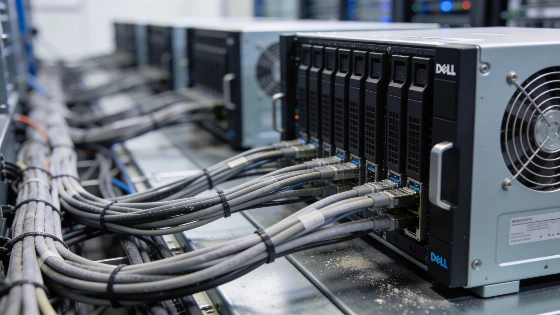
A record $95 billion AI server backlog has propelled Dell Technologies into the spotlight, with Bank of America forecasting a 41% stock surge as supply constraints and surging enterprise demand reshape the company's financial trajectory.
Dell Technologies' $95 billion AI server backlog has drawn significant attention on Wall Street, elevating the company among leading hardware providers and prompting Bank of America to raise its price target to $600-a projected 41% upside. The rapid increase in orders, which nearly doubled in a single quarter, has left Dell unable to fulfill all demand, making its backlog both a financial driver and a strategic risk as competition in AI infrastructure intensifies.
Dell reported that over the last 12 months, it has received $131.7 billion in AI-related orders, highlighting the scale and momentum of enterprise AI adoption.
Demand now extends beyond AI servers to storage, networking, and PCs. Bank of America's analysis positions Dell as more than a server vendor-it is now a critical bottleneck in the broader AI infrastructure buildout. With an installed base estimated at 1.2 million servers of 14th generation or older, Dell faces a significant upgrade cycle as generative AI workloads shift from cloud hyperscalers to private data centers and edge deployments. Over the past two quarters, Dell's traditional server revenue nearly matched its annual total, and the company gained more than 10 percentage points of market share in that segment.
Macro Catalysts and Financial Drivers
Before this quarter's results, Dell's AI server backlog stood at $51.3 billion, underscoring the sharp sequential growth in its order book. This rapid expansion has been highlighted in subsequent financial media coverage as a sign of accelerating enterprise AI investment.
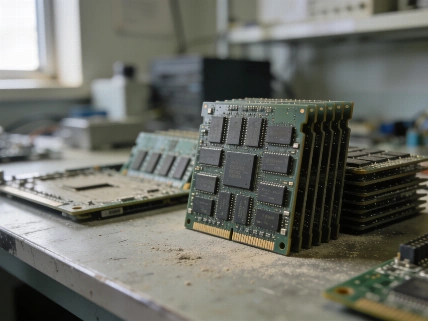
Currently, supply constraints-not demand-are the primary limitation. Dell's forecasts indicate it will not be able to fulfill all orders this year or next, with Bank of America projecting demand will exceed supply by approximately 30% in fiscal 2027. Component shortages, particularly in memory and chips, are limiting shipments. However, this scarcity is prompting customers to place orders further in advance, securing future revenue and supporting pricing power.
Balance Sheet Impact and Market Stakes
In the past 12 months, Dell has booked $131.7 billion in AI-related orders, and its AI customer base increased from 5,000 to over 6,500 in a single quarter. The company raised its fiscal 2027 AI server sales projection to $74 billion (from $60 billion) and its full-year total sales outlook by $25 billion to $192 billion. Non-GAAP EPS expectations increased to $25.50 from $17.90, as detailed in Dell's earnings update.
Bank of America analyst Wamsi Mohan now forecasts fiscal 2027 revenue of $197 billion (up from $178 billion) and EPS of $26.35 (up from $19.56)-a 35% increase in earnings forecast and a projected 156% EPS growth over Dell's fiscal 2026 adjusted EPS of $10.30. For fiscal 2028, Mohan projects EPS at $30.41, with the $600 price target based on a 20x multiple-above Dell's historical range, but supported by its unique AI exposure and improved leverage. For context, the S&P 500's average P/E ratio was near 20 in early 2026, but few hardware companies have matched Dell's revenue acceleration and margin expansion. As previously reported, not every hardware rally is sustainable-rising component costs and supply constraints can quickly shift sentiment. Dell's challenge is to convert backlog into shipped products before market conditions change.
Investor and Consumer Impact
For investors, Dell's AI backlog represents a pipeline of future revenue that could reshape its earnings profile. The risk remains: Dell cannot recognize revenue on hardware it cannot deliver, and ongoing shortages in DRAM, NAND, CPUs, and networking components could limit near-term growth. Nevertheless, scarcity is enabling Dell to maintain pricing and visibility, as customers order further ahead to secure supply.
The AI trend is also benefiting Dell's PC business, which grew 20% last quarter-the fastest in five years-while commercial PC revenue rose 22%. Storage and networking segments are also experiencing record growth, indicating that AI demand is influencing every business line. For U.S. households and investors, Dell's performance is now closely linked to the broader AI infrastructure cycle, rather than any single product or customer segment.
Federal Reserve policy continues to influence technology valuations. As of June 2026, the federal funds rate is 5.25%, with year-over-year inflation at 3.1%. Higher rates have historically pressured hardware sector multiples, but Dell's backlog-driven visibility and margin expansion offer some protection in a sector sensitive to supply chain disruptions.
The combination of strong demand, supply constraints, and a major technology shift places Dell at the center of the AI infrastructure buildout. The $95 billion backlog suggests that the infrastructure phase of the AI boom is still in its early stages. If Dell can execute effectively, it may capture a significant share of enterprise technology spending. However, ongoing supply bottlenecks or a slowdown in demand could turn the backlog from an asset into a liability. Currently, Dell stands out as a hardware stock with both rapid growth and real pricing power-an uncommon position in today's market.
As AI workloads move from cloud hyperscalers to private data centers, edge devices, and PCs, control over hardware bottlenecks will shape the pace and pricing of the next decade's computing expansion. Dell's position is strong but not without risk; investors considering a 41% upside must watch not only the backlog, but also Dell's ability to convert orders into delivered systems before the next supply or demand shift alters the landscape.
AI servers are specialized computers designed for the intensive data processing and model training required by artificial intelligence applications. Unlike standard servers, they incorporate high-end GPUs, advanced networking, and custom storage to support machine learning workloads. The current surge in demand is driven by both cloud providers and enterprises deploying generative AI tools, automating processes, and analyzing large datasets. For investors, understanding the distinction between AI-optimized and conventional servers-and the supply chain risks affecting both-is essential when evaluating Dell, Nvidia, and their peers.