
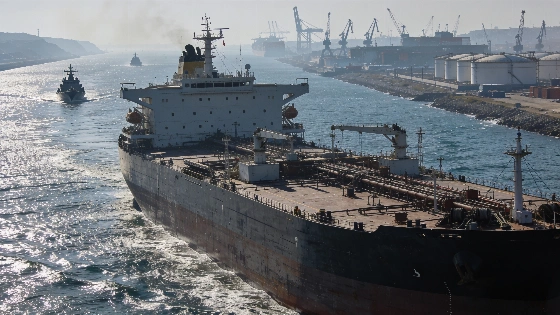
Negotiations to reopen the Strait of Hormuz remain unresolved, keeping global shipping and energy markets on edge as U.S. military enforcement and Iranian threats continue to shape risk for investors and businesses
Efforts to restore commercial shipping through the Strait of Hormuz remain in flux as the U.S. and Iran continue negotiations without a finalized agreement. President Donald Trump indicated Thursday that while talks are ongoing, no breakthrough has been reached to fully reopen the critical waterway. The uncertainty leaves global energy markets and shipping companies facing persistent risks, with the U.S. Navy maintaining a blockade and Iran retaining the capacity to disrupt maritime traffic.
The Strait of Hormuz is a vital chokepoint for global oil and liquefied natural gas shipments, with roughly 20% of the world's petroleum passing through its narrow waters. Any prolonged disruption can drive up shipping costs, increase insurance premiums, and inject volatility into energy prices. U.S. military control has so far prevented major incidents, but the threat of naval mines or sudden attacks remains a deterrent for commercial vessels, especially as even a single mine can halt billion-dollar cargoes and reroute global supply chains.
According to reporting by Fox News Digital, President Trump expressed optimism that negotiations are progressing, but he acknowledged that the risk of escalation persists. The administration's strategy has focused on military enforcement to stabilize the region, but the lack of a formal agreement means shipping companies must continue to weigh the possibility of sudden disruptions. For U.S. importers, exporters, and investors, the situation translates into higher costs and ongoing uncertainty in energy and shipping markets.
Recent data from the U.S. Energy Information Administration shows that in 2025, the Strait of Hormuz accounted for the transit of approximately 17 million barrels of oil per day, underscoring its central role in global energy flows. Insurance rates for tankers operating in the region have risen sharply during periods of heightened tension, with some underwriters imposing war risk premiums that can add millions of dollars to a single voyage. These costs are often passed along the supply chain, affecting fuel prices and shipping rates worldwide.
For U.S. businesses and consumers, the unresolved status of the Strait of Hormuz negotiations means continued exposure to energy price swings and potential supply chain delays. Companies reliant on imported goods or energy-intensive operations may face higher input costs, while investors in energy and shipping sectors must navigate increased volatility. The situation also highlights the broader geopolitical risks that can impact financial markets, commodity prices, and the cost of doing business globally.
Understanding chokepoints like the Strait of Hormuz is essential for anyone tracking global supply chains or investing in energy markets. These narrow passages concentrate risk, as a single incident can disrupt vast flows of goods and commodities. Insurers, shippers, and multinational companies often use hedging strategies, diversified sourcing, and contingency planning to manage exposure. For individual investors, recognizing how geopolitical tensions translate into market volatility can inform decisions about portfolio diversification and risk management, especially in sectors sensitive to global events.