Tesla shareholders are demanding clarity from Elon Musk on whether a merger with SpaceX is on the table, as cross-company deals and rising cash burn raise new questions about the future of both firms
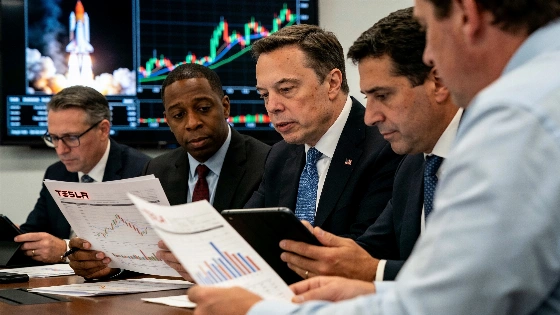
Tesla's upcoming earnings call is shaping up to be more than a routine check-in on profits and product launches. Investors are increasingly focused on the company's deepening ties with SpaceX, and many are pressing CEO Elon Musk for a direct answer: Is a merger between the two companies on the horizon, and what would it mean for Tesla shareholders?
Through the Say Technologies platform, Tesla shareholders have submitted and ranked questions for the July 22 earnings call. While topics like Full Self-Driving, Robotaxi, and Optimus remain high priorities, the fifth most popular category is now the potential for a Tesla-SpaceX merger. According to Business Insider, more than 20 questions on this subject have made it onto the formal agenda, reflecting a growing sense of urgency among investors who want to understand how Musk's overlapping ventures could reshape their stakes.
Financial Ties and Overlapping Interests
The two companies are already financially intertwined. Tesla holds a stake in SpaceX, and since 2023, it has sold nearly $890 million in vehicles and batteries to SpaceX and its AI subsidiary, xAI. In 2025 alone, SpaceX spent $131 million on Cybertrucks, according to regulatory filings. Earlier this year, SpaceX acquired xAI, converting Tesla's $2 billion investment in xAI into a small equity position in SpaceX. This marked the first time a regulatory filing formally linked the two companies' ownership structures, as reported by CNBC.
Musk has also discussed plans for a joint chip manufacturing facility, dubbed Terafab, which aims to produce a terawatt of AI compute hardware annually. SpaceX's own IPO prospectus listed merger execution and integration as a potential risk factor, a detail that has not gone unnoticed by attentive investors. The operational overlap is fueling speculation that a formal merger could be more than just a hypothetical scenario.
Signals and Ambiguity from Leadership
Investor speculation intensified after SpaceX President and COO Gwynne Shotwell, speaking on the day of SpaceX's IPO, declined to rule out a future merger with Tesla. She acknowledged the synergies between the two companies and suggested that combining them could simplify Musk's management challenges. However, she also emphasized her current focus on SpaceX's core businesses, including rockets and broadband, and stopped short of making any commitments. The lack of a clear denial has left Tesla shareholders uneasy, especially as Musk has a history of being noncommittal on corporate structure questions.
For investors, the ambiguity is more than a communication issue-it's a material risk. Tesla's valuation, which recently hovered around $1.4 trillion, is heavily dependent on the company's progress in autonomy, robotics, and AI. Any shift in corporate structure or strategic direction could have significant implications for how the market values Tesla's future earnings and growth potential.
Bull and Bear Cases for a Merger
Wall Street analysts are divided on the merits and feasibility of a Tesla-SpaceX merger. Dan Ives of Wedbush has been one of the most vocal proponents, estimating an 80% chance that a deal could happen by the first half of 2027. He argues that combining Tesla's AI and robotics capabilities with SpaceX's ambitions in compute hardware could create a powerful technology platform. Ives maintains a $600 price target on Tesla, the highest among major analysts.
On the other hand, BNP Paribas remains skeptical, maintaining an underperform rating and a $280 price target for Tesla. The bank points to the significant cash burn at both companies and the regulatory hurdles that would accompany any merger. BNP Paribas estimates that SpaceX could burn through $216 billion between 2026 and 2031, on top of Tesla's own capital needs. Regulatory approval would be complicated by SpaceX's defense contracts and international operations, potentially delaying or derailing any deal. There's also the risk that Tesla shareholders, who invested in an electric vehicle and robotics company, may not want exposure to the risks and volatility of a space business.
What to Watch at Tesla's Earnings Call
With the July 22 earnings call approaching, investors are looking for more than vague assurances. The most pressing questions center on whether Tesla's core projects-autonomy, Robotaxi, and Optimus-are on track, as these are the business lines underpinning the company's current valuation. The merger question is likely to come up, but based on Musk's past approach, a direct answer is far from guaranteed.
Shareholder submissions also reveal a broader concern about how the operational relationship between Tesla and SpaceX is shaping Tesla's product roadmap. One investor representing nearly half a million shares specifically asked about plans to roll out "Digital Optimus with SpaceXAI," highlighting the extent to which cross-company collaboration is already influencing expectations.
For now, there is no confirmed merger and no public timeline. But as SpaceX's stock has slipped from its IPO highs, some Tesla shareholders may be more open to a combination, especially if it promises to unlock new value or operational efficiencies. The question is not fading; it is gaining momentum with every new regulatory filing and commercial tie between the two companies. As recent analysis of AI-driven stock rallies shows, investor sentiment can shift quickly when expectations and reality diverge.
According to Tesla's most recent quarterly filing, the company reported $21.3 billion in revenue for the first quarter of 2026, with automotive gross margins of 17.2%. SpaceX, which went public earlier this year, has not yet released full quarterly results, but its IPO prospectus highlighted both rapid revenue growth and substantial capital expenditures. The scale of spending at both companies is a key factor in the ongoing debate over whether a merger would strengthen or strain their financial positions.
When companies with overlapping leadership and technology ambitions consider merging, the stakes for investors go beyond simple arithmetic. A merger could reshape risk profiles, alter regulatory exposure, and change the way each company is valued by the market. For Tesla shareholders, the central question is whether a combination with SpaceX would enhance or dilute the company's core strengths-and whether the potential rewards justify the added complexity and risk.
Corporate mergers, especially among companies with distinct business models and regulatory obligations, often face significant hurdles. In the case of Tesla and SpaceX, any deal would likely require approval from multiple U.S. agencies, including those overseeing defense contracts and antitrust issues. The process could take years and may involve conditions that affect how the combined entity operates. Investors should also consider that a merger could change the risk-return profile of their holdings, potentially introducing new sources of volatility or shifting the company's strategic focus in ways that may not align with their original investment thesis.