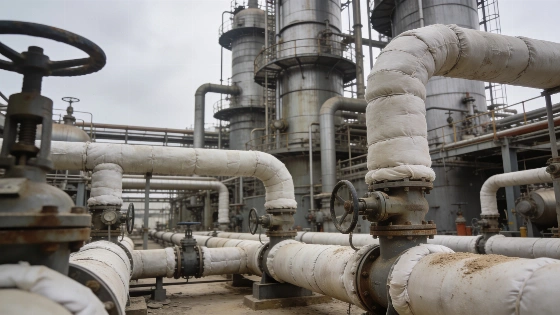
Dow and LyondellBasell cut quarterly dividends as the chemical downturn squeezed payouts. Linde, Ecolab and Sherwin-Williams raised theirs, backed by contracts, repeat demand and pricing power.
Dow's quarterly payout fell from $0.70 to $0.35 per share. LyondellBasell made a similar cut. In the same downturn, Linde, Ecolab and Sherwin-Williams raised their quarterly dividends. Their businesses bring in cash in different ways, but none offers a promise of safety.
For investors who rely on dividends in retirement, that difference matters more than a headline yield. Linde sells industrial gases through long-term customer contracts. Ecolab supplies products and services that customers regularly need to replenish. Sherwin-Williams runs its own paint-store network and sells directly to professional buyers.
Linde's $1.60 quarterly dividend was paid on September 17, 2026, to shareholders of record on September 3.
The contrast echoes the pressure on telecom investor Telus. An earlier dividend review examined its dividend cut and debt burden. In chemicals, the question is whether recurring cash can support payouts when commodity markets weaken.
Linde raised its quarterly dividend to $1.60 from $1.50, or $6.40 a year. At the quoted share price of $472.60, the yield was 1.32%. The company builds air separation and hydrogen plants at or near customer sites, then supplies gas under long-term contracts. Those deals typically include minimum purchase commitments and pass-throughs for energy costs. Revenue is less exposed to short-term changes in customer volumes than revenue from commodity sales.
Reuters company-profile data puts Linde's yield at about 1.4% and its payout ratio at 41.34%. Its dividend record lists the $1.60 payment on September 17. The company also has a large project pipeline: it reported an $8.1 billion sale-of-gas backlog within an $11.0 billion total project backlog.
In the second quarter, operating cash flow was $2.271 billion. Capital spending was $1.438 billion, leaving $833 million in free cash flow. Linde returned $1.59 billion to shareholders through dividends and buybacks during the quarter. That is substantial cash generation.
Reuters lists Ecolab's dividend yield at about 1.04%. Its company profile describes the business as a provider of water, sanitation and infection-prevention solutions.
The payout has room against earnings, but returning cash to shareholders competes with investment and other uses of capital.
Linde's annualized dividend of $6.40 compares with trailing diluted earnings per share of $15.58. Management raised full-year adjusted EPS guidance to $17.70-$17.90. Those figures support the current payout. For investors focused on income, the company's record of regular increases matters more than yield alone.
Ecolab's repeat business works differently. The company sells cleaning chemicals, sanitizers, water-treatment programs and infection-prevention systems to restaurants, hotels, hospitals and food processors. Technicians also service those accounts. Customers use the products and reorder them. Switching suppliers can require retraining and revalidation.
Ecolab raised its quarterly dividend to $0.73 from $0.65, or $2.92 a year. At the quoted share price of $280.23, the yield was 1.02%. According to the supplied record, the dividend rose every year from 2005 through 2026. A long run of increases.
Second-quarter revenue rose 9.69% to $4.4154 billion. Operating income grew 6.73% to $757.9 million. Trailing diluted EPS was $7.46, and full-year adjusted EPS guidance rose to $8.05-$8.25.
Ecolab held $5.1353 billion in cash and repurchased about 1.2 million shares during the quarter. Those figures help explain the payout, but they do not remove the risks of operating through a changing economic cycle.
Sherwin-Williams has more direct control over the sale. Its company-operated Paint Stores Group sells to professional painters and contractors. That setup lets the company set prices and see demand at its own stores. The segment recorded $3.89 billion in second-quarter sales, up 5.1%. Same-store sales rose 4.2%, and the segment's margin was 24.6%.
The quarterly dividend edged up to $0.80 from $0.79, or $3.20 a year. At the quoted share price of $332.79, the yield was 0.99%. The quarterly rate increased every year from 1999 through 2026, rising from $0.12 to $0.80.
Reuters company-profile data lists a yield of about 0.97%. The $0.80 quarterly dividend was paid on September 11, 2026, to shareholders of record on August 21, according to Reuters dividend data.
Sherwin-Williams generated $1.3475 billion in operating cash flow during the quarter, up 21.11%. Capital spending was $108.4 million. Free cash flow rose 33.08% to $1.2391 billion, an 86% conversion rate.
The company returned $2.23 billion to shareholders through the first half and reported net debt of 2.4 times adjusted EBITDA. Its $3.20 annualized dividend compares with trailing diluted EPS of $10.83. Adjusted EPS guidance also rose, to $11.80-$12.20.
These three stocks have modest starting yields, from 0.99% to 1.32%. Their case rests on pricing power, repeat demand and records of annual dividend increases. Those records cannot guarantee another raise. Adjusted earnings guidance is not cash in hand.
For retirement investors comparing chemical companies, contract-backed sales, recurring consumables and owned distribution offer a sturdier basis for income than exposure to commodity prices alone. These businesses may be more defensible dividend candidates, but they are not risk-free substitutes for diversification.