Veteran strategist Tom Lee updates his buy list for fall 2026, spotlighting Arista Networks, JPMorgan Chase, and Lumentum Holdings, while warning investors about valuation risks in Robinhood and the importance of sector diversification
As the 2026 mid-term elections approach, Tom Lee, head of research at Fundstrat Global Advisors, has revised his core stock recommendations, focusing on companies positioned to benefit from the ongoing surge in artificial intelligence infrastructure and financial sector activity. Lee, who has analyzed markets for over three decades, is known for identifying major trends early, including last year's AI rally and the rebound in energy stocks. His latest list, shared on CNBC, reflects both optimism about select growth stories and caution about valuation risks that could catch investors off guard.
AI Infrastructure: Arista Networks and Lumentum
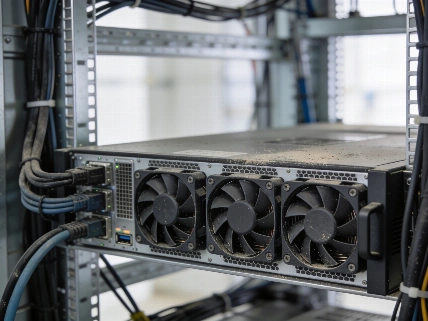
Lee's top pick for the fall is Arista Networks (ANET), a company specializing in high-speed networking equipment for data centers. As AI adoption accelerates, demand for Arista's switches has soared. In its August 4 earnings report, Arista posted its first-ever quarter with revenue above $3 billion, up nearly 38% year over year, and raised its full-year 2026 revenue outlook to $12.6 billion, implying roughly 40% annual growth. This rapid expansion is driven by a handful of major customers building out AI capacity, but that concentration also introduces risk: if even one large client reduces orders, Arista's results could be hit hard. The company's gross margin slipped to 62.9% from 65.2% a year earlier, as larger clients negotiated steeper discounts.
Lumentum Holdings (LITE) is another name on Lee's list, supplying optical components that enable high-speed data transfer inside AI data centers. Lumentum's fiscal fourth-quarter revenue, reported August 11, more than doubled from a year earlier to $1.01 billion. The company has attracted direct investment from Nvidia, which announced plans to invest $2 billion to support Lumentum's light-based networking technology. Yet, after a 130% share price gain this year, some analysts warn that Lumentum's valuation may now outpace its growth prospects, making the stock vulnerable if AI infrastructure spending slows.
Banking on Dealmaking: JPMorgan Chase
Lee's second major pick is JPMorgan Chase (JPM), which he sees as the strongest play in financial services. The bank reported a record $21.1 billion in net profit for the second quarter of 2026, up 41% from the prior year, fueled by an 86% jump in equities trading revenue to $6 billion. Much of this growth is tied to a surge in initial public offerings and related deal activity, areas where JPMorgan is a dominant player. The stock trades at about 15 times earnings, well below the multiples seen in leading tech names, offering investors exposure to AI-driven dealmaking without direct chip or hardware risk. Still, the bank's trading revenue is sensitive to market activity, and a slowdown in deal flow could quickly reverse recent gains.
For context, the S&P 500's technology sector has outperformed the broader market in 2026, but volatility remains high as investors weigh the sustainability of AI-related growth. According to Financial Sumo, competition among chipmakers and shifting customer priorities continue to shape the sector's outlook, underscoring the importance of diversification and risk management.
Energy and Sector Diversification
Beyond individual stocks, Lee continues to advocate for broad energy sector exposure. He argues that years of underperformance have set up energy companies for a rebound, especially as data centers drive up electricity demand. Investing in energy provides a way to participate in the AI buildout without betting on a single hardware or software provider. Sector-based strategies can help spread risk, as poor performance by one company is less likely to drag down the entire position.
Stocks to Avoid: Robinhood and Crypto Sensitivity
Lee also highlighted a stock he believes investors should avoid for now: Robinhood Markets (HOOD). His main concern is valuation-Robinhood trades at a forward price-to-earnings multiple of 33.7x, far above Charles Schwab's 15.2x and SoFi's 24.6x. The company's revenue rose 32% year over year in the second quarter to $1.31 billion, boosted by increased prediction-market activity, but Lee groups Robinhood with other crypto-sensitive names like Galaxy Digital and Riot Platforms, where price swings can be severe. While some market participants remain optimistic about Robinhood's growth and product expansion, the stock's high valuation leaves little room for error if trading volumes or crypto activity decline.
How to Use Analyst Buy Lists
Lee's recommendations share a common thread: most are tied directly to AI infrastructure spending or the financial activity that supports it. This focus can amplify both gains and losses, depending on how the AI investment cycle evolves. Investors considering these names should pay close attention to valuation, customer concentration, and sector exposure. Entering after a sharp run-up in price increases downside risk, while sector-based bets like energy can help balance individual stock volatility. As always, analyst lists are a starting point for research, not a substitute for evaluating your own risk tolerance and investment horizon.
AI infrastructure spending has become a central theme in U.S. equity markets, with companies like Arista Networks and Lumentum Holdings reporting record growth as data center buildouts accelerate. According to company filings, Arista's revenue for the second quarter of 2026 reached $3.036 billion, up 37.7% from the prior year, while Lumentum's quarterly revenue more than doubled to $1.01 billion. JPMorgan Chase, meanwhile, posted a 41% year-over-year increase in net profit for the same period, reflecting the impact of heightened trading and deal activity tied to the AI boom.
Investing in companies that supply AI infrastructure or facilitate related financial activity can offer significant upside, but it also introduces unique risks. Customer concentration, as seen with Arista Networks, can make earnings highly sensitive to a few large clients. High valuations, such as those for Lumentum and Robinhood, may leave stocks exposed if growth expectations are not met. Sector-based strategies, like energy, can help mitigate single-stock risk but are not immune to broader market shifts. For investors, understanding the mechanisms behind these trends-such as how data center demand drives utility profits or how IPO pipelines affect bank earnings-can provide a clearer view of both opportunity and risk in a rapidly evolving market.