
A new 25% U.S. tariff on many Brazilian imports is set to reshape supply chains, with steelmaker Nucor potentially gaining from reduced competition while Embraer's U.S. business remains largely shielded by aerospace exemptions
The U.S. government has enacted a sweeping 25% tariff on a wide range of Brazilian imports, marking a significant escalation in trade policy that could alter the competitive landscape for American manufacturers and importers. The measure, announced by the Office of the U.S. Trade Representative and effective July 22, 2026, targets thousands of products but carves out key exemptions for items such as aerospace components, coffee, beef, and orange juice. The move is framed as a response to what U.S. officials describe as unfair Brazilian trade practices in areas including digital payments, intellectual property, and market access.
For U.S. companies and investors, the new tariffs introduce both risks and opportunities. Some domestic producers may benefit from reduced foreign competition, while others that rely on Brazilian imports could face higher costs or supply chain disruptions. The impact will depend on the specific products affected, the ability of companies to adapt, and the potential for retaliatory measures from Brazil.
Winners and Losers Among U.S. Companies
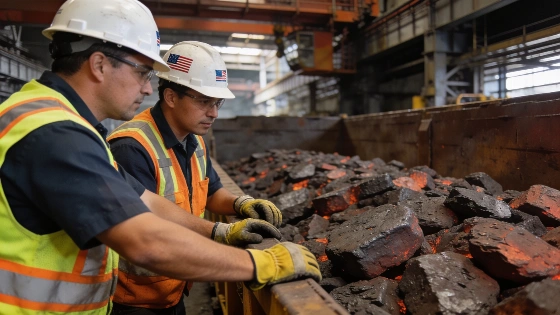
One of the most closely watched beneficiaries is Nucor, the largest steel producer in North America. Brazil is a major supplier of pig iron, a critical input for electric arc furnace steelmaking, and the new tariffs could prompt U.S. buyers to shift more sourcing to domestic producers. While some steel imports from Brazil were already subject to separate Section 232 duties and are excluded from the latest tariffs, the broader trade action may still support U.S. steel prices and utilization rates by limiting overall import competition.
Nucor has invested heavily in expanding its production capacity and serves a range of sectors including construction, infrastructure, and manufacturing. Although tariffs alone do not guarantee higher profits-since steel demand is ultimately driven by broader economic activity-historical patterns suggest that trade barriers can provide a tailwind for domestic producers when import alternatives become less attractive on price.
On the other hand, Embraer, the Brazilian aerospace manufacturer with significant exposure to the U.S. market, appears largely insulated from the immediate effects of the new tariffs. Civil aircraft and hundreds of aerospace-related products were specifically exempted, reflecting the deep integration of U.S.-Brazil aerospace supply chains. This exemption helps protect Embraer's U.S. revenue stream, which accounts for nearly 60% of its total sales. Still, the company faces ongoing uncertainty if trade tensions escalate or if future rounds of tariffs target additional sectors.
Tariff Details and Market Impact
The Section 301 tariffs cover a broad array of Brazilian goods, but the list of exemptions is notable for its focus on products with strong U.S. consumer demand or strategic supply chain importance. Coffee, beef, orange juice, and aerospace components were all spared, likely to avoid immediate price spikes or disruptions for U.S. businesses and consumers. For affected products, importers will face a 25% duty, which could be passed on to buyers or absorbed in profit margins, depending on market dynamics.
According to the U.S. Census Bureau, Brazil ranked among the top 10 sources of U.S. imports in 2025, with total goods imports exceeding $40 billion. Steel-related products, including pig iron, accounted for a significant share of this trade. Nucor reported annual net sales of $34.7 billion in 2025, while Embraer's North American revenue reached approximately $2.7 billion in the same period, underscoring the scale of exposure for both companies.
For U.S. manufacturers that rely on Brazilian inputs, the new tariffs may force a search for alternative suppliers or a renegotiation of contracts. Some companies may be able to pass higher costs to customers, while others could see margins compressed. The ultimate effect will depend on the elasticity of demand, the availability of substitutes, and the duration of the tariff regime.
Risks of Retaliation and Policy Uncertainty
While the immediate impact of the tariffs is shaped by the list of exemptions, the broader risk is that trade tensions between the U.S. and Brazil could escalate. Brazil may respond with its own tariffs or restrictions on U.S. exports, potentially affecting American agricultural, industrial, or technology sectors. Such retaliation could further complicate cross-border supply chains and introduce new volatility for companies with significant international exposure.
Trade disputes rarely remain static. Even sectors currently exempt-such as aerospace-could be drawn into future rounds of tariffs or regulatory action if negotiations break down. For investors, the risk is not just direct cost increases but also the potential for shifting sentiment, delayed investment, and longer-term uncertainty about market access and regulatory stability.
Tariffs are a blunt policy tool, and their effects often ripple unpredictably through the economy. While some U.S. producers may benefit from reduced competition, others face higher input costs or lost export opportunities. The net effect on jobs, prices, and growth will depend on how companies, consumers, and policymakers respond to the evolving trade environment.
Understanding Tariffs and Supply Chains
Tariffs are taxes imposed on imported goods, typically with the goal of protecting domestic industries or responding to perceived unfair trade practices. While they can provide short-term relief for certain sectors, they also risk raising costs for manufacturers and consumers, disrupting established supply chains, and provoking retaliatory measures from trading partners. The complexity of modern global supply chains means that even targeted tariffs can have far-reaching and sometimes unintended consequences. For investors and business leaders, understanding the specific products affected, the likelihood of exemptions, and the potential for policy shifts is essential to managing risk in a volatile trade environment.