
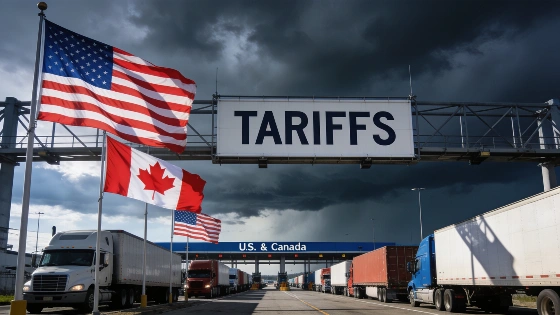
The White House's new tariffs on Canadian goods-some as high as 50%-are straining U.S.-Canada trade, fueling political shifts in Ottawa, and exposing deep regional divides that could reshape North American economic ties
Canada has long relied on stable trade and diplomatic relations with the United States, but that foundation is now under pressure as the White House imposes steep new tariffs on Canadian exports. The latest round of tariffs, announced in early June, targets a select group of Canadian products with rates reaching up to 50%-a level far above the 10% tariffs applied to most other countries. This escalation comes after the U.S. declined to renew its longstanding free trade agreement with Canada and Mexico for another 16-year term, shifting instead to annual renegotiations. For U.S. businesses and consumers, the move signals potential price increases on certain imports and heightened uncertainty for cross-border supply chains.
The White House has justified the tariffs as retaliation for what it describes as unfair Canadian trade practices. Yet the scale and focus of the measures have drawn attention, especially since Canada had previously been shielded from the harshest U.S. tariffs due to its trade agreement. Now, even products that were once protected are subject to new duties. The administration's approach appears calculated to send a political message to Ottawa while minimizing direct impact on U.S. consumers by limiting the range of affected goods. Still, the decision has unsettled Canadian policymakers and business leaders, who now face the prospect of annual trade negotiations and the risk of further economic disruption.
Political Fallout
The tariffs have triggered a sharp response in Canada's political landscape. Prime Minister Mark Carney, who took office after the Liberal Party ousted Justin Trudeau in the wake of last year's election, has seen his popularity rise as Canadians rally around his promise to stand up to U.S. pressure. The timing of the tariffs-following public statements from the U.S. president about potentially annexing Canada as a 51st state, albeit without military force-has only intensified the sense of urgency in Ottawa. For Canadian voters, acquiescing to U.S. demands is politically toxic, making a forceful response almost inevitable.
Regional divisions within Canada are also coming to the fore. The new tariffs disproportionately affect Ontario, Quebec, and British Columbia-provinces with large manufacturing sectors and vocal opposition to the current U.S. administration. In contrast, Alberta and Saskatchewan, which depend more on natural resource exports like oil, have been largely spared. This uneven impact risks deepening existing fissures in Canadian politics, especially as Alberta prepares for a referendum on independence later this year. Any Canadian retaliation, such as an export tax on oil, could further inflame these regional tensions and complicate efforts to present a unified front.
Economic Impact
For U.S. companies that rely on Canadian imports-particularly in manufacturing, agriculture, and energy-the new tariffs introduce fresh uncertainty. Annual renegotiations of trade terms could disrupt long-term planning and investment, while higher tariffs may lead to increased costs for certain goods. Canadian exporters, meanwhile, face the challenge of finding alternative markets or absorbing the cost of new duties, given their heavy reliance on U.S. buyers and limited infrastructure for shipping goods elsewhere.
According to the U.S. Census Bureau, Canada remains the United States' largest trading partner, with bilateral trade in goods and services totaling over $800 billion in 2025. The imposition of 50% tariffs on select Canadian products could affect billions of dollars in annual trade, depending on the final list of targeted goods and the duration of the measures. While the White House has signaled that the tariffs are intended as leverage in ongoing trade talks, the risk of escalation remains if Canada retaliates in kind-a pattern seen in previous trade disputes.
Strategic Risks
The broader implications of the tariff dispute extend beyond immediate economic costs. Canada's dependence on the U.S. for both trade and defense has left it vulnerable to shifts in American policy. The current standoff highlights the risks of overreliance on a single partner, especially when political relations sour. For U.S. investors and multinational firms, the episode underscores the importance of monitoring geopolitical developments that can quickly alter the landscape for cross-border business.
While the Canadian government has not yet announced its response, past practice suggests that retaliation is likely. Prime Minister Carney's political standing depends in part on his willingness to push back against U.S. pressure, but any countermeasures will need to balance national unity with economic pragmatism. The outcome of this dispute could set a precedent for future trade negotiations-not only between the U.S. and Canada, but across North America.
Trade policy is a powerful tool that can reshape economic relationships, but it also carries significant risks. Tariffs are designed to protect domestic industries or punish perceived unfair practices, yet they often lead to higher prices for consumers and retaliatory measures from trading partners. In the case of the U.S. and Canada, the deep integration of supply chains means that disruptions can ripple across multiple sectors, affecting jobs, investment, and regional economies on both sides of the border. For businesses and investors, understanding the mechanics of tariffs and the political dynamics behind them is essential for managing risk in an increasingly unpredictable global market.