Bloom Energy shares have soared over 800% in a year, but a recent 30% drop from all-time highs has UBS calling it a potential buy-the-dip play as AI data center demand drives new deals and revenue growth
Bloom Energy has become one of the most closely watched stocks on Wall Street, with its share price climbing more than 800% over the past 12 months and 1,300% in the last three years. The company, which manufactures solid oxide fuel cell systems, has emerged as a key player in powering artificial intelligence (AI) data centers-an area where demand for reliable, on-site electricity is surging.
AI Infrastructure Drives Growth
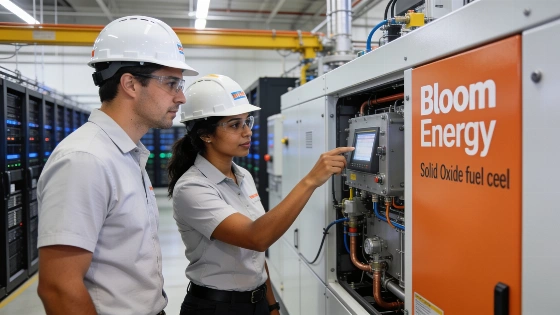
Bloom Energy's "Energy Servers" are designed to generate power directly at the site, reducing dependence on local electric grids. This capability has made the company a preferred supplier for AI data centers, which require large, stable power sources to support rapid expansion. During its first-quarter 2026 earnings call, Bloom Energy's leadership highlighted new partnerships, including a major deal with Oracle for the Project Jupiter AI campus in New Mexico. The agreement could eventually provide up to 2.45 gigawatts of power, relying entirely on Bloom's technology instead of traditional gas turbines or diesel generators.
Bloom's backlog is also growing, with more than half of its current data center orders coming from hyperscale cloud providers and colocation firms beyond Oracle. This momentum is reflected in the company's financials: Bloom reported first-quarter 2026 revenue of $751.1 million, a 130% increase from the same period a year earlier. It was the company's first quarter of triple-digit percentage growth since going public. Bloom also raised its full-year 2026 revenue guidance to a range of $3.4 billion to $3.8 billion, up from its previous forecast of $3.1 billion to $3.3 billion.
UBS Raises Price Target
Despite these gains, Bloom Energy shares have pulled back about 30% from their all-time highs, prompting UBS to reiterate its buy rating and raise its price target to $350 from $322. The investment bank cited Bloom's expanding role in AI infrastructure and a newly enlarged partnership with Brookfield, which increased its commitment from $5 billion to $25 billion. This funding is tied to Brookfield's AI Infrastructure Fund, which launched in late 2025 with a goal of deploying $100 billion to support rapid power delivery for AI projects.
UBS analysts argue that Bloom and Brookfield are advancing a new model for AI data centers by integrating power generation, computing, infrastructure, and capital from the outset. Other banks remain more cautious: Wells Fargo maintains an equal weight rating, while Oppenheimer and BMO Capital both rate the stock as market perform, according to Investing.com.
Valuation and Analyst Outlook
Analyst forecasts suggest Bloom Energy's revenue could rise from $2 billion in 2025 to $14 billion by 2030, according to data from Tikr.com. Free cash flow is projected to grow from $57 million to $4.77 billion over the same period. If the stock were to trade at 40 times forward free cash flow-a valuation some analysts consider reasonable for a high-growth infrastructure company-Bloom's share price could potentially triple over the next four years. Still, these projections depend on continued execution and sustained demand from AI data center customers.
Of the 19 analysts covering Bloom Energy, 9 rate the stock a buy and 10 recommend holding. The average price target is $287, about 17% above the recent price of $245. While the company has secured real contracts and posted record revenue growth, its valuation remains a subject of debate among market participants.
Power Constraints and Industry Trends
Bloom Energy's own research highlights a broader trend: 61% of data center developers plan to bring their own power sources if the grid cannot keep up with demand. As AI workloads increasingly require fast, on-site electricity, the need for alternative power solutions is expected to persist. Bloom's mid-year Data Center Power Report also found that inference-running AI models in production-now accounts for more than half of all AI computing needs, further fueling demand for reliable energy infrastructure.
For investors, the combination of rapid revenue growth, expanding partnerships, and a pullback in share price has put Bloom Energy at the center of the debate over how to value companies tied to the AI infrastructure boom. As always, the risks include execution challenges, competition, and the possibility that demand could shift if technology or regulatory conditions change.
In the first quarter of 2026, Bloom Energy reported revenue of $751.1 million, up 130% year-over-year, and raised its full-year revenue guidance to $3.4-$3.8 billion. The company's backlog of AI data center projects and expanded funding commitments from Brookfield have positioned it as a leading supplier in the fast-growing market for on-site power solutions.
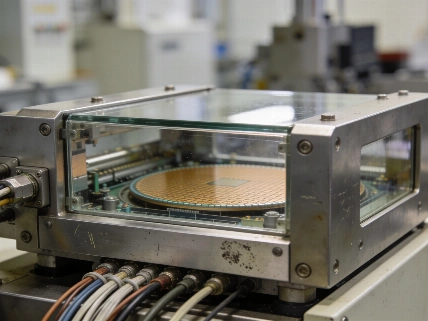
Solid oxide fuel cell systems, like those produced by Bloom Energy, convert fuel such as natural gas or hydrogen into electricity through an electrochemical process rather than combustion. This technology can offer higher efficiency and lower emissions compared to traditional power generation, making it attractive for data centers and other facilities with high, continuous power needs. However, the economics of fuel cell adoption depend on fuel costs, capital investment, and the evolving regulatory landscape for clean energy. As AI data centers drive new demand for reliable, scalable power, companies like Bloom are betting that their technology can address both the technical and environmental challenges facing the industry.