
Washington's push to restrict Chinese AI models could reshape the U.S. tech landscape, driving up costs for businesses and shifting market power to a handful of American firms as policymakers weigh national security against competition and innovation
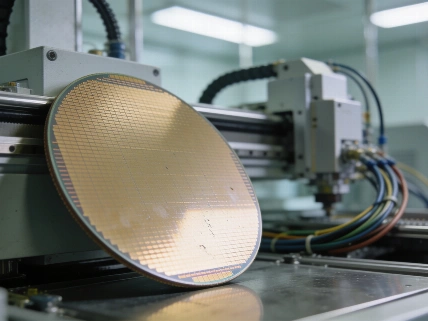
For years, U.S. trade policy has targeted advanced semiconductors as a strategic chokepoint in the technology rivalry with China. Export controls on high-end chips have already erased Nvidia's direct market share in China, according to reporting by TheStreet. But the latest moves from Washington signal a shift: the focus is expanding from hardware to software, with artificial intelligence models now in the crosshairs.
In June, the U.S. Commerce Department ordered Anthropic to restrict access to its newest Claude AI models for all foreign nationals, including its own non-citizen employees. The company complied within 90 minutes, disabling the models worldwide, as Forbes reports. This marked a significant expansion of export controls, bringing AI software under the same regulatory perimeter as physical chips.
AI Models and Market Impact
Now, the Biden administration is reportedly considering measures that could effectively ban cutting-edge Chinese AI models from the U.S. market. Such a move would have far-reaching consequences-not just for Chinese tech firms, but for American companies that have increasingly adopted Chinese open-weight AI models to cut costs. Axios notes that Chinese models like Moonshot AI's Kimi K3 have become competitive in both price and quality, prompting some U.S. startups to shift all their AI workloads to Chinese providers.
Procurement departments, not Beijing, have driven this trend. For many U.S. businesses, the lower cost of Chinese AI models has been a compelling reason to switch, especially as the performance gap narrows. Lindy, a U.S. startup, reportedly moved all its traffic to DeepSeek, a Chinese AI provider, and saw costs drop sharply. If a ban is enacted, it would primarily impact these American buyers, not the Chinese labs themselves, since some Chinese firms plan to release their model weights publicly regardless of U.S. policy.
Regulatory Uncertainty and Enforcement
Despite talk of a ban, the regulatory path remains unclear. Last year, the Commerce Department considered adding several Chinese AI labs to its Entity List, which would require U.S. companies to obtain a license before accessing their models. Other proposals included making U.S. firms liable for breaches if they hosted Chinese AI models, or issuing advisories to steer companies away from Chinese providers. Internal resistance over fears of stifling domestic innovation delayed these measures, but renewed national security concerns and the rapid progress of Chinese models have brought the issue back to the forefront.
Rather than a sweeping ban, the current approach appears to rely on procurement rules, pressure campaigns, and the threat of Entity List designations to limit U.S. access to Chinese AI. This slower, more targeted strategy may prove more durable, but it also creates uncertainty for American businesses that rely on affordable, high-quality AI tools.
Winners, Losers, and Market Dynamics
If Chinese AI models are blocked, the immediate beneficiaries would likely be U.S. firms Anthropic and OpenAI, which dominate the domestic market for advanced AI. Critics argue that such a move would reduce competition and hand a near-monopoly to these two companies, potentially driving up prices for U.S. businesses. Supporters of the ban, including some policymakers, frame the issue as a matter of national security, warning against reliance on technology developed under Beijing's jurisdiction.
Both arguments have merit. While national security concerns are real, restricting access to Chinese AI models could also limit choice and increase costs for American companies. The debate highlights the trade-off between protecting sensitive technology and maintaining a competitive, innovative market.
On July 16, Moonshot AI's Kimi K3 model debuted at the top of the Frontend Code Arena, outperforming Anthropic's Fable 5 and OpenAI's GPT-5.6 Sol in blind coding tests, according to Axios. The rapid progress of Chinese AI has intensified the policy debate, with U.S. officials reviving proposals to blacklist Chinese labs just days after Kimi K3's launch.
Financial Stakes and Investor Reaction
For investors, the implications are complex. Nvidia, which has been a major supplier of AI chips, saw its market value reach nearly $4.9 trillion as of July 17, 2026, according to StockAnalysis.com. Apple briefly overtook Nvidia as the world's most valuable company that same morning, reflecting shifting investor sentiment as the AI landscape evolves. Some analysts suggest that the rise of competitive, lower-cost Chinese models could compress the high profit margins currently enjoyed by leading U.S. AI labs, even as overall demand for AI computing power continues to grow.
Cheaper AI models mean more inference workloads, which still require advanced chips-potentially benefiting hardware suppliers in the long run. But the real pricing risk may fall on American software firms whose business models depend on continued access to affordable AI tools. With Moonshot AI set to release the Kimi K3 model weights publicly on July 27 and Nvidia's next earnings report due August 26, the coming weeks could bring more clarity on how these policy shifts will play out in the market.
According to the U.S. Bureau of Economic Analysis, the technology sector accounted for over $2 trillion in U.S. GDP in 2025, with AI-related investments growing at double-digit rates. The U.S. remains the world's largest market for AI software and services, but regulatory changes could alter the competitive landscape and cost structure for both providers and users.
Export controls and technology bans are blunt instruments in a globalized digital economy. While they can restrict access to certain products or services, they also risk unintended consequences-such as higher costs, reduced competition, and slower innovation. For U.S. businesses, the challenge is to balance security concerns with the need for affordable, high-quality technology. As policymakers debate the next steps, companies and investors alike will be watching for signals on how far Washington is willing to go in its AI rivalry with China-and what that means for the future of the U.S. tech sector.
Export controls are a longstanding tool in U.S. trade and national security policy, but their effectiveness depends on the nature of the technology being targeted. Unlike physical goods, AI models-especially those released as open-source or with downloadable weights-can be difficult to contain once they are publicly available. This raises questions about the enforceability of bans and the potential for workarounds. For businesses, understanding the evolving regulatory landscape is essential for managing risk, controlling costs, and maintaining access to the tools needed to compete in a rapidly changing market.