VICI Properties raised its quarterly dividend to $0.46, while its shares fell nearly 24% over the past year. Lease income supports the payout, but a change in Caesars' ownership could affect future lease terms.
VICI Properties reported Q2 2026 adjusted funds from operations, or AFFO, of $0.62 per share. That covered the then-current quarterly dividend of $0.45 by about 1.3 times, according to a Q2 coverage analysis. The company has since raised the quarterly payment to $0.46.
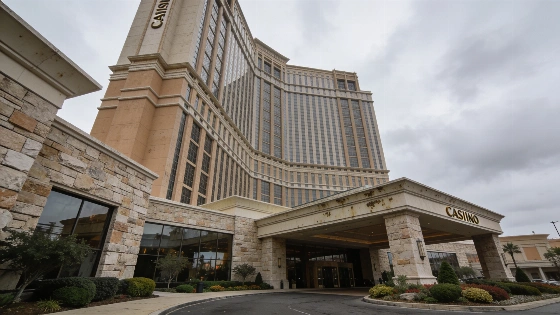
VICI's main support comes from its agreements with major tenants Caesars and MGM Resorts. Their triple-net leases provide steady rent, with inflation-linked increases that can lift payments over time. This gives VICI a more contract-driven income stream than a landlord that relies on frequent tenant turnover. It does not remove the risk of a change in a major tenant relationship.
VICI declared a $0.46-per-share quarterly dividend for Q3 2026, payable on 8 October to shareholders of record on 17 September. The annualized payout is $1.84 per share.
The Q2 coverage figure predates the increase, so it does not show how well AFFO covers the new $0.46 payment. VICI's FY2026 AFFO guidance is $2.45 to $2.47 per share. Reported net debt stood at about 4.9 times annualized Q2 adjusted EBITDA.
That is the catch. A dividend increase does not erase a share-price decline. A high yield also does not guarantee a positive total return. VICI traded at $23.13 on Pluang, down 0.30% as of September 30, 2026, at 22:03 WIB. Its stated yield was 7.93%. Market summaries put the forward yield at about 7.9% after the increase. That figure reflects both the cash payout and the fall in the share price. MarketBeat's dividend report says the payment is scheduled for 8 October. Pluang reported that all order activity on its platform was on the buy side. That points to buying interest there, but it does not prove the wider market shares that view.
VICI's income-backed payout has a useful parallel in McDonald's payout coverage, though the businesses and sources of rent differ. Caesars and MGM together account for a large majority of VICI's rent. The test is whether tenant payments and lease protections keep supporting AFFO as VICI manages its debt and pays shareholders.
Late-September analysis described a possible Caesars lease restructuring or rent cut as a risk being priced into the stock, but said that scenario would not automatically mean VICI's dividend is uncovered.
Changes in Caesars' ownership deserve close attention. Coverage describes the Caesars lease and ownership situation as a central structural risk. It does not report that a renegotiation has already happened. If the terms change, the effect on VICI will depend on what changes. The available information does not establish that outcome or quantify its impact.
VICI's dividend increase signals confidence in recurring lease income. It does not show that the stock's decline has ended. Reported coverage of the previous dividend and current AFFO guidance inform the payout outlook. Caesars remains a specific point of vulnerability.
A REIT's dividend yield moves with its distribution and share price. When the share price falls, the yield can rise even if the cash payment stays the same. That arithmetic alone does not make the payout safer. For VICI, check AFFO coverage and leverage. Then look at the lease terms that generate rent. Those measures speak to the income behind the dividend. The share price reflects the market's changing view of risk and possible returns.