
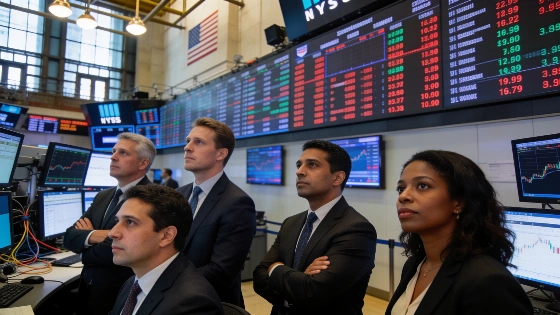
U.S. stock trades now settle in one day, but industry leaders say true efficiency will come from overhauling the market's core infrastructure-not just extending trading hours. Here's what's changing and why it matters for investors
Every time an investor buys or sells a stock, the transaction appears to complete in seconds. Yet behind the scenes, a complex network of brokers, custodians, clearinghouses, and exchanges must reconcile records and transfer ownership. In 2024, the Securities and Exchange Commission (SEC) shortened the standard settlement cycle for U.S. equities from two business days to one (T+1), aiming to reduce risk and free up capital. But many industry leaders argue that even this improvement falls short of what modern technology could achieve.
Beyond Trading Hours
Much of the public debate has focused on whether U.S. stock markets should operate around the clock, especially as retail investors increasingly follow global markets in real time. While extended trading hours have grown-now accounting for over 11% of U.S. equity activity, according to NYSE research-the more consequential shift is happening after the trade, not during it. Settlement determines when ownership and cash officially change hands. Shortening this cycle reduces the window for default, lowers collateral requirements, and makes cross-border investing less cumbersome. Hundreds of billions of dollars currently sit idle as collateral in traditional settlement systems, capital that could be put to more productive use if settlement were instantaneous.
Achieving faster, more efficient settlement requires more than software upgrades. It demands a fundamental overhaul of the infrastructure that moves assets and cash between institutions. This includes building real-time risk management systems and ensuring global interoperability, so that markets can operate seamlessly across borders. Regulatory approval is another hurdle, as changes must be coordinated among exchanges, clearinghouses, and banking supervisors, each with their own risk standards and timelines.
What 24/7 Trading Would Take
Major exchanges like NYSE, Nasdaq, and Cboe, along with new entrants such as 24X, have submitted proposals to operate nearly 24 hours a day, with the SEC granting preliminary approval to several. Demand from Asia-Pacific investors seeking access to U.S. stocks during their business hours is a key driver. Yet liquidity-the availability of buyers and sellers-remains concentrated during traditional market hours. Spreading trading across all hours risks thinner order books and wider bid-ask spreads, which can disadvantage retail investors the most.
Technologically, continuous trading is feasible, but the real challenge lies in market structure. If settlement remains delayed, simply extending trading hours may create new bottlenecks rather than solving existing ones. The databases maintained by brokers, custodians, and exchanges all require time to reconcile after markets close. Only by modernizing this infrastructure can true around-the-clock trading become practical and efficient.
For context, the number of private U.S. companies valued at over $1 billion has surged from 280 in 2017 to more than 1,500 by 2025, according to Bloomberg Intelligence. Meanwhile, the number of publicly listed U.S. companies has dropped to about half its 1990s peak. As more value creation shifts to private markets, the need for efficient, transparent settlement systems becomes even more urgent. Private asset transactions often rely on manual processes and fragmented records, making transfers slow and valuations difficult to verify. Improved infrastructure could lower minimum investment sizes and holding periods, making these markets more accessible to a broader range of investors.
Infrastructure Overhaul
The most visible changes-new listings, longer trading hours, regulatory approvals-are only part of the story. The more significant transformation is happening in the market's plumbing: the systems that record, reconcile, and settle trades. When assets are issued and transferred on shared digital infrastructure, the need for overnight reconciliation largely disappears. This shift could make every financial instrument more efficient, but it also requires coordination across institutions that have historically moved at different speeds and with different incentives.
Artificial intelligence is already playing a growing role in fraud detection and risk management at major financial institutions. As market infrastructure becomes more data-rich, AI is expected to expand into market surveillance, liquidity management, and even trade execution. Regulators are watching closely to ensure these systems are explainable and do not introduce new systemic risks. The pace of change will depend on regulatory frameworks, interoperability standards, and how quickly institutions adopt new technology.
While the transformation is gradual, its effects could be far-reaching. The shift to electronic trading in past decades changed who could participate in markets and how trades were executed. Today's overhaul of settlement and infrastructure may have an equally profound impact, even if most investors don't notice until the changes are complete. As the industry adapts, some experts warn that focusing solely on visible changes like trading hours misses the deeper, structural reforms underway. For example, as Goldman Sachs' recent dividend hike shows, confidence in market infrastructure and capital strength can have immediate effects on investor returns and market stability.
According to the SEC, the move to T+1 settlement in May 2024 was designed to reduce credit, market, and liquidity risks for investors and market participants. The change is expected to lower margin requirements and improve capital efficiency, but it also requires significant operational adjustments for brokerages, asset managers, and custodians. The SEC has indicated that further reductions in settlement time, potentially to same-day or even real-time settlement, will depend on continued technological progress and industry coordination.
As the financial system becomes more digital, investors should pay attention not just to new products or trading hours, but to the underlying infrastructure that makes modern markets possible. The next phase of Wall Street's evolution may be less visible, but its impact on efficiency, risk, and access could be even greater than the last.
Settlement is a core process in financial markets, determining when a trade is finalized and ownership officially changes hands. In the U.S., the move from T+2 to T+1 settlement means trades now settle one business day after execution, reducing the time that capital is tied up and lowering counterparty risk. However, faster settlement also requires firms to upgrade their technology, improve risk management, and coordinate more closely with regulators. As markets evolve, the balance between speed, security, and accessibility will remain a central challenge for both institutions and individual investors.