Wendy's is preparing to close hundreds of U.S. restaurants after reporting its sixth straight quarter of declining sales, with management warning that more closures could follow if performance fails to improve
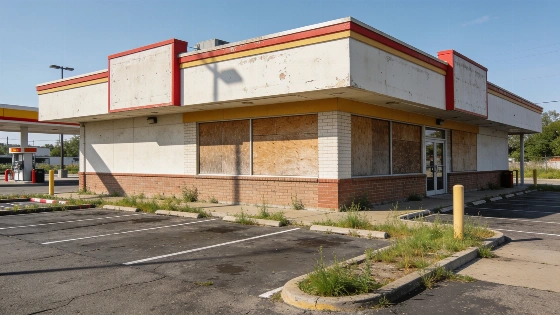
Wendy's, the 57-year-old fast-food chain, is bracing for a wave of U.S. restaurant closures as it struggles to reverse a persistent drop in sales and customer traffic. The company has already shuttered 28 locations and plans to close between 5% and 6% of its U.S. restaurants-roughly 289 to 358 underperforming units-by mid-2026. Executives have signaled that additional closures remain on the table if individual locations continue to drag down franchisees' financial health.
Management attributes much of the recent weakness to a focus on cost-cutting and efficiency that, in some cases, has eroded Wendy's brand differentiation. As competition intensifies across the quick-service restaurant sector, Wendy's has also lagged rivals in customer satisfaction. According to the American Customer Satisfaction Index for 2026, Wendy's scored 77 out of 100, trailing several major competitors in the fast-food space.
Turnaround Plan and Strategic Shifts
After reporting its sixth consecutive quarter of declining sales, Wendy's has launched a broad turnaround effort. The company is updating its capital allocation strategy to provide more flexibility and has identified five critical areas for improvement: menu quality and value, demand-driving marketing, operational excellence, digital engagement, and leveraging restaurants as growth engines. Leadership says restructuring and reorganization are already underway, with a focus on restoring both customer traffic and franchisee profitability.
During the second quarter of fiscal 2026, Wendy's reported a 6.5% year-over-year decline in global systemwide sales. U.S. systemwide sales fell 8.2%, and same-restaurant sales in the U.S. dropped 7%. These figures underscore the urgency of the turnaround, as the company faces continued pressure from both consumers and competitors.
Closures and Franchisee Health
Wendy's management has emphasized that closures are not intended to shrink the brand for its own sake, but rather to support franchisees in markets where certain locations are no longer financially viable. The company says it will work with franchisees to restructure portfolios and selectively close restaurants that have become persistent drags on profitability. This approach is designed to stabilize the broader system while focusing on long-term growth opportunities.
Wendy's has also withdrawn its 2026 financial outlook, citing the need for its new leadership team to fully assess business opportunities and develop a comprehensive turnaround plan. The company recently appointed Steve Cirulis, a former Potbelly executive, as CFO and Chief Strategy Officer. Cirulis previously worked with Wendy's CEO Bob Wright on a successful brand turnaround at Potbelly, and both leaders are now tasked with restoring momentum at Wendy's.
Ongoing Headwinds and Consumer Impact
Looking ahead, Wendy's expects continued headwinds in customer traffic and sales, making a return to year-over-year systemwide sales growth unlikely in the near term. The company also anticipates ongoing pressure on margins and adjusted EBITDA for its company-operated restaurants in the second half of the year, driven by sales deleverage. For consumers, these changes could mean updates to menu offerings, value deals, restaurant operations, and digital experiences as Wendy's seeks to win back customers.
For franchisees, the risk of further closures remains, especially in markets where individual restaurants are no longer sustainable. Management has made clear that closures will be used selectively and strategically, rather than as a blanket approach to downsizing. The broader turnaround effort will focus on bringing customers back through improved menu quality, value, marketing, and digital initiatives.
Wendy's challenges echo broader trends in the restaurant industry, where chains are under pressure to adapt to shifting consumer preferences, rising costs, and increased competition. As seen in other sectors, such as the auto retail industry, companies that fail to execute effective turnarounds can face rapid declines in market share-a dynamic explored in the story of Carvana's dramatic rebound from near-bankruptcy, as detailed in this analysis of Carvana's comeback.
According to Wendy's most recent earnings release, the company is prioritizing financial discipline and targeted investment as it works to stabilize performance. The next phase will depend on whether the new strategy can reverse sales declines and restore the financial health of the restaurant system. Until then, further closures remain a possibility as management evaluates underperforming locations across the U.S.
Wendy's reported global systemwide sales of $11.6 billion for the full year 2025, according to its annual filing. The company operated approximately 6,500 restaurants worldwide at the end of 2025, with the majority located in the United States. Franchisees account for more than 90% of Wendy's U.S. locations, making their financial health a critical factor in the chain's overall performance.
For restaurant chains, the decision to close underperforming locations is often a response to sustained declines in sales, rising operating costs, or shifts in consumer demand. While closures can help improve profitability for franchisees and the parent company, they also carry risks, including potential damage to brand reputation and loss of market presence. The effectiveness of a turnaround strategy depends on the company's ability to balance cost control with investments in menu innovation, marketing, and customer experience. In a highly competitive sector, even established brands like Wendy's must continually adapt to changing market conditions to remain relevant and profitable.