Pershing Square paid $100 a share for control of Howard Hughes, while the shares were later valued at about $72 in the account described here. Ackman's plan depends on property sales and insurance results, not valuation targets alone.
At quarter-end, Howard Hughes reported more than $2.65 billion in cash and cash equivalents. That total included Vantage's funds. Bill Ackman wants the company to rely less on developing and selling property and more on insurance and investments. The plan is a major shift.
Pershing Square acquired 9 million shares at $100 each and took control of Howard Hughes Holdings. In the account described here, those shares were later worth about $72 each. That gap captures the central tension. Management sees substantial long-term value, while investors are pricing in the risk that the assets, the insurance operation or both fall short.
In its first 27 days of consolidation, Vantage reported $4.7 million in underwriting profit and $11 million in investment income, but a $20.8 million pretax loss. Howard Hughes attributed the result to purchase-accounting effects and said it did not represent a full year of operations.
A property company in transition
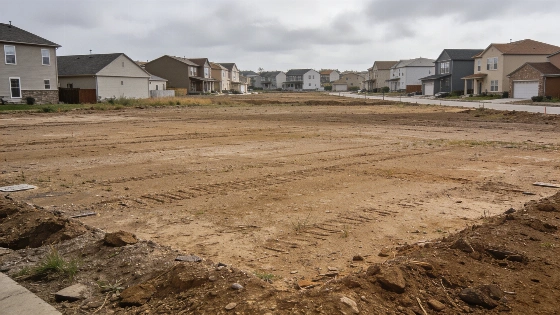
Most Howard Hughes assets are tied to land and development in its master-planned communities. Ackman's plan is to sell real estate over time and focus more on managing property than on continually buying and developing it. Finished condominiums and operating assets are also expected to bring in cash. Management projects $2.5 billion to $3 billion in real estate cash generation by 2030.
Howard Hughes completed its approximately $2.1 billion acquisition of Vantage Group Holdings on June 4, 2026. Vantage became the company's insurance and reinsurance platform. TheStreet's deal report noted that Vantage contributed $97.2 million in earned premiums during the 27 days from closing through June 30. Howard Hughes also reported more than $2.65 billion in cash and cash equivalents at quarter-end. That figure included Vantage's funds.
The transaction included a $900 million capital investment in Vantage. Howard Hughes contributed $300 million, and Pershing Square provided the remainder. Howard Hughes owns slightly more than half of Vantage. Pershing Square holds its economic interest through a preferred instrument that Howard Hughes can redeem within seven years.
Pershing Square immediately sold Vantage's fixed-income holdings. It then invested excess capital from the insurer's balance sheet in common stocks. That equity portfolio stood at about $1.3 billion in the account described here. The strategy connects property sales with insurance growth: proceeds from real estate could increase the capital available to underwrite risk and invest.
This is not just a bet on rising land prices. Ackman wants Howard Hughes to turn property value into capital, then earn returns through insurance underwriting and an equity portfolio. At a shareholder meeting, he said the company plans to bring in partners and cut its share of real estate funding by as much as 80%. The change would move part of the business toward an asset-management model while Howard Hughes kept an equity interest, according to Bisnow's meeting coverage.
Vantage's strategy will prioritize disciplined underwriting rather than maximizing premium volume, a focus on risk quality over rapid premium growth.
Returns depend on execution
Vantage is led by Marc Grandisson, formerly CEO of Arch Capital Group. Ackman expects the insurer to produce above-average underwriting results. Pershing Square will manage the stock portfolio. The fund's historical return range, cited in the account described here, is 15% to 20%. Management combines that expectation with insurance profits to project a 16% to 22% return on equity.
Return on equity measures profit relative to shareholder capital. But a forecast is not a realized result. Each part of the projection also depends on different kinds of execution. The math is demanding.
Fees matter, too. Pershing Square charges to manage Vantage's portfolio, which cuts the returns available to Howard Hughes shareholders. Insurance performance could disappoint if underwriting results fall short. Selling assets at attractive prices is another condition, not a sure thing. Higher interest rates can weigh on land values because undeveloped property does not generate income that can help support a valuation.
Management estimates intrinsic value at $104 per share, with a potential rise to $211 by 2030. Ackman has also argued that the business could be worth more than $1 trillion over 50 years. Those figures are management and investor expectations, not independently established values or guaranteed outcomes. The reported share value of about $72 may look like a discount to management's estimates. It may also reflect doubts about the assumptions behind them.
What shareholders must weigh
A company's value depends on what it can earn and how much capital it must commit to do so. Howard Hughes is therefore hard to assess on its real estate holdings alone. Investors must also judge Vantage's underwriting, the equity portfolio's returns after fees, and the pace and proceeds of property sales. A market-cap framework can help put long-term growth claims in perspective. It cannot validate the operating assumptions behind that growth.
At roughly $70 per share in the account described here, the stock could interest investors who believe Howard Hughes can sell property effectively and build a profitable insurance operation. A more cautious approach is to wait for evidence that those steps are working. Management's intrinsic-value estimate is not a price the market must eventually reach.
The plan depends on recycling capital. Howard Hughes would turn real estate into cash, then use that money to support insurance underwriting and investments. Each stage has its own timing and risks, as well as costs. The projected $2.5 billion to $3 billion in real estate cash by 2030 is central to the case.
Sales and underwriting results still need to prove the model works after fees. Until then, the shares reflect an execution-dependent transformation, not a proven bargain.