
Major U.S. companies are citing AI as a key reason for job cuts, with nearly 40% of layoffs in May linked to automation. Community resistance to new data centers is rising, threatening the infrastructure behind AI growth
Artificial intelligence is rapidly reshaping the U.S. labor market, with a growing number of companies citing AI adoption as a primary driver for workforce reductions. Oracle recently disclosed plans to cut 21,000 jobs in fiscal 2026, attributing a significant portion of these layoffs to the integration of AI technologies. Snap, another high-profile tech firm, eliminated 1,000 positions, with its CEO stating that advances in AI now allow smaller teams to handle workloads that previously required far more staff. These moves reflect a broader trend: according to Challenger, Gray and Christmas, nearly 40% of U.S. job cuts in May were attributed to AI, up sharply from just 7% in January.
Public sentiment toward AI’s impact on employment is increasingly negative. At college graduation ceremonies this spring, speakers who mentioned AI faced open hostility from students, signaling a growing frustration among young workers entering a job market transformed by automation. The backlash is not limited to rhetoric. Nobel laureate Paul Krugman recently argued that the current resistance to AI is more than skepticism about technological change—it reflects deeper anxieties about job security and economic inequality.
Corporate Response and Community Demands
Mark Cuban, a prominent investor and entrepreneur, has been vocal about the responsibilities of AI companies amid these sweeping changes. According to reporting by TheStreet, Cuban believes that major AI firms have failed to address the needs of workers and communities most affected by automation. He argues that companies should engage directly with towns experiencing job losses, asking what support—financial or otherwise—would help offset the disruption. Cuban contends that investing in local programs and creative industries is not just good public relations, but a necessary cost of doing business in an era where public trust is eroding.
He also criticizes the industry’s reliance on celebrity endorsements and political lobbying, suggesting these strategies do little to rebuild goodwill. Instead, Cuban urges AI companies to consult directly with working artists, creative unions, and local organizations to determine what meaningful support looks like. He warns that as AI’s infrastructure demands grow—particularly the need for new data centers—companies that ignore community concerns risk facing even greater resistance to expansion.
Data Center Pushback and Infrastructure Risks
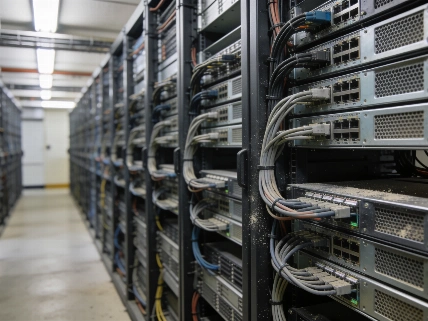
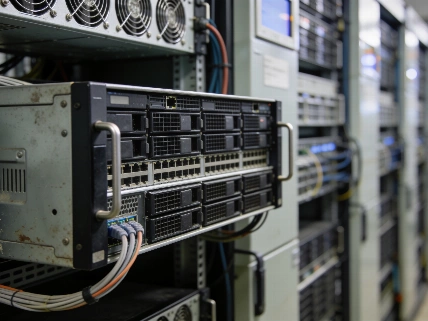
Resistance to AI is increasingly manifesting in opposition to data center construction. In the first quarter of 2026 alone, at least 75 U.S. data center projects, representing roughly $130 billion in investment, were blocked or delayed, according to Benzinga. A Gallup survey from May found that 71% of Americans oppose building AI data centers near their communities, with nearly half expressing strong opposition. Residents cite concerns over power consumption, water use, noise, and rising utility bills, but the underlying issue is often the perception that AI-driven wealth is concentrating at the top while local jobs disappear.
Cuban argues that these protests are less about the physical presence of data centers and more about what they symbolize: the economic disruption and inequality associated with rapid AI adoption. As more communities push back, the risk grows that the infrastructure needed to support AI’s expansion will lag behind industry projections, potentially slowing the pace of technological advancement and limiting the sector’s growth.
Layoff Trends and Economic Impact
The scale of AI-driven layoffs is accelerating. At least 16 major U.S. companies—including Snap, Cisco, and Coinbase—have announced job cuts in 2026 specifically citing AI redundancies, according to TheStreet. The share of layoffs attributed to AI rose from 7% in January to nearly 40% by May, making automation the leading reason for workforce reductions among surveyed firms. Andy Challenger of Challenger, Gray and Christmas notes that this marks a significant shift in how companies justify downsizing, with AI now surpassing traditional factors like restructuring or cost-cutting.
Despite the immediate pain for displaced workers, some industry leaders—including Cuban—believe that AI could eventually create more jobs than it eliminates. But for now, the benefits remain unevenly distributed, and the social costs are mounting. The Pew Research Center reports that public perception of the tech industry has soured dramatically over the past decade, with a majority of Americans now viewing large technology companies as having a negative impact on society. This skepticism is increasingly directed at AI, compounding the challenges facing companies seeking to expand their operations.
Financial Data and Market Context
According to Challenger, Gray and Christmas, U.S. employers announced 80,089 job cuts in May 2026, with 39%—over 31,000 positions—explicitly attributed to AI and automation. This marks the highest monthly share of AI-related layoffs on record. The surge in automation-driven cuts comes as the U.S. unemployment rate remains historically low, but labor force participation among certain sectors, especially tech and creative industries, is declining. Meanwhile, the number of blocked or delayed data center projects in Q1 2026 is the highest since tracking began, signaling a growing infrastructure bottleneck for the AI sector.
For investors and workers alike, the rapid pace of AI adoption is creating new risks and uncertainties. Companies that fail to address community concerns may face regulatory hurdles, higher permitting costs, and reputational damage, while workers in at-risk sectors may need to seek retraining or transition to new roles. The evolving landscape underscores the importance of monitoring both the economic benefits and the social costs of automation as AI continues to reshape the U.S. economy.
As AI transforms the labor market, understanding the mechanics of automation-driven layoffs is crucial. Companies often turn to AI to streamline operations, reduce costs, and increase productivity, but these efficiencies can come at the expense of existing jobs. The transition can be especially disruptive in sectors where tasks are easily automated, such as administrative support, customer service, and certain creative roles. For affected workers, retraining and upskilling may offer a path forward, but access to these opportunities often depends on employer investment and public policy support. The broader challenge for policymakers and business leaders is to balance the promise of technological progress with the need to protect workers and maintain public trust in the face of rapid change.