Nvidia's rapid AI growth is running into a new obstacle: the U.S. power grid. As data center electricity demand surges, experts warn that infrastructure and energy costs could become the biggest constraint on future AI expansion.
For much of the past year, Nvidia CEO Jensen Huang has been at the center of conversations about chip shortages, export restrictions, and whether Nvidia can sustain its explosive growth. But recently, Huang has shifted his focus to a different-and potentially more disruptive-challenge: the enormous energy demands of artificial intelligence.
Speaking at Stanford University events this spring, Huang warned that the computing power required for next-generation AI could be up to 1,000 times greater than what's available today. While he acknowledged the estimate is rough, the underlying concern is clear: as AI systems evolve from responding to prompts on demand to running continuously as autonomous agents, their appetite for electricity could outpace anything the tech sector has seen before.
AI's Growing Appetite
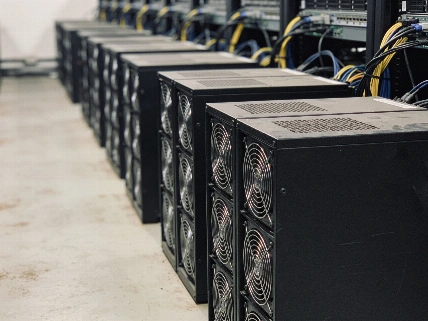
Today's AI models typically process queries and then idle, but the future Huang describes involves AI agents operating around the clock, handling millions of tasks in parallel. This shift could drive a dramatic increase in data center energy consumption, far beyond the needs of traditional search engines or cloud computing.
Recent research supports this trajectory. Goldman Sachs projects that U.S. data center power demand will jump from 31 gigawatts in 2025 to 66 gigawatts by 2027-more than doubling in just two years. That would push data centers' share of U.S. peak summer electricity demand from 4.1% to 8.5% over the same period. The Department of Energy estimates that by 2028, data centers could account for as much as 12% of all U.S. electricity use, up from 4.4% in 2023.
Utility executives are sounding the alarm as well. Duke Energy reports that its electricity demand growth is now running at roughly 10 times the pace of previous decades, driven largely by new data center construction. The surge is already affecting consumer costs: PJM Interconnection, which manages the grid for 65 million people in the eastern U.S., saw its capacity price soar from $28.92 per megawatt-day in 2024-2025 to $329.17 for 2026-2027, with data centers responsible for about 63% of that increase.
Infrastructure Bottlenecks
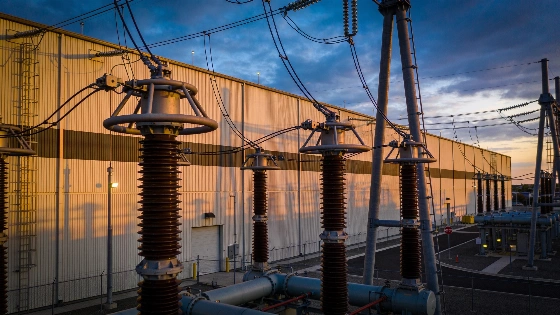
While much of the public debate has focused on whether the U.S. can generate enough electricity, Goldman Sachs analysts argue that the real bottleneck may be the grid itself. They estimate that roughly $720 billion in grid upgrades will be needed through 2030 to support the rising load from data centers and AI infrastructure. Without these investments, even abundant generation capacity won't be enough to deliver power where it's needed most.
Some companies are already adapting. Caterpillar, better known for heavy machinery, has seen its power generation sales surge 44% year over year as data centers turn to on-site generators and battery storage to bridge the gap until new grid connections are available. Management expects this trend to drive company-wide sales growth of 5% to 7% annually through 2030, outpacing recent years.
For investors, the stakes are high. Nvidia expects global annual data center capital expenditures to reach $3 trillion to $4 trillion over the next five years, reflecting the scale of the AI infrastructure buildout. But as the power crunch intensifies, the pace of AI adoption may depend less on chip innovation and more on the ability of utilities and grid operators to keep up.
Market Impact and Industry Response
Wall Street is watching closely. According to reporting by TheStreet, Nvidia's own projections and recent analyst research suggest that the computational demands of AI are rising much faster than previously anticipated. Some estimates indicate that the resources needed for advanced "agentic" AI-systems capable of multi-step reasoning and autonomous action-are already 100 times higher than what Nvidia expected just a year ago.
Other tech companies are also feeling the pressure. As data center operators scramble to secure reliable power, the cost and complexity of expansion are rising. This has led to new partnerships between utilities, equipment suppliers, and cloud providers, as well as a surge in demand for backup power solutions. For a look at how other chipmakers are navigating the AI infrastructure race, see this analysis of AMD's evolving AI strategy: AMD's pivot toward powering real-world AI applications.
Gartner projects that global data center power demand will rise 27% in 2026 alone, reaching 132 gigawatts, and could more than double to 290 gigawatts by 2030. These figures underscore the scale of the challenge facing both the tech sector and the broader energy industry.
What the Numbers Show
According to the U.S. Energy Information Administration, total U.S. electricity consumption in 2023 was about 4,000 terawatt-hours. Data centers accounted for roughly 4.4% of that total, but if current trends continue, their share could triple within five years. The rapid growth in AI-driven workloads is a key driver, with capital spending on data center infrastructure expected to reach record levels through the end of the decade.
For households and businesses, the implications are significant. Rising electricity demand from data centers could put upward pressure on utility rates, especially in regions where grid upgrades lag behind new construction. At the same time, the need for massive investment in both generation and transmission infrastructure may reshape the economics of the entire energy sector.
As AI becomes more deeply embedded in everything from finance to healthcare to logistics, the question is no longer whether the technology will transform the economy, but whether the physical infrastructure can keep pace with its ambitions.
Data center power demand is a complex issue that sits at the intersection of technology, energy policy, and market economics. Unlike traditional manufacturing or office buildings, data centers require highly reliable, round-the-clock electricity and often cluster in regions with favorable tax incentives or access to renewable energy. This concentration can strain local grids and complicate planning for utilities. For investors and policymakers, understanding the interplay between AI growth and energy infrastructure is increasingly critical-not just for the tech sector, but for the broader economy and the future of U.S. competitiveness.