
AI stocks have powered major U.S. indexes to record levels but a mix of high valuations, persistent inflation, and historical tech bubble patterns now threatens to upend the rally
Wall Street's AI-driven rally is encountering growing skepticism as concerns mount over elevated valuations and the inflationary effects of large-scale infrastructure investment. Artificial intelligence has propelled the Dow Jones Industrial Average, S&P 500, and Nasdaq Composite to record highs, but the same forces fueling these gains are now increasing the risk of a significant market correction.
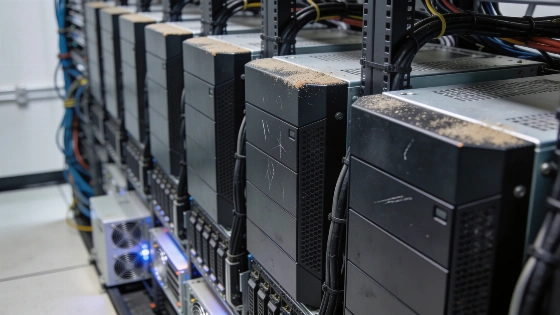
According to Reuters, Microsoft, Alphabet, Amazon, Meta, and Oracle are projected to spend about $795 billion on capital expenditures in 2026 and nearly $1.08 trillion in 2027, reflecting the unprecedented scale of the AI infrastructure boom.
Inflation and Rate Hikes Threaten AI Momentum
The Federal Open Market Committee has identified the rapid expansion of AI infrastructure as a new source of inflationary pressure. As companies accelerate deployment of advanced systems, increased costs are being passed to consumers, contributing to sustained high prices. In response, policymakers have indicated that higher interest rates may be necessary to control inflation-a development that could directly challenge the growth assumptions underlying current AI stock valuations.
On September 17, 2026, the Federal Reserve raised its benchmark rate by 0.25 percentage points to a range of 3.75%-4.00%. Markets are already anticipating further increases due to accelerating inflation and rising bond yields, as detailed in a Reuters financial review. This tightening cycle follows a September 11, 2026, report from Reuters noting that U.S. consumer prices accelerated in August, with core inflation posting its largest increase in four months, intensifying expectations for more assertive Fed action.
In July 2026, several members of the Federal Reserve's policy committee explicitly warned that large-scale investments in data centers could have broader effects on prices by pushing up aggregate demand, thereby creating additional inflationary pressures.
Valuation Metrics Flash Red
Several key indicators suggest the AI sector is approaching the upper bounds of market sustainability. The S&P 500's Shiller Price-to-Earnings (P/E) Ratio has reached its second-highest level on record, largely driven by AI-related stocks. According to Reuters and market data, the Shiller CAPE for the S&P 500 stood around 40.6-41.7 in mid-September 2026-a level rarely seen outside the peak of the dot-com bubble-highlighting the extraordinary valuation environment reported by Reuters. Historically, when this ratio exceeds 30, the market has often experienced notable declines in subsequent periods. Some leading AI companies are also trading at price-to-sales ratios above those seen in previous technology bubbles, raising questions about how much future growth is already reflected in current prices.
These valuation signals point to a disconnect between investor optimism and the practical challenges of deploying AI at scale. While the long-term potential of AI remains significant, the timeline for achieving widespread profitability is likely to be slower and more uneven than many forecasts currently suggest.
Recent volatility in Treasury yields has further complicated the outlook. As previously reported, a spike in the 10-year Treasury yield has increased pressure on stocks and borrowing costs, amplifying risks for sectors with elevated valuations. Notably, Reuters reported that on September 17, 2026, the 10-year U.S. Treasury yield briefly exceeded 5%, reflecting investor concerns over interest rates and adding strain to risk assets, including technology stocks.
Lessons from Past Tech Bubbles
Historical precedent offers a warning for investors considering the AI rally at current valuations. The dot-com era followed a similar trajectory: rapid capital inflows, soaring valuations, and widespread belief in transformative technology, followed by a swift and severe correction when expectations outpaced reality.
Today's AI leaders face comparable challenges. Demand for advanced computing and automation is genuine, but the timeline for converting that demand into sustainable profits remains uncertain. Investors who overlook the lessons of previous bubbles may be exposed if the current cycle ends similarly.
Data from S&P Dow Jones Indices shows the S&P 500's Shiller P/E Ratio reached 33.5 in June 2024, a level surpassed only during the dot-com bubble and the lead-up to the 1929 crash. Meanwhile, the Consumer Price Index indicated annual inflation remained above 3 percent for much of the year, complicating the Federal Reserve's efforts to balance economic growth and price stability.
Understanding Bubble Risk in AI Stocks
For individual investors, the main takeaway is not to discount AI's potential, but to recognize the risks associated with pursuing momentum in overheated markets. Elevated valuations, persistent inflation, and the likelihood of further rate hikes all suggest a more challenging environment for AI stocks in the near term. Diversification, disciplined risk management, and a realistic assessment of what the technology can deliver are increasingly important.
Bubble risk is not exclusive to AI, but the sector's rapid rise and central role in recent market gains make it particularly sensitive to changes in sentiment and policy. Investors should closely monitor valuation metrics, interest rate trends, and the pace of real-world adoption when evaluating exposure to AI-related assets. Understanding the interplay of these factors can help avoid the pitfalls that have affected previous generations of technology investors.