Alibaba's latest AI model for laptops is free to download, but the company is quietly testing new fees for commercial users-signaling a shift in how open-source AI could be monetized as competition with Meta heats up
Open-source artificial intelligence is moving from the fringes of Silicon Valley to the center of the global tech race, with major players now targeting the laptops and desktops of everyday users. The latest move comes from Alibaba, which has released Qwen3.8-27B, an AI model designed to run on a single consumer graphics card. This launch arrives just days after Meta introduced its own laptop-ready model, Muse Glimmer, intensifying the competition to put advanced AI directly in the hands of consumers and developers.
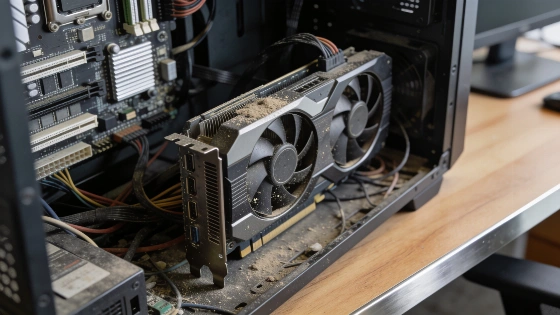
The appeal of these models is straightforward: users can download the AI weights and run them locally, avoiding cloud fees and privacy concerns. But as the market matures, the definition of "open-source" is evolving. Alibaba's Qwen3.8-27B, with 27 billion parameters and a quantized size of about 17 gigabytes, is engineered to fit on a high-end consumer GPU. According to Cybernews, it matches or exceeds the performance of much larger systems on coding and research tasks, though independent developers have raised questions about the benchmarking methods used.
Meta's Muse Glimmer, a 30-billion-parameter model distilled from its proprietary Muse Spark, also runs on a single consumer GPU and requires less than 20 gigabytes of memory. Independent testing by VentureBeat found that Glimmer outperformed Qwen on certain privacy benchmarks, highlighting that neither company's model is dominant across all metrics. What is clear is the demand: Qwen3.8-27B surpassed 3 million downloads on Hugging Face within three days, making it the platform's top-trending model, according to Cybernews.
Shifting Business Models
While both companies are making powerful AI models available for local use, Alibaba is quietly changing the economics behind open-source AI. Alongside its laptop model, Alibaba released open weights for Qwen3.8 Max, a flagship system with 2.4 trillion total parameters and about 95 billion active at a time. According to CNBC, Alibaba plans to require large commercial users of Qwen3.8 Max to share a portion of the revenue generated from the model. The company has not finalized the revenue-sharing rate, but the approach mirrors licensing terms used by other Chinese AI labs, such as Moonshot's Kimi K3, which can require up to a 30% revenue share from companies earning more than $20 million annually from AI-powered services.
Until now, Alibaba only charged for models hosted on its own cloud, allowing most open-weight releases to be used freely on customer servers. The new policy marks a significant shift, signaling that the era of entirely free, open-source AI at scale may be ending-at least for enterprise users who build profitable businesses on these models.
Meta's Contrasting Approach
Meta, by contrast, continues to offer Muse Glimmer with no commercial restrictions. The model is free to download, requires no account, and comes with no usage fees. This strategy aligns with Meta's broader business model, which relies on advertising, hardware, and user engagement rather than direct sales of AI access. By giving away the model layer, Meta makes it harder for rivals to charge for similar offerings, while reinforcing its own ecosystem.
This divergence in business models reflects a broader debate over the future of open-source AI. For developers and startups, the difference could mean new costs and licensing negotiations if Alibaba's approach becomes the industry standard. For now, the two strategies are running in parallel, but the outcome could reshape how AI is developed, distributed, and monetized worldwide.
Market Impact and Investor Focus
Alibaba's shares traded near $125 on Monday, August 17, little changed on the day but up roughly 39% from their 52-week low in June. The company's upcoming earnings report on August 20 will be closely watched for signs that its AI strategy is translating into revenue, not just attention. Investors are looking for evidence that the surge in downloads for Qwen3.8-27B and the new licensing model for Qwen3.8 Max can drive sustainable growth.
Alibaba is not alone in testing new monetization strategies for open-source AI. Moonshot, another major Chinese AI lab, has already moved to charge large commercial users of its open models. If this trend continues, the free access that defined open-source AI in recent years may become a thing of the past for enterprise-scale users, with new costs and compliance requirements emerging as the technology matures.
For U.S. investors and technology companies, these developments signal a shift in the global AI landscape. As open-source models become more powerful and commercially relevant, the lines between free community tools and paid enterprise products are blurring. Companies that rely on open AI models for their own products and services may soon face new licensing costs, while consumers could benefit from more capable AI running directly on their devices-at least for now.
According to Alibaba's most recent annual report, the company generated $126.5 billion in revenue for the fiscal year ended March 31, 2026, with cloud computing and digital media services accounting for a growing share of its business. The company's investment in AI is seen as a key driver of future growth, but the financial impact of its new licensing strategy remains to be seen as the market adapts to changing rules for open-source technology.
As the AI market evolves, the definition of "open-source" is becoming more complex. While open weights and code remain available for individual and small-scale use, large commercial deployments are increasingly subject to licensing fees and revenue-sharing agreements. This shift reflects the growing value-and cost-of advanced AI models as they move from research labs to real-world business applications.