Alphabet's record cloud revenue failed to impress investors as soaring capital expenditures and negative free cash flow highlight the growing gap between AI investment and returns, putting pressure on Microsoft and Meta ahead of their earnings
Alphabet delivered its strongest quarter ever for Google Cloud, reporting $119.8 billion in revenue for the period, a 24% increase from a year earlier. Cloud revenue surged 82% to $24.8 billion, far outpacing analyst expectations, and the company's cloud backlog reached $514 billion. Nearly 90% of Fortune 100 companies are now using Gemini Enterprise, underscoring the rapid adoption of AI-powered services among major U.S. corporations.
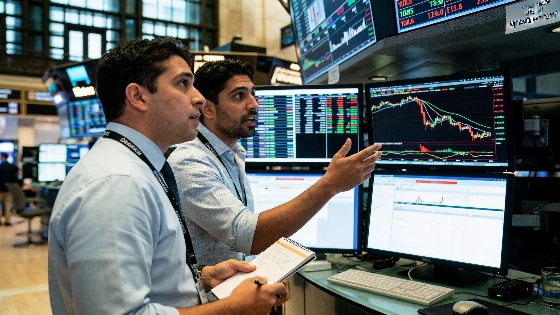
Yet despite these headline numbers, Alphabet's stock dropped 6.5% the following morning. The reason: capital expenditures soared to $44.9 billion in just one quarter, and free cash flow turned negative. Much of the company's net income growth was tied to a one-time gain from its stake in Anthropic, rather than ongoing business operations. Stripping out that gain, investors were left with a company spending at a pace that raises doubts about whether even robust revenue growth can keep up with the costs of building out AI infrastructure.
AI Investment Outpaces Revenue
This disconnect between AI-driven revenue and the capital required to generate it is now at the center of Wall Street's debate over the sustainability of the so-called "AI trade." According to reporting by TheStreet, Alphabet's record cloud growth was not enough to offset concerns about the scale and speed of its spending. The market is now focused on whether the returns from AI will ever justify the unprecedented investment pouring into the sector.
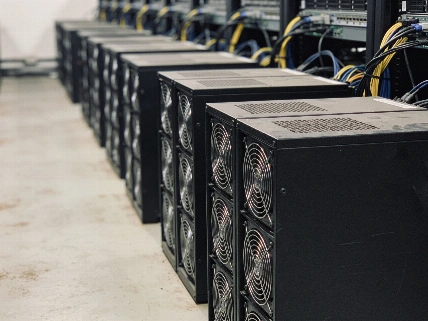
Alphabet's $44.9 billion in quarterly capital expenditures, if annualized, would approach $180 billion. When combined with projected spending from Microsoft, Meta, and Amazon, total capital outlays for 2026 are on track to reach $725 billion, with some analysts forecasting that figure could top $1 trillion in 2027. The key question for investors is how quickly revenue can catch up to these massive investments-a tension that is now being priced into every earnings report.
The Capex-to-Revenue Gap
Sequoia analyst David Cahn estimates there is a $600 billion annual gap between what major cloud providers are spending on AI infrastructure and what the broader AI ecosystem is generating in sales. Goldman Sachs has noted that to justify current investment levels, hyperscalers would need to produce more than $1 trillion in annual profits-more than double current consensus estimates. Allianz Research calculates that the divergence between AI capital spending and revenue growth is now 46%, wider than the 32% gap seen during the 2001 telecom bubble, which preceded a prolonged downturn in tech stocks.
Michael Heinrich, CEO of 0G Labs, described the current environment as one where valuations are "pricing perfection"-meaning that even a blowout quarter can disappoint if it fails to deliver on the market's lofty expectations for AI returns. Alphabet's negative free cash flow, despite record revenue, is a stark example of how high the bar has become for AI-driven businesses.
Comparisons to the Dot-Com Era
Some industry leaders are drawing parallels to the late 1990s, when internet technology was transformative but failed to deliver returns on the timeline investors expected. JPMorgan CEO Jamie Dimon recently warned that AI spending may not pay off as quickly or as predictably as many hope. Unlike the dot-com era, however, today's AI investments are generating real usage and revenue from enterprise customers. The risk is not that the technology won't work, but that the cost of scaling it may outpace the returns for longer than the market is willing to tolerate.
For context, Microsoft's upcoming earnings report on July 29 will be closely watched for signs that Azure's AI-driven cloud growth can keep pace with its own heavy capital spending. Meta, which reports July 30, faces scrutiny over whether its $125 billion to $145 billion in annual AI investment is translating into meaningful product traction. As recent analysis of Microsoft's earnings expectations shows, the market is demanding clear evidence that AI spending is driving sustainable revenue growth.
What Investors Are Watching Next
Three key factors will shape whether the AI trade is headed for a healthy correction or something more severe: whether the gap between AI infrastructure spending and revenue is narrowing; whether AI is evolving from an assistant to an agent that can complete tasks and generate direct revenue; and whether the cost of running AI applications is falling fast enough to make them viable at scale. The next round of earnings from Microsoft and Meta will provide the most detailed look yet at these dynamics.
For investors, the stakes are high. If the largest tech companies cannot demonstrate that their AI investments are producing returns commensurate with their spending, valuations across the sector could come under renewed pressure. The coming weeks will test whether the math behind the AI trade can hold up under the weight of Wall Street's expectations.
According to Alphabet's Q2 2026 earnings release, the company's $119.8 billion in quarterly revenue included $24.8 billion from Google Cloud, up 82% year over year. Capital expenditures for the quarter reached $44.9 billion, and free cash flow was negative. Analysts estimate that combined AI-related capital spending by Alphabet, Microsoft, Meta, and Amazon could exceed $725 billion in 2026, with projections of more than $1 trillion in 2027 if current trends continue.
The challenge of aligning massive capital investment with sustainable revenue is not unique to AI, but the scale and speed of today's spending set it apart. In technology markets, the capex-to-revenue gap can signal whether a sector is building for future growth or overextending itself. Investors and executives alike are watching for signs that AI's promise will translate into profits before the market's patience runs out.