Amazon has suspended all cargo operations with 21 Air following a catastrophic Miami runway overrun that killed five workers and triggered lawsuits and regulatory scrutiny
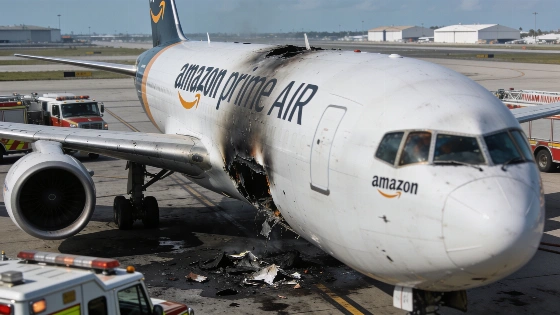
Amazon's logistics network has been significantly disrupted after the company suspended all cargo flights operated by 21 Air, its North Carolina-based partner, following a fatal runway overrun at Miami International Airport. This decision comes as federal investigators examine the sequence of errors that caused a Boeing 767 freighter to overrun the runway by 1,300 feet, collide with multiple vehicles, and ignite a fire that resulted in five fatalities among ground workers and injuries to five others.
Reuters reports that Amazon clarified the suspension applies specifically to 21 Air, the carrier operating flights for Amazon Air, and does not impact the broader Amazon Air network. The National Transportation Safety Board (NTSB) confirmed the aircraft overran the runway by approximately 1,300 feet (about 396 meters) before striking ground vehicles, underscoring the severity of the incident and the operational risks involved.
Preliminary NTSB findings indicate that one of the pilots warned the crew that the aircraft was approaching the runway at excessive speed more than a minute before touchdown.
Central to the investigation is a cockpit voice recording capturing one pilot warning of excessive landing speed and another suggesting a go-around-a standard maneuver to abort a risky landing-just 15 seconds before the crash. Both pilots survived and were hospitalized. The NTSB's preliminary findings indicate a breakdown in cockpit decision-making and adherence to safety protocols. All five fatalities were members of a cleaning crew traveling in a van on a service road adjacent to the runway, highlighting the broader risks of aviation accidents beyond the flight deck.
21 Air, which also operates for DHL, has publicly defended its safety record and training standards. However, the company faces increased scrutiny after several former employees alleged they were dismissed for raising safety and procedural concerns with management, according to CBS. The airline's assurances now stand in contrast to the NTSB's early findings and the operational suspension imposed by Amazon.
Legal and Financial Repercussions
The incident has led to a series of lawsuits. The widow of Yoel Rodriguez Naranjo, one of the five workers killed, has filed a wrongful death lawsuit against the airline and the pilots. Another injured worker, Roosevelt Torres, is suing both the cargo company and the flight crew, with his attorney stating that Torres saw the plane approaching his van in the final moments. These lawsuits add to the financial exposure facing 21 Air and its partners, as insurance claims and potential settlements are anticipated.
The NTSB has stated that its investigation is ongoing and currently focuses on the crew's decision-making, cockpit voice and flight data recordings, and the sequence of actions after touchdown. No final determination of the crash cause has been issued yet.
Amazon's decision to suspend 21 Air reflects the company's response to reputational and logistical risks. Amazon has stated it is cooperating with the federal investigation and reviewing the circumstances of the crash. The company's ability to maintain delivery standards now depends on the resilience of its remaining air cargo partners and the speed at which it can reassign routes and capacity.
Ownership ties add further complexity. Houston Astros owner Jim Crane is the primary owner of 21 Air through an LLC, a detail that may attract additional attention as the investigation progresses. The crash has also disrupted operations at Miami International, causing ripple effects for other carriers and shippers in the region.
Industry Context and Broader Risks
This incident occurs as the air cargo sector faces rising insurance costs, labor shortages, and increased regulatory scrutiny. According to the Bureau of Transportation Statistics, U.S. air cargo volume reached 13.7 million tons in 2025, up 2.1% from the previous year, but the sector's safety record remains under close examination following several high-profile incidents. The Miami crash underscores that lapses in operational discipline or cockpit procedures can have severe financial and human consequences.
Amazon's rapid response contrasts with slower corporate actions in other sectors. For example, when Simmons Bank experienced a major revenue miss, it took months before announcing branch closures, as previously reported. In the case of 21 Air, Amazon's swift suspension signals a zero-tolerance approach to operational risk, particularly under intense public scrutiny and when the consequences are fatal.
For investors and logistics professionals, the Miami disaster highlights the vulnerability of complex supply chains that rely on multiple subcontractors with differing safety cultures. The financial impact will be measured not only in lawsuits and insurance payouts, but also in the costs of rerouting freight, potential delivery delays, and reputational damage to both Amazon and its partners. As the NTSB investigation continues, the industry will monitor for regulatory changes and further consequences that could influence how air cargo contracts are awarded and managed.
Amazon's decision to suspend operations with 21 Air-at least temporarily-demonstrates a calculated effort to contain risk and reassure customers, regulators, and investors. However, the underlying vulnerabilities in outsourced logistics persist. Until the sector enforces stricter oversight and accountability, the risk of catastrophic failure remains, with the true cost borne by workers, shippers, and ultimately, consumers.
Air cargo operations in the U.S. are governed by a complex framework of federal regulations, insurance requirements, and contractual relationships between shippers and carriers. While major airlines often operate their own fleets, many e-commerce and logistics companies depend on third-party operators for routes, maintenance, and staffing. This model can improve efficiency and reduce costs, but it also introduces variability in safety standards and oversight. For consumers, the reliability of next-day or two-day delivery depends on the weakest link in this chain-a reality made clear when disaster occurs.