Tesla heads into its second-quarter earnings with upgraded forecasts from Bank of America, as stronger deliveries and new robotaxi markets raise expectations but also highlight key risks for investors
Tesla is entering its second-quarter earnings season with renewed optimism from Wall Street, as Bank of America has raised its revenue and earnings estimates for the electric vehicle maker through 2028. The move comes after Tesla reported stronger-than-expected vehicle deliveries and expanded its robotaxi operations, signaling a potential turnaround after several quarters of underwhelming results.
Upgraded Forecasts and Price Target
Bank of America now projects Tesla's revenue will reach $107.8 billion in 2026, up from its previous estimate of $103.4 billion. The bank also increased its 2027 and 2028 revenue forecasts to $126.2 billion and $144 billion, respectively. Earnings per share estimates were raised to $2.13 for 2026, $2.71 for 2027, and $3.39 for 2028. These upgrades reflect a roughly 7% increase for 2026 and 4% for the following years. The bank reiterated its Buy rating and set a $460 price target, which implies a potential 17.6% upside from Tesla's July 17 closing price of $391.06.
According to Bank of America, the improved outlook is driven by Tesla's recent delivery beat and the early stages of monetizing its robotaxi, full self-driving (FSD), Optimus humanoid robot, and energy storage businesses. The bank's model anticipates adjusted earnings per share of $0.51 in the second quarter, rising to $0.68 by the fourth quarter of 2026.
Robotaxi Expansion and Market Challenges
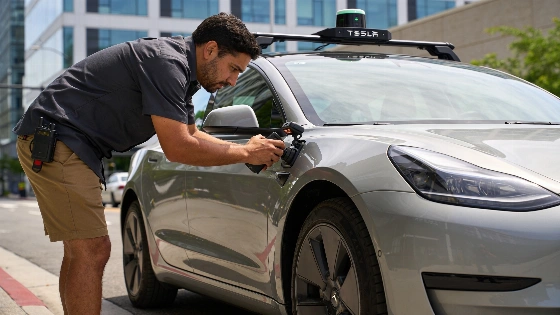
Robotaxi operations are emerging as a central pillar of Tesla's growth narrative. As of July, Tesla has launched robotaxi services in five major U.S. markets, including a recent rollout in Miami, with four more cities reportedly in preparation. While this falls short of the company's initial goal of nine cities by mid-2026, the expansion is notable. In Texas, Tesla's robotaxi fleet grew by over 100 vehicles in a single month, reaching 175 units. However, the absolute scale remains modest, and not all markets operate at the same level of autonomy-San Francisco, for example, still requires a safety driver in each vehicle.
Bank of America's analysis found that Tesla's robotaxi rides in San Francisco are priced about 21% lower than competitors like Waymo, Uber, and Lyft, but estimated arrival times are significantly longer. The bank also noted 22 reported incidents involving Tesla robotaxis through mid-June, none resulting in serious injuries or fatalities. For comparison, Waymo reported 2,000 incidents over more than 200 million miles. The data suggests Tesla's service is still ramping up and faces operational hurdles, including fleet density and dispatch efficiency.
Automotive and Energy Performance
Tesla's automotive segment delivered a positive surprise in the second quarter, with approximately 480,000 vehicles delivered-about 18% above consensus estimates and a 25% increase year over year. This performance outpaced the estimated 15% global growth in battery-electric vehicles, indicating Tesla gained nearly a full percentage point of global market share. In the U.S., Tesla's EV market share rose to 46.1%, even as some legacy automakers scale back lower-margin electric vehicle production. Notably, Tesla achieved this growth without another round of major price cuts, though average selling prices remain below 2022 levels.
Beyond vehicles, Tesla is advancing its Optimus humanoid robot project, with initial production at its Fremont facility expected by late July or August and Texas output planned for 2027. Bank of America expects a gradual production ramp, with meaningful volumes unlikely before then. Tesla's recent 25-GWh NatPower Megapack deal also highlights the growing importance of its energy storage business as a revenue driver.
Valuation Risks and Financial Assumptions
Bank of America's $460 price target is based on a sum-of-the-parts approach, valuing Tesla's automotive business at eight times long-term enterprise value to EBITDA, and applying separate discounted cash flow models for robotaxi, FSD, Optimus, and energy storage through 2040. These long-range forecasts rely on aggressive assumptions, such as 40% penetration of Optimus in U.S. manufacturing and 35% in U.S. households, as well as robust international growth for FSD subscriptions. The bank uses a 10.2% weighted average cost of capital for robotaxi and 11.2% for energy, with terminal growth rates of 4.5% and 3%, respectively.
Despite the bullish outlook, the model's sensitivity to small changes in discount rates, terminal growth, and margins makes the valuation difficult to audit. Free cash flow is projected to swing from a positive $6.2 billion in 2025 to a negative $10.3 billion in 2026, remaining negative through 2028. Margins are expected to recover from 4.6% in 2025 to 8.2% by 2028, but would not surpass 2024 levels until the final year of the forecast.
For context, a similar dynamic is playing out in the tech sector, where analysts have also raised expectations for Apple ahead of its earnings report. For more on how analyst upgrades can impact stock targets, see this recent coverage of Apple's price target reset: Apple's price target reset ahead of earnings.
According to Tesla's official second-quarter report, the company delivered 480,000 vehicles, up from 384,000 in the same period a year earlier. Tesla's U.S. market share for electric vehicles increased to 46.1% in the second quarter of 2026, while the company's closing share price on July 17 stood at $391.06, down 45% from its post-listing peak but still reflecting significant investor interest in the company's long-term prospects.
Valuing a company like Tesla requires understanding the difference between traditional automotive metrics and the assumptions embedded in high-growth technology businesses. Discounted cash flow models, especially those projecting out to 2040, can be highly sensitive to small changes in growth rates, discount rates, and margin assumptions. Investors should be aware that while long-term forecasts can justify higher valuations, they also introduce greater uncertainty and make it harder to evaluate whether a company's future performance will match optimistic projections. As Tesla expands into new markets and technologies, the gap between headline growth stories and underlying financial results may widen, underscoring the importance of scrutinizing both the numbers and the assumptions behind them.