Rocket Lab's latest earnings report showed strong growth in its Space Systems division, but a dip in launch revenue. Bank of America remains bullish, calling the stock's pullback an opportunity for investors seeking exposure to the space sector
Bank of America is maintaining its positive outlook on Rocket Lab after the company's second-quarter results revealed a mixed performance. While Rocket Lab's Space Systems division posted robust growth, its launch services revenue fell short of Wall Street's expectations, leading to a modest pullback in the stock. Despite this, Bank of America reiterated its Buy rating and $115 price target, which implies significant upside from the share price used in its August 10 analysis.
The bank views the recent weakness in Rocket Lab shares as a potential entry point for investors, citing the company's expanding Space Systems business, a record order backlog, and a stronger revenue forecast for the third quarter. According to Bank of America, these factors outweigh the temporary softness in launch revenue and support the case for continued growth.
Revenue Breakdown and Backlog Growth
For the second quarter, Rocket Lab reported revenue of $234.1 million, a 62% increase from the same period last year. This result exceeded Bank of America's internal estimate but came in just below the broader Wall Street consensus. The shortfall was primarily due to a 4% year-over-year decline in launch services revenue, which totaled $44.6 million. In contrast, Space Systems revenue nearly doubled to $189.5 million, driven by contracts related to the Space Development Agency's Tranche II and III programs and strong demand for spacecraft components.
Bank of America noted that Space Systems revenue surpassed its own projections, highlighting the division's momentum. Rocket Lab also secured more than $437 million in new launch contracts during and after the quarter, pushing its total launch backlog above 90 missions. At quarter's end, the company reported a record $2.36 billion in total backlog, up 137% from a year earlier. Approximately 45% of this backlog is expected to convert to revenue within the next 12 months, supporting the company's near-term growth outlook.
Profitability and Forward Guidance
Rocket Lab narrowed its GAAP net loss to $49.3 million in the second quarter, compared to a $66.4 million loss a year ago. Gross profit rose to $84.6 million from $46.4 million, reflecting improved operational efficiency. The company's adjusted EBITDA loss for the quarter was $8.8 million, which was better than both Bank of America's estimate and the consensus forecast.
Looking ahead, Rocket Lab projects third-quarter revenue between $250 million and $265 million. At the midpoint, this would represent roughly 66% year-over-year growth and would exceed the consensus estimate cited by Bank of America. The company expects an adjusted EBITDA loss of $17 million to $23 million for the third quarter, reflecting ongoing investment in growth initiatives.
Risks and Long-Term Outlook
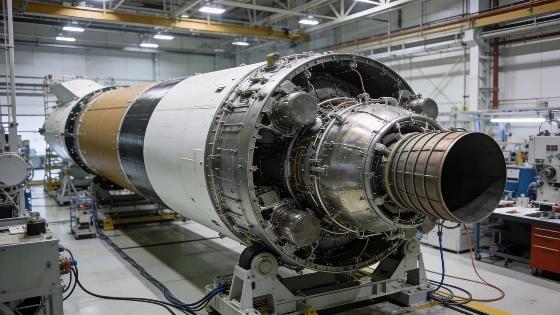
Rocket Lab's Neutron rocket remains a key variable in the company's long-term strategy. Production of the Stage 1 tank is on track for a fourth-quarter 2026 launch pad delivery, with hardware assembly and testing underway. However, Bank of America cautions that development timelines for Neutron are still uncertain, and any delays could impact future revenue and investor sentiment.
The bank's $115 price target is based on a discounted cash flow analysis that incorporates a range of scenarios through 2045. Downside risks include potential production setbacks, challenges in integrating acquisitions, and execution issues in the Neutron program. Despite these uncertainties, Bank of America remains optimistic about Rocket Lab's prospects, pointing to the company's strong backlog, accelerating Space Systems growth, and improving profitability metrics.
For investors tracking the broader aerospace sector, recent developments such as the shifting supplier landscape following Magellan Aerospace Middletown's bankruptcy-covered in detail in this analysis of Howmet Aerospace's position-underscore the importance of scale, diversification, and execution in a rapidly evolving industry.
According to company filings, Rocket Lab's backlog at the end of the second quarter stood at $2.36 billion, with 46% expected to be recognized as revenue over the next year. The company's Space Systems division generated $189.5 million in quarterly revenue, up from $97.9 million a year earlier, while launch services revenue declined to $44.6 million. The company's gross profit margin improved, and its net loss narrowed compared to the prior year.
Understanding the dynamics of the space industry requires attention to both the cyclical nature of launch demand and the growing importance of satellite and spacecraft component businesses. Companies like Rocket Lab are increasingly relying on diversified revenue streams to offset volatility in launch schedules and to capture value from government and commercial contracts. For investors, evaluating the sustainability of backlog growth, the pace of new contract wins, and the execution of major development projects like Neutron is essential to assessing long-term potential and risk in this sector.