BlackRock is raising over $12 billion in bonds to finance a Meta Platforms data center in Texas, but the debt won't sit on BlackRock's own balance sheet-reshaping how Wall Street approaches risk and recurring fees in the AI infrastructure boom
BlackRock, the world's largest asset manager, is making a high-profile move into the artificial intelligence infrastructure race-but not as a builder. Instead, BlackRock is acting as a lender, seeking to raise more than $12 billion in bonds to fund a massive Meta Platforms data center campus in El Paso, Texas. The structure of this deal signals a shift in how major financial players are positioning themselves to profit from the AI buildout while managing risk exposure.
Unlike traditional corporate borrowing, the bonds for this project are being issued by a holding company-Project Sopaipilla Holdings-that owns BlackRock's stake in the data center, according to Bloomberg. This means the debt is backed by the project's own cash flows and assets, not BlackRock's corporate balance sheet or credit rating. If the facility underperforms, losses are largely contained within the project entity, insulating BlackRock shareholders from direct impact.
Ownership and Financing Structure
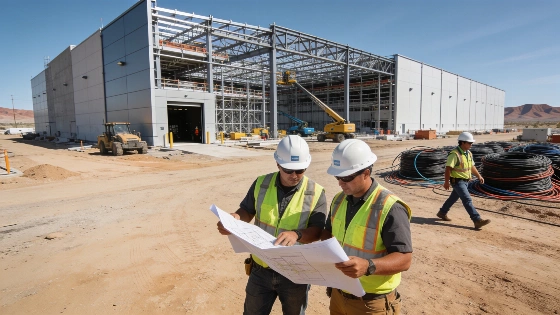
The El Paso data center's ownership is split between BlackRock-managed funds, which hold 80% through Global Infrastructure Partners and HPS Investment Partners, and Meta Platforms, which owns the remaining 20% and will serve as the anchor tenant. The financing could ultimately reach $13 billion, with JPMorgan Chase and Morgan Stanley arranging calls with fixed-income investors and pricing expected soon. This approach allows BlackRock to scale its involvement in AI infrastructure without taking on the full risk profile of the underlying assets.
Market reaction to the announcement has been muted. BlackRock shares recently closed near $1,063, up about 1.8% over five trading days but still down roughly 21% year-to-date. The limited stock movement reflects the fact that the risk is largely isolated from BlackRock's core operations, a key consideration for investors evaluating the company's long-term fee potential.
Fee Growth and Asset Base Expansion
For BlackRock, the real opportunity lies in recurring management fees. The company earns ongoing fees from infrastructure and private-credit assets held within Global Infrastructure Partners and HPS, and these fees grow as the asset base expands. BlackRock reported record assets under management of $15.34 trillion as of July 15, 2026, with second-quarter revenue reaching $7.08 billion, up 31% from a year earlier. Private markets drew $15.4 billion in net inflows for the quarter, including $5.2 billion into infrastructure, according to Yahoo Finance.
This strategy positions BlackRock as a preferred financier for tech giants seeking to expand AI capacity without burdening their own balance sheets. The company's role as an arranger and manager of infrastructure debt is increasingly central to its growth story, as recurring fee income from these deals is both durable and high-margin. For context, Nvidia's $4 trillion global data center forecast highlights the scale of capital flowing into AI infrastructure, as discussed in this analysis of Nvidia's AI-driven energy impact.
Why Texas and El Paso?
The choice of El Paso, Texas, is strategic. Texas operates its own power grid through ERCOT, which is largely outside federal oversight. This independence allows for faster, more flexible power contract negotiations-an advantage for projects requiring large-scale electricity on tight timelines. El Paso also offers relatively inexpensive land and room for expansion, both critical for a facility expected to draw enormous power as it ramps up. Meta has already committed more than $10 billion to the site, targeting one gigawatt of capacity by 2028, according to CNBC.
Such a large corporate commitment from Meta underpins the project's financial stability and helps support the bond issuance. Still, the project's reliance on the ERCOT grid means it is exposed to Texas's history of extreme weather and price volatility, which could affect operating costs and uptime.
Risks and Investor Considerations
Despite the clean structure, two main risks stand out for investors. First, the dependence on Texas's power grid exposes the project to potential disruptions from weather events or price spikes, which could impact profitability. Second, the concentration risk is significant: Meta is the primary tenant, so any change in its AI spending plans could alter the project's economics. Meta's capital budget for the year is as high as $145 billion, but spending priorities can shift, and a single anchor tenant creates a single point of failure.
There is also a broader market context to consider. The market for data center debt has grown rapidly, with more than $20 billion in high-yield bonds and loans launched in a recent three-week period, according to Yahoo Finance. Some investors are showing signs of fatigue, and the pricing of BlackRock's bonds will test the market's appetite for additional exposure to this sector.
What to Watch Next
For BlackRock shareholders, the near-term impact of this deal is likely to be modest, since the debt is ring-fenced within the project. The longer-term payoff will show up in the company's fee-earning asset base, not in a single quarter's results. Key indicators to monitor include the pricing and demand for the upcoming bond sale, ongoing inflows into infrastructure and private-market funds, Meta's future capital spending guidance, and BlackRock's stock performance relative to its 52-week high near $1,220.
Ultimately, BlackRock's approach to the AI infrastructure boom is about building a steady stream of management fees while keeping the largest risks off its own books. For investors, the rewards are likely to accrue gradually as the company's asset base and fee income continue to grow-provided the underlying projects perform as expected and market demand for infrastructure debt remains strong.
Infrastructure debt is a specialized segment of the bond market, often used to finance large-scale projects like data centers, energy facilities, and transportation networks. Unlike traditional corporate bonds, these instruments are typically backed by the cash flows and assets of the specific project rather than the parent company's balance sheet. This structure can offer higher yields but also introduces unique risks, such as project delays, cost overruns, or reliance on a single tenant or revenue source. For investors, understanding the nuances of project finance and the underlying contractual arrangements is essential before considering exposure to this asset class.