Nvidia CEO Jensen Huang projects global data center spending could hit $4 trillion by 2030, far outpacing Wall Street estimates and fueling a surge in electricity demand that may drive up U.S. household utility bills and inflation in coming years
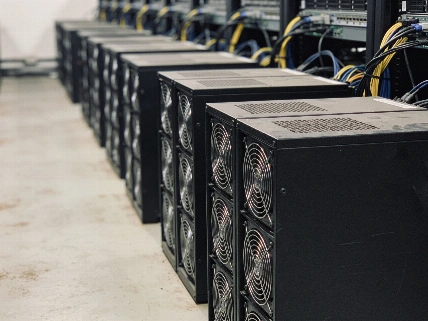
The rapid expansion of artificial intelligence is driving a surge in demand for data centers, and with it, a dramatic increase in electricity consumption that is beginning to affect American households. Nvidia, the dominant supplier of AI chips, is at the center of this transformation. CEO Jensen Huang has told investors he expects global annual capital expenditures on data centers to reach $3 trillion to $4 trillion by the end of the decade, according to CNBC. That figure is several times higher than most Wall Street forecasts and signals a scale of infrastructure buildout that could have far-reaching economic consequences.
AI Spending Forecasts Diverge Sharply
Huang's projection stands in stark contrast to the consensus among analysts and industry participants. Needham's Laura Martin, cited by CNBC, notes that hyperscale cloud providers are expected to spend about $1 trillion annually on capital expenditures by 2028. Bank of America recently raised its estimate for the total addressable market for AI data center systems to $1.7 trillion by 2030, up from $1.4 trillion, reflecting how quickly expectations are shifting. Still, Nvidia's forecast is more than double even these revised figures, highlighting the uncertainty around how fast AI infrastructure will scale.
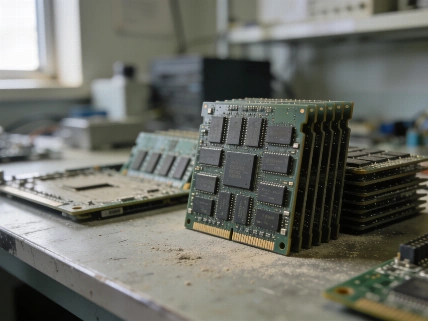
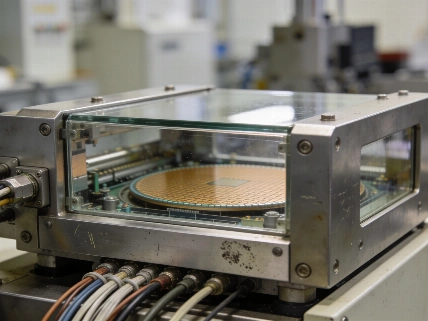
Nvidia's own financial results underscore the momentum behind Huang's vision. In its most recent quarter, the company reported $81.6 billion in revenue, up 85% from a year earlier. Data center revenue alone surged 92% to $75.2 billion. Nvidia's market capitalization now hovers near $4.9 trillion, briefly trading places with Apple as the world's most valuable public company in July 2026. Despite this growth, some analysts remain cautious about the durability of Nvidia's dominance, noting that the company currently accounts for about 85% of AI processor revenue, with AMD and custom chips making up the rest.
Electricity Demand Hits Home
For U.S. consumers, the most immediate impact of the AI boom may be felt in their monthly utility bills. As data centers proliferate to support AI workloads, their appetite for electricity is reshaping the energy market. Goldman Sachs analysts project that consumer electricity inflation will run at about 6% through 2026 and 2027, before easing to 3.5% in 2028 as natural gas prices moderate. Data centers are expected to account for roughly 40% of total electricity demand growth over the next five years, with the burden falling disproportionately on lower-income households, who spend a larger share of their income on utilities.
Households located near major data center clusters may see even steeper increases. Gartner projects that global data center power demand will rise 27% in 2026 alone, reaching 132 gigawatts, and could more than double to 290 gigawatts by 2030. The unprecedented pace of generative AI adoption is a key driver of this expansion. As utility costs rise, Goldman Sachs estimates that core inflation will increase by 0.1 percentage point in both 2026 and 2027, with higher energy costs filtering into prices for medical services, food, vehicles, and clothing. Consumer spending growth could slow by 0.2% through 2027 as higher electricity bills reduce disposable income, contributing to a modest drag on overall economic growth.
China's Role and Regulatory Wild Cards
One major variable in Nvidia's outlook is the status of its business in China. U.S. export restrictions have sharply limited shipments of advanced AI chips to Chinese customers, but recent comments from the Commerce Department suggest that some sales may be resuming. If regulatory barriers continue to ease, the Chinese market could provide a significant new growth channel for Nvidia, potentially accelerating the company's path toward Huang's ambitious infrastructure spending target. This dynamic echoes the high-stakes competition seen in other technology sectors, such as the satellite launch industry, where companies like Rocket Lab have made bold moves to capture market share-see how the space race is evolving in this analysis of Rocket Lab's Iridium acquisition.
Even if Nvidia never reaches a $20 trillion valuation, the scale of investment and energy consumption behind the AI boom is already rippling through the broader economy. From utility bills to grocery prices, the effects of this infrastructure wave are becoming harder for American households to ignore.
In the first quarter of fiscal 2027, Nvidia guided to $91 billion in revenue for the following quarter, nearly doubling its year-ago performance. This outlook assumes no data center compute revenue from China due to ongoing export controls, underscoring how regulatory shifts could further alter the company's trajectory. Meanwhile, hyperscale cloud providers are locking in multi-year supply contracts with Nvidia, often with upfront payments, signaling confidence in sustained demand for AI hardware even as some investors question the longevity of current growth rates.
As the AI infrastructure buildout accelerates, the intersection of technology, energy, and household finances is likely to remain a central issue for U.S. consumers and policymakers alike.
Data from the U.S. Energy Information Administration shows that average residential electricity prices in the United States rose to 16.2 cents per kilowatt-hour in 2025, up from 14.1 cents in 2022. This increase reflects both higher fuel costs and growing demand from commercial and industrial users, including data centers. The EIA projects continued upward pressure on prices as AI-driven infrastructure expands, with regional variations depending on local energy supply and demand.
Understanding the mechanics of data center energy use is crucial for grasping the broader economic impact of AI. Data centers require vast amounts of electricity not only to power servers but also to cool equipment and maintain reliability. As more AI applications move from research labs to commercial deployment, the need for high-density computing infrastructure grows. This creates a feedback loop: more AI means more data centers, which in turn drives up energy demand and, ultimately, costs for consumers and businesses. Policymakers and utilities are now grappling with how to balance innovation with the need for affordable, reliable power.