
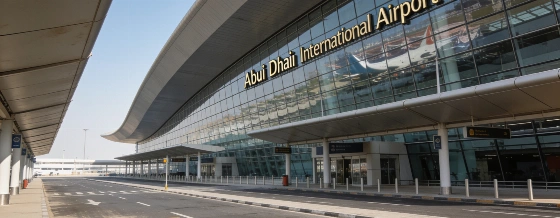
British Airways has removed all London to Abu Dhabi flights from its schedule, leaving Etihad as the sole carrier on the route and signaling deeper fallout from ongoing Middle East instability
British Airways has removed its entire London to Abu Dhabi route from future schedules, leaving the United Arab Emirates capital without direct service from the UK's flagship airline for the foreseeable future. This decision, confirmed by industry schedule data, follows repeated delays and escalating security concerns in the region.
The implications for travelers and investors are immediate. British Airways had previously planned to resume six weekly flights to Abu Dhabi International Airport in early 2027, but these flights have now been withdrawn from all published timetables. Although the airline has not issued a formal press release, the removal is evident in industry databases and was first reported by aviation analytics firms. Refunds are being processed for affected bookings, and no new tickets are available for the route.
As of early September 2026, British Airways' Abu Dhabi service remains suspended, with no active direct flights listed in UAE travel trackers or industry updates.
This decision is driven by a significant increase in regional risk following the U.S. strike on Iran in early 2026. Airspace restrictions, rising insurance costs, and the threat of further conflict have led most Western carriers to reassess their Middle East operations. While airlines such as United Airlines and American Airlines have also delayed or suspended routes to Dubai and Doha until at least 2027, British Airways' complete withdrawal from Abu Dhabi represents the most definitive action by a major European carrier to date.
Historically, Abu Dhabi has attracted less international air traffic than Dubai, but British Airways' exit now gives Etihad Airways, the UAE's state-owned flag carrier, a clear advantage. Etihad is currently the only airline offering direct London-Abu Dhabi service, operating four weekly flights on widebody aircraft. Emirates, based in Dubai, continues to dominate the broader UK-UAE market, but for Abu Dhabi, the competitive field has narrowed to a single provider.
Reuters reported in March 2026 that British Airways had already been cancelling or temporarily suspending services across several Middle East markets, including Abu Dhabi, Amman, Bahrain, Doha, Dubai, Tel Aviv and Riyadh, citing ongoing uncertainty and airspace restrictions.
British Airways had only recently resumed daily flights to Abu Dhabi in April 2024 after a four-year pandemic-related suspension. However, the deteriorating security environment quickly made long-term planning unsustainable. According to a travel industry update, British Airways' Abu Dhabi service remains suspended in public guidance, with no active direct flights listed as of September 2026.
Other carriers are taking similar measures. United Airlines has postponed the restart of its Newark to Dubai route to March 2027, and American Airlines has delayed its Doha service until at least the same year. The trend is clear: major Western airlines are unwilling to commit to Middle East routes until the security and insurance environment stabilizes.
For U.S. investors and travelers, British Airways' withdrawal highlights the fragility of international air connectivity in volatile regions. The move also underscores the operational leverage that state-backed airlines like Etihad and Emirates possess when private competitors reduce service. As seen in the recent closure of dozens of Simmons Bank branches, abrupt changes in service can leave entire markets underserved and consumers with fewer options.
According to the International Air Transport Association (IATA), air passenger demand in the Middle East declined by 8.7% year-over-year in the first quarter of 2026, with the steepest drops on routes affected by conflict and airspace closures. Insurance premiums for flights traversing the region have more than doubled since January, and several carriers have rerouted or suspended service entirely.
British Airways' decision to exit Abu Dhabi is not only a response to immediate risk but also a strategic retreat from a market where uncertainty now outweighs potential profit. The airline's willingness to yield ground to state-owned rivals marks a shift in international aviation, where private carriers may increasingly avoid regions with unpredictable security and regulatory conditions. For travelers, this results in fewer choices and higher fares on remaining routes. For investors, it serves as a reminder that geopolitical risk can disrupt even the most established business models with little warning.
Direct flights between major cities are fundamental to global business and tourism, but their viability depends on a complex interplay of security, insurance, and regulatory factors. When one element in this chain fails-due to conflict, policy, or market forces-entire routes can disappear, sometimes for extended periods. The British Airways withdrawal from Abu Dhabi illustrates how quickly international connectivity can unravel when risk becomes unmanageable.