Warren Buffett's disciplined approach urges investors to resist panic selling during 2026's market swings, as Berkshire Hathaway shifts billions into stocks and data shows long-term holders consistently outperform those who react to headlines.
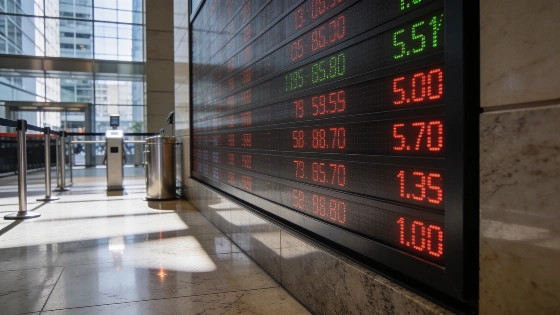
As the Dow dropped 374 points following U.S. strikes against Iran and the S&P 500's record run faltered, investors faced a familiar dilemma: sell in fear or hold steady. Warren Buffett, whose investing career spans more than seventy years, is wagering that most will misjudge this moment-just as they did during past crises.
By the end of Q2 2026, Berkshire Hathaway became a net buyer of stocks for the first time in about three and a half years, purchasing $23.5 billion in external equities while selling $3.7 billion.
Fed Policy Shifts and Market Crosscurrents
Recent market swings have been fueled by geopolitical shocks, surging oil prices, and shifting Federal Reserve expectations. By August 31, 2026, traders assigned a 60-66% probability to a 25 basis point Fed rate hike at the September 15-16 meeting, according to Reuters. This marked a sharp reversal from earlier forecasts of a rate cut, as policymakers signaled a more hawkish stance. The 30-year Treasury yield climbed to 4.9%, its highest since 2007, raising borrowing costs and pressuring equities, even as technology stocks posted gains.
Despite these headwinds, the S&P 500, Dow, and Nasdaq all reached new highs in 2026, though returns slowed to single digits after May. The temptation to sell at the first sign of trouble remains strong-precisely the behavior Buffett has cautioned against for decades.
Berkshire's Moves Signal Opportunity, Not Fear
On September 1, 2026, Reuters reported that Wall Street volatility persisted amid higher yields and rising oil prices, with the probability of a Fed rate hike in September estimated at 68.2% by FedWatch. After comments from Fed official Waller on September 3, this probability dropped to 50.4%.
Buffett has long argued that ordinary pullbacks rarely justify aggressive buying. He waits for genuine panic-when, as he once said, "nobody will answer their phones because the markets are collapsing." He's also criticized the speculative surge in short-term options trading, likening the market to "a church with a casino attached." Yet his core principle endures: the best opportunities arise when fear is widespread, not when confidence is high.
Long-Term Discipline Outperforms Market Timing
Historical data supports Buffett's approach. Investors who bought during the depths of the 2008-2009 crisis captured the lion's share of the S&P 500's more than 1,000% rally from its lows. Those who sold in panic missed the recovery. As previously reported, Buffett's rare pivots-such as Berkshire's foray into technology-have been driven by long-term value, not short-term trends.
Buffett's 2008 warning about "hapless" investors who buy only when comfortable and sell at the first sign of trouble remains relevant. This pattern explains why some lose money even during decades of market growth. The evidence is clear: time in the market, not timing the market, is what builds lasting wealth.
Risks and Rewards for U.S. Investors
For U.S. households and retirement savers, the stakes are tangible. Selling now to avoid a potential downturn risks missing further gains if the rally resumes, while staying invested through corrections has historically rewarded those holding quality companies. The S&P 500's long-term trajectory has favored those who endure volatility rather than react to it.
Federal Reserve policy remains a key variable. Persistent inflation or escalating geopolitical risks could trigger more volatility. Yet Buffett's record-having seen Berkshire's stock drop over 50% three times without capitulating-demonstrates that discipline, not emotion, is the rarest and most valuable asset in investing. Investors who let headlines dictate their moves are more likely to lock in losses than sidestep them. The real winners are those who can separate noise from signal and act only when the odds are decisively in their favor.
As of August 2026, the S&P 500 hovered near all-time highs, but the CBOE Volatility Index (VIX) spiked above 22, reflecting heightened uncertainty. The 30-year Treasury yield reached 4.9%, and oil prices surged past $90 per barrel amid renewed Middle East tensions. These figures highlight the market's sensitivity to macroeconomic and geopolitical shocks, even as corporate earnings in sectors like technology remain robust.
Market pullbacks are inevitable, but panic selling is a choice. Buffett's track record shows that the market's greatest rewards accrue to those who maintain composure when others lose theirs. Ultimately, the discipline to stay invested through turbulence-rather than chasing comfort or fleeing at the first sign of trouble-remains the most reliable edge for ordinary investors. Price swings may dominate headlines, but true value changes slowly. Those who focus on long-term growth, factoring in dividends, buybacks, and compounding, are best positioned to build enduring wealth in the stock market.