
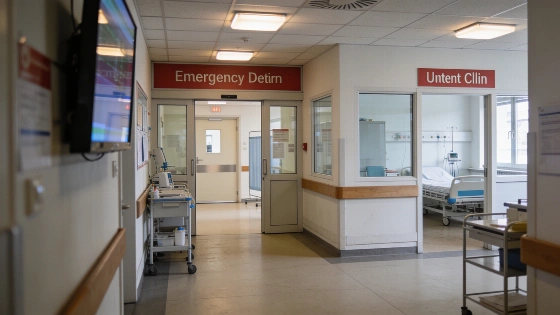
Patients would be assessed before being sent to a hospital or outpatient care. The Bundestag also approved insurance-rule changes as officials forecast a 2.9% average contribution rate for next year.
The first assessment could happen face to face, by phone or through a digital service. Germany's parliament approved the emergency-care reform on Oct. 15, 2026, aiming to send patients to the level of care their condition requires and ease avoidable pressure on hospital emergency departments. The legislation links the physician on-call service with hospital emergency departments. It also coordinates ambulance services and revises parts of a recent statutory health-insurance savings package, including rules affecting doctors and insurers.
The Bundesrat, Germany's upper house, still must consider the reform before the legislative process is complete. According to dpa-AFX, the chamber was expected to hold its final deliberation on Nov. 20.
One route for emergency care
The plan links Germany's emergency number 112 with the physician on-call service at 116117. After an initial assessment, patients could be directed to a doctor's office or an after-hours clinic. Other options include telemedicine and a home visit. Patients may also be sent to an integrated emergency center or a hospital emergency department. Ambulance services could be involved when the case calls for them. The Bundestag's reform plan keeps 112 for life-threatening emergencies and expands 116117's role in arranging outpatient care.
Hospitals selected for the scheme would host integrated emergency centers, known by the German abbreviation INZ. Each center would include a hospital emergency department and an attached physician on-call practice. A central point would carry out the initial assessment. The proposed network is expected to comprise about 750 centers. Patients would be assessed and then routed to inpatient or outpatient care, rather than automatically sent to a hospital emergency department.
The reform also calls for integrated dispatch services to coordinate emergency responses. Digital connections would link the different care channels. The federal government planned €225 million over five years from its special fund to support related measures. The stated goal is to match the destination and form of care to the urgency of a patient's condition.
That distinction has practical consequences. When an on-call practice can treat a patient, the hospital emergency department can reserve capacity for cases that need hospital care. An unnecessary ambulance dispatch can also tie up a resource needed elsewhere.
For suspected heart attack or stroke, severe injury, serious shortness of breath or immediate danger to life, the guidance remains to call 112. For urgent problems that are not life-threatening, 116117 is intended to provide an initial assessment and help arrange suitable care.
Changes to insurance savings
The Bundestag attached revisions to the government's recent statutory health-insurance savings package. The changes remove a cost provision affecting family doctors and pediatricians. They also eliminate certain deductions tied to physician-centered care arrangements and improve payment rules for psychotherapy.
Insurers would again have to notify members when they raise the additional contribution rate. The adopted draft also changes doctors' obligations to report appointment availability. The stated aim is to create better conditions for effective appointment placement. Lawmakers considered these revisions alongside the emergency-care measures.
Governing-party lawmakers argue that the savings measures are working, even as the package is adjusted. The revisions approved alongside the emergency-care reform do not provide an estimate of the package's overall savings.
What the 2.9% figure says
A day before the Bundestag debate, the statutory health-insurance estimator group reported a calculated average additional contribution rate of 2.9% for the following year. That figure was unchanged from its previous forecast. Health Minister Carsten Linnemann said the average rate would remain stable. SPD health-policy lawmaker Christos Pantazis described the forecast as evidence that efforts to stabilize insurance finances were bearing fruit.
The 2.9% figure is an average forecast, not a guarantee that every insured person's contribution will stay the same. It refers to statutory health-insurance financing in Germany. Individual insurers set their own additional contribution rates.
The average rate is a system-level indicator, not the precise cost faced by every member. The additional contribution is part of statutory health-insurance financing. The emergency reform's triage rules concern how patients reach care. The Bundestag approved the measures together. The emergency-center plan is intended to coordinate care and ease pressure on hospital emergency departments.