A sudden shift in AI industry sentiment has put CoreWeave in the crosshairs as Bernstein singles out the company's rural data center strategy for heightened risk if AI training slows
CoreWeave's stock declined sharply after Bernstein identified it as the most vulnerable company in the AI infrastructure sector, highlighting a significant shift in how Wall Street evaluates data center operators. Shares fell nearly 7% to $82.98 on September 14, a steeper drop than sector peers, underscoring that location and business model are now more decisive than general AI enthusiasm.
On September 14, 2026, CoreWeave CEO Michael Intrator was scheduled to testify before a U.S. Senate Commerce Committee hearing titled 'Winning the AI Race,' highlighting the company's role in the national debate over AI infrastructure and safety.
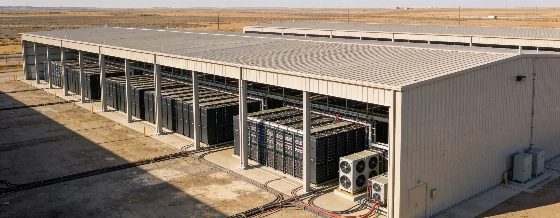
This contradiction unsettled investors who had anticipated sustained spending on AI infrastructure. Bernstein's analysis clarified which data center stocks are best positioned if AI training demand slows. CoreWeave emerged as particularly exposed. Bernstein analyst Madison Rezaei noted that approximately 25% of CoreWeave's active U.S. power is located in rural Tier 3 and Tier 4 markets-sites optimized for training rather than the low-latency inference workloads prevalent in metropolitan areas. Additionally, 74% of its contracted but not yet active power is also concentrated in these rural locations.
This geographic strategy now appears risky. Training workloads can operate at a distance from end users, but inference-the process of running AI models in real-world applications-requires proximity to customers. If the industry shifts toward slower training cycles and increased inference, CoreWeave's rural expansion could become a liability. While the company's current backlog is supported by take-or-pay contracts, future growth tied to rural capacity is less assured.
Reuters reported that CoreWeave began in 2017 as Atlantic Crypto and shifted into data centers after the 2018 bitcoin crash, which helps explain why it is now heavily exposed to AI infrastructure demand.
Metro advantage
In contrast, Bernstein views Equinix, Digital Realty, and Csquare as better positioned. Each maintains over 90% of its U.S. capacity in major or minor metropolitan markets, enabling them to serve inference workloads that require low latency. Bernstein rates all three Outperform, with price targets of $1,270 for Equinix, $226 for Digital Realty, and $27 for Csquare. The analysis indicates that as AI shifts from training to inference, metro-based data centers will become increasingly valuable.
The September 14 sell-off was not limited to CoreWeave. Other neocloud providers such as Nebius, Applied Digital, DigitalOcean, and IREN also recorded losses between 4% and 8%. Networking equipment manufacturers and chip suppliers involved in the AI buildout-including Lumentum, Ciena, Coherent, Arista Networks, Marvell, Arm, AMD, Intel, and Broadcom-experienced declines as well, reflecting a broader reassessment of risk across the supply chain.
Sector shakeout
During much of the AI boom, infrastructure stocks moved in tandem, responding to overall demand trends. Bernstein's note signals a shift: investors are now focusing on where a company's capacity is located, not just its total volume. This change recalls the late-1990s telecom fiber buildout, when operators who misjudged timing and location faced losses long before demand caught up.
Recent market volatility has prompted investors to reconsider broad-based bets on AI infrastructure. As reported by Reuters, Amodei's call for a slowdown included a three-step framework: independent evaluators, coordination among leading firms, and international cooperation. The proposal has sparked global debate, with China's state-backed Global Times criticizing it as a "Cold War" tactic aimed at China, according to Reuters.
Federal Reserve data shows that U.S. nonfinancial corporate debt reached $13.7 trillion in the second quarter of 2026, a 4.2% increase from the previous year. The rapid growth in AI infrastructure capital spending has contributed to this debt, raising concerns about the sustainability of aggressive expansion if demand forecasts are revised downward.
CoreWeave's situation illustrates how quickly market narratives can change. The company's rural expansion, once viewed as a strategic move to capture AI training demand, now exposes it to the risk of underutilized assets if industry priorities shift. Investors who previously treated AI infrastructure as a uniform investment are now examining details such as geography, contract structures, and customer composition. The key takeaway: in a sector defined by rapid change, yesterday's growth strategy can quickly become a source of risk.
Data centers are the physical foundation of the digital economy, but not all capacity is equally valuable. Facilities in major metropolitan areas are sought after for their ability to provide low-latency services to dense populations and enterprise clients. Rural data centers, while less expensive to build and operate, may find it challenging to attract inference workloads that require proximity to end users. As AI adoption evolves, the distinction between training and inference infrastructure will determine which operators succeed and which may be left with underused assets.