New York's one-year pause on large data centers has rattled investors, but U.S. construction and demand for AI infrastructure continue to surge, with key suppliers reporting record backlogs and revenue outlooks
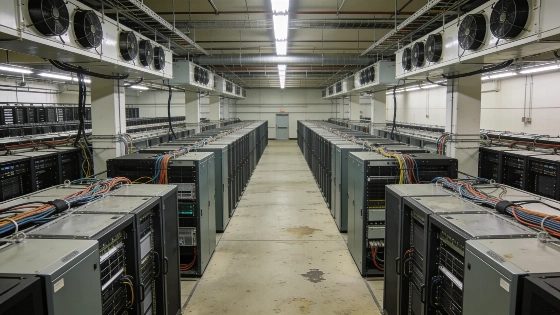
Investors in data center stocks are facing renewed uncertainty after New York became the first state to impose a one-year moratorium on new hyperscale data centers consuming more than 50 megawatts of power. The move, intended to give regulators time to develop consistent statewide standards and assess environmental impacts, has fueled concerns that nearly half of planned U.S. data centers for 2026 could be delayed or canceled. Yet, according to reporting by TheStreet, veteran fund manager Louis Navellier argues that the broader data center boom remains intact and that investors should not overreact to short-term headlines.
The New York moratorium, announced by Governor Kathy Hochul, is designed to pause construction and permitting for large-scale facilities while the state reviews the environmental footprint of these energy-intensive operations. Upstate New York has been a favored location for data centers due to its access to low-cost hydroelectric power and a direct-current grid from Hydro-Québec. Industry observers expect that, once new standards are finalized, construction activity in the region will likely resume.
U.S. Data Center Expansion
Despite regulatory headwinds in New York and scattered local opposition elsewhere, the U.S. data center market continues to expand rapidly. According to Stanford University's AI Index Report, there were 5,427 data centers in the U.S. at the end of 2025, with plans to add 3,969 more-802 of which are already under construction. In June, data center construction spending rose 7% to $68.3 billion, marking a 46% increase from the previous year. Supply chain constraints, including shortages of natural gas fuel cells, turbines, and memory chips, have caused some delays, but the overall order backlog is expected to extend through at least 2029 or 2030.
For investors, the key takeaway is that demand for data center infrastructure-driven by artificial intelligence, cloud computing, and digital services-remains robust. While some projects may face temporary setbacks, the long-term trajectory for the sector is still upward. This is reflected in the performance and outlook of companies that supply critical systems to data centers.
Key Suppliers Report Record Backlogs
EMCOR Group, Inc. (EME), which designs and installs power distribution and cooling systems for hyperscale and AI facilities, recently reported a 20% surge in its stock price after beating second-quarter earnings expectations and raising its full-year 2026 guidance. The company now forecasts revenue between $20 billion and $20.5 billion and earnings per share between $32 and $33.25, up from previous estimates. EMCOR's stock is currently rated a B in Navellier's grading system.
Comfort Systems U.S.A, Inc. (FIX), a provider of heavy-duty HVAC and modular cooling solutions for data centers, reported its project backlog jumped to $14.06 billion in the second quarter of 2026, up from $12.45 billion in the first quarter and $8.12 billion a year earlier. Management cited strong demand and the company's reputation for driving the year-over-year increase. Comfort Systems holds an A rating in Navellier's system.
Quanta Services, Inc. (PWR), which upgrades transmission lines and builds mission-critical electrical and communication systems for data centers, announced a record $53.4 billion backlog in the second quarter. For fiscal 2026, Quanta expects revenue between $39.3 billion and $39.7 billion and adjusted earnings per share between $16.45 and $16.95, both above current analyst projections. Quanta Services also holds an A rating in Navellier's grading.
Staying Invested Amid Policy Shifts
While the New York moratorium has heightened investor anxiety, the broader U.S. data center sector continues to attract capital and expand capacity. Companies supplying essential infrastructure are reporting record backlogs and raising their financial outlooks, suggesting that demand is likely to persist even as regulatory scrutiny increases. For those tracking sector trends, it's worth noting that institutional investors have also been making bold moves in related areas-Soros Fund Management, for example, recently increased its stake in Micron Technology despite volatility in AI chip stocks, as detailed in this analysis of recent fund activity.
For investors considering exposure to the data center supply chain, it's important to monitor both regulatory developments and the operational performance of key suppliers. While policy changes can introduce short-term volatility, the underlying demand for digital infrastructure remains a powerful driver for the sector.
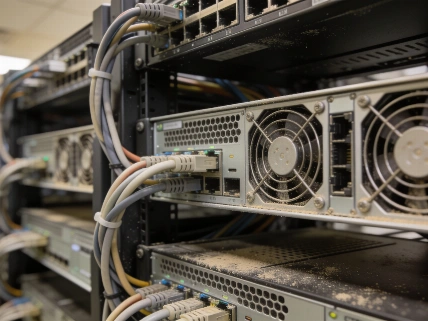
Data centers are capital-intensive facilities that house servers, networking equipment, and cooling systems to support cloud computing, AI, and digital services. Their rapid growth has raised concerns about energy consumption, land use, and environmental impact, prompting new regulations in some states. For investors, understanding the interplay between policy, technology demand, and supply chain capacity is essential to evaluating long-term opportunities and risks in this evolving sector.