AI investing may be shifting from chipmakers to businesses that deploy software, secure systems and supply power to the grid. Five ETFs offer different ways to track that next phase.
Nvidia accounts for 19% of SMH's portfolio. Four companies make up 35% of IGV's assets.
Those figures show why an ETF's label can tell only part of the story. The funds cover different parts of the AI supply chain, but their holdings overlap and some portfolios are concentrated.
Concentration still matters.
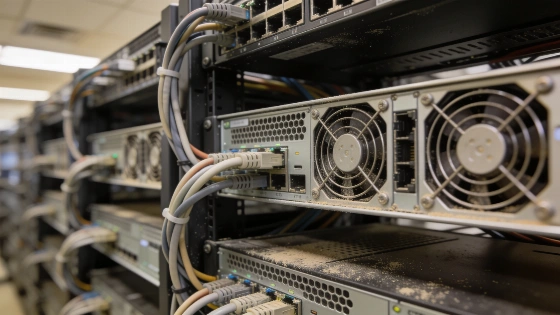
Servers use about 60% of the electricity consumed by modern data centers. Cooling accounts for roughly 7% in efficient hyperscale facilities, but can exceed 30% in less efficient corporate data centers.
Chips remain the base layer
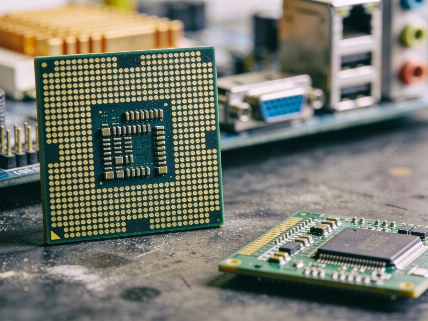
The VanEck Semiconductor ETF (SMH) holds companies that make the hardware behind AI computing. Demand for training large language models helped drive the first phase of the buildout. Wider use of AI for inference could also require substantial computing capacity. That may support continued demand, but it does not guarantee gains for semiconductor stocks.
Nvidia is SMH's largest holding at 19%. The fund also owns other chipmakers, equipment companies and memory providers. That spread does not remove the risk of sharp moves tied to the semiconductor industry. Investors can compare the portfolio with an earlier fund analysis of SMH's exposure to AI growth.
Cloud and software put capacity to work
Cloud providers connect AI infrastructure with companies that need computing resources and related services. The First Trust Cloud Computing ETF (SKYY) holds 65 companies. Its portfolio includes Everpure, DigitalOcean Holdings and Arista Networks. The fund covers a range of cloud businesses, rather than one AI application or a single infrastructure provider.
In its base-case outlook, the IEA expects electricity use by servers with accelerators, especially GPUs, to grow about 30% annually through 2030. Those servers are projected to account for nearly half of the increase in data-center electricity consumption.
Software offers another way to invest in how businesses use computing capacity. The iShares Expanded Tech-Software Sector ETF (IGV) holds just over 100 companies. Four of them, Palo Alto Networks, Palantir, CrowdStrike and Microsoft, account for 35% of its assets.
The investment case rests on businesses using AI for productivity through automation, analytics, coding and other applications. That is different from the established demand for chips. The technology's existence alone does not assure adoption or commercial success.
Adoption is not assured.
Security is part of the buildout
AI may make cybercrime easier to scale. That could increase pressure on companies to defend their systems. The First Trust Nasdaq Cybersecurity ETF (CIBR) holds businesses that sell those protections. Its five largest holdings are CrowdStrike, Fortinet, Palo Alto Networks, Cisco Systems and Broadcom.
The holdings matter more than a fund's name. CrowdStrike and Palo Alto Networks are also among IGV's concentrated positions. Owning both funds may add less diversification than their separate labels suggest.
Security spending may last, but the available research does not establish how quickly budgets will grow or which companies will win that business.
Electricity can constrain expansion
AI systems use significant amounts of electricity. The infrastructure that supplies data centers is struggling to keep pace with demand. The First Trust Nasdaq Clean Edge Smart Grid Infrastructure Index Fund (GRID) invests in companies that upgrade and expand that infrastructure. It does not own data center REITs. Its holdings include electrical-component manufacturers, industrial companies and electronic-equipment producers.
The IEA estimates global data-center electricity consumption could rise from about 485 terawatt-hours in 2025 to 950 terawatt-hours by 2030. That would equal around 3% of worldwide electricity demand. AI-focused data centers could triple their consumption over the same period. The World Bank cited the IEA outlook in its discussion of data-center power demand. IEA figures cited in that discussion also show data-center electricity use rose about 17% in 2025. Use at AI-focused facilities increased roughly 50%.
GRID is a less direct way to invest in AI than a chip or software fund. Its performance depends on companies tied to grid infrastructure, not simply on AI adoption. The link between power infrastructure and computing hardware has drawn attention as data-center demand grows. TheStreet's coverage of AI data-center power explores that connection.
A power bottleneck can make electrical equipment and infrastructure relevant to the AI buildout. It does not mean every company in GRID will benefit equally.
These ETFs offer targeted exposure. They are not substitutes for a diversified portfolio. Investors may already own some of the same companies through an S&P 500 or total U.S. stock market fund. The article's author would keep thematic ETFs from becoming a large portfolio allocation.
AI's investment chain extends beyond headline chipmakers. But narrow themes can overlap, concentrate risk and depend on uncertain business adoption. The next phase may involve computing, software, security and power. That does not make every link an equally attractive investment.