Soros Fund Management multiplied its Micron stake nearly eightfold in Q2 2026, defying a wave of institutional selling as the AI chipmaker posted record results and sector volatility intensified
George Soros, known for his high-conviction market moves, has sharply increased his exposure to Micron Technology, signaling a contrarian stance as many institutional investors reduce their positions in the AI chip sector. Soros Fund Management, based in New York, disclosed in its Q2 2026 13F filing that it raised its Micron stake from 2,824 shares to 22,422 shares, a nearly eightfold jump. The value of this holding soared from just under $1 million to nearly $26 million, reflecting a $24.9 million increase in capital committed to the stock.
This aggressive move comes as Micron shares, which recently traded near $940, remain up more than 229% year-to-date despite pulling back from a June 25 all-time high of $1,255. According to WhaleWisdom, Soros Fund Management reported $8.14 billion in managed 13F securities for the quarter, with Amazon as its largest holding, followed by TSM and Alphabet. Micron now ranks among the fund's most significant bets, even as other major hedge funds have been heading for the exits.
Contrarian Play Amid Institutional Selling
Soros's decision stands out against a backdrop of widespread selling by some of the most respected names in the hedge fund world. Data compiled by Seeking Alpha shows that Renaissance Technologies, Bridgewater, Appaloosa, Duquesne, Kerrisdale, and Discovery Capital all slashed or exited their Micron positions in Q2. Renaissance, for example, cut its stake from 2.16 million shares to just over 211,000, while Bridgewater reduced its holding by more than 90%. In contrast, Soros not only held firm but dramatically increased his exposure, joined by a handful of other funds like Altimeter Capital and Coatue Management that also added to or initiated Micron positions.
Soros's investment philosophy, known as reflexivity, is built on the idea that market participants' biases can create self-reinforcing cycles that drive prices away from fundamentals. He has a history of betting against consensus, especially when he believes the market is mispricing a structural trend. The recent wave of institutional selling, triggered in part by Micron's sharp pullback from its peak, appears to fit the kind of pessimism Soros has often faded in the past.
Micron's Record-Breaking Quarter
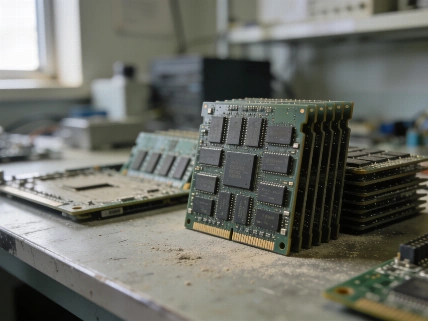
The timing of Soros's move coincides with Micron's strongest financial performance in its 47-year history. For fiscal Q3 2026, Micron reported revenue of $41.46 billion, up from $9.3 billion a year earlier. GAAP net income reached $28.24 billion, or $24.67 per diluted share, and operating cash flow hit $25.39 billion. The company also began high-volume shipments of its HBM4 memory for leading AI platforms. Looking ahead, Micron guided for Q4 revenue of $50 billion, gross margins of 86%, and non-GAAP EPS of $31.00, according to its official earnings release.
CEO Sanjay Mehrotra attributed these results to the strategic importance of memory in the AI era, emphasizing that multi-year customer agreements should help sustain strong financial performance. The company's position as the only U.S.-based manufacturer of advanced memory chips has also become more valuable as AI data centers now consume about 70% of global memory chip output. Hyperscale cloud providers have reportedly committed $22 billion in advance payments to secure supply, and Micron's HBM product line is sold out through 2027.
Macro Perspective and Market Dynamics
Soros is not known for bottom-up stock picking; his firm typically builds positions based on macroeconomic trends and policy shifts. The current AI infrastructure boom, fueled by government subsidies and multi-year capital spending by cloud giants, fits the kind of structural demand surge that Soros seeks. The ongoing shortage of advanced memory chips is not a short-term blip but the result of years of underinvestment followed by a sudden spike in demand.
From a reflexivity standpoint, Soros may see a feedback loop: AI enthusiasm drives capital spending, which boosts memory demand and Micron's earnings, attracting more investment and further increasing demand. Unless something breaks this cycle, the market could continue to reprice memory stocks higher. While Micron's stock has already delivered a 662% one-year return, Soros's increased stake suggests he believes the market has not yet fully recognized the long-term implications of the AI-driven memory cycle.
For context, the S&P 500's top performers in 2026 have included SanDisk, Moderna, and Dell, with Micron ranking fourth. Moderna's recent surge, for example, was driven by late-stage clinical results for its personalized mRNA skin cancer vaccine and regulatory milestones. For a broader look at how chipmaker partnerships and AI ambitions are shaping Wall Street forecasts, see this analysis of AMD's $5 billion Anthropic deal and its impact on price targets: how major chip deals are influencing analyst outlooks.
As always, investors should weigh the risks of following high-profile moves, especially in volatile sectors like semiconductors. While Soros's track record and conviction are notable, the sector remains exposed to cyclical swings, supply chain disruptions, and shifts in AI investment trends. The fact that many institutional investors are reducing exposure underscores the uncertainty and divergent views on where the memory chip cycle is headed next.
Micron's Q3 2026 results highlight the scale of the current AI-driven demand for advanced memory chips. The company's revenue, profit, and cash flow have all reached record levels, and its forward guidance points to continued strength. Yet, as with any sector experiencing rapid growth, investors face the challenge of distinguishing between sustainable trends and temporary surges. The semiconductor industry is known for its boom-bust cycles, and while structural demand for AI infrastructure appears robust, future returns will depend on how well companies like Micron can navigate supply constraints, competition, and evolving technology standards.