Elon Musk claims that by 2036, artificial intelligence and robotics could make money nearly obsolete, but economists warn that scarcity and inequality may persist even as technology reshapes the global economy
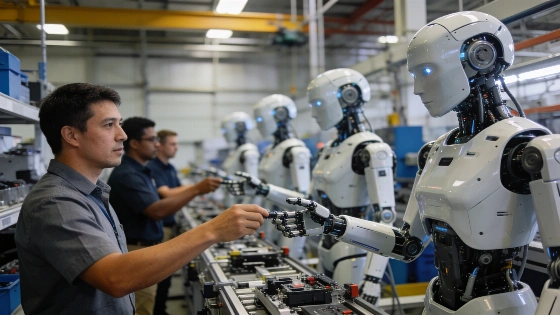
Elon Musk has never shied away from bold predictions, but his latest forecast about the future of money is sparking debate among economists, investors, and policymakers. In a recent interview at Tesla's Texas Gigafactory with The Economist's editor-in-chief Zanny Minton Beddoes, Musk argued that by 2036, advances in artificial intelligence and robotics could make money itself largely irrelevant. He envisions a world where machines produce such an abundance of goods and services that traditional currency loses its purpose.
Musk's reasoning is straightforward: if AI and robots can generate more food, housing, transportation, and entertainment than people can consume, the need for money to allocate these resources disappears. He also expects deflation, not inflation, to dominate the coming decade. As machines drive down the cost of production and the money supply remains relatively stable, Musk believes prices will fall and the dollar's purchasing power will rise-eventually to the point where currency becomes less meaningful in daily life.
He has floated the idea of governments issuing direct payments to citizens once goods become cheap enough, a concept he previously described as "universal high income." Yet Musk acknowledges the transition could be turbulent, with income transfers and political battles likely to emerge as automation disrupts traditional jobs and industries.
Economic Pushback
Many economists are skeptical of Musk's vision. They argue that even if manufactured goods become nearly free, scarcity will persist in other forms. Desirable real estate, elite education, and access to influential people are all examples of resources that remain limited regardless of how many cars or gadgets robots can produce. Money, they contend, will still be needed to allocate these scarce goods and services.
Experts such as Tyler Cowen and Noah Smith have pointed out that Musk's post-scarcity scenario applies mainly to physical goods, not to status, location, or human attention. Critics also highlight the issue of ownership: if a handful of companies control the robots and the energy infrastructure, the distribution of abundance becomes a political question, not an automatic outcome. Major tech firms like Nvidia, Microsoft, and Meta are investing heavily in the AI infrastructure Musk describes, but there is little indication they plan to give away the resulting output for free.
For investors, these debates are not just theoretical. Tesla's stock price is closely tied to expectations for its humanoid robot, Optimus, and the company's ability to monetize AI-driven automation. SpaceX, which recently went public at a $1.77 trillion valuation, is also betting on a future shaped by advanced technology. Yet if Musk's prediction comes true and dollars lose their relevance, the value of these investments-and the currency in which returns are paid-could be called into question.
Political and Social Risks
The path to Musk's envisioned future is far from smooth. Beddoes pressed Musk on the political realities of mass automation, noting that job losses from AI often arrive before the promised abundance. Workers displaced by technology may demand government intervention, including nationalization of AI companies, higher taxes on tech profits, or regulations that slow the pace of disruption. Musk conceded that the transition would be "bumpy," with income transfers likely to become a major policy battleground.
These concerns echo broader anxieties about the impact of AI on the labor market. According to the Bureau of Labor Statistics, U.S. unemployment stood at 4.0% in June 2026, but automation is expected to reshape millions of jobs over the next decade. While some roles will be created, others may disappear or require significant retraining, raising questions about how society will support those left behind.
Debate over the distribution of AI-driven wealth is not limited to Musk. As recent reporting on Intel's AI-driven job cuts shows, even companies benefiting from the AI boom are making tough decisions about labor and investment. The tension between technological progress and economic security is likely to intensify as automation accelerates.
Investor Implications
Musk's forecast also raises practical questions for investors. If the dollar's importance fades, what happens to the value of stocks, bonds, and other assets denominated in U.S. currency? While few experts expect money to disappear entirely, the possibility of deflation and rapid technological change could alter the risk and return profile of many investments. Investors may need to consider not just which companies will benefit from AI, but also how the broader economic landscape could shift as automation advances.
For now, the U.S. dollar remains the world's dominant reserve currency, and most financial assets are still priced in dollars. But as AI and robotics continue to evolve, the debate over the future of money-and who controls the benefits of technological abundance-will remain at the center of economic and political discussions.
Scarcity is a foundational concept in economics, referring to the limited availability of resources relative to human wants. Even in a world where AI and robotics make many goods cheap or abundant, scarcity can persist in areas such as land, time, and social status. This means that while technology may reduce the cost of some products, it does not eliminate the need for systems-like money-to allocate access to what remains limited. Understanding how scarcity shifts, rather than disappears, is crucial for policymakers, investors, and consumers navigating a rapidly changing economy.