Elon Musk claims AI and robots will double the world economy in under a decade but the numbers behind that vision reveal a much steeper climb than most realize
Elon Musk has issued a challenge to the global economy: double the world's output in less than ten years, driven by AI and robotics. For investors and policymakers, the real surprise is not the scale of the ambition, but the mathematical hurdles involved.
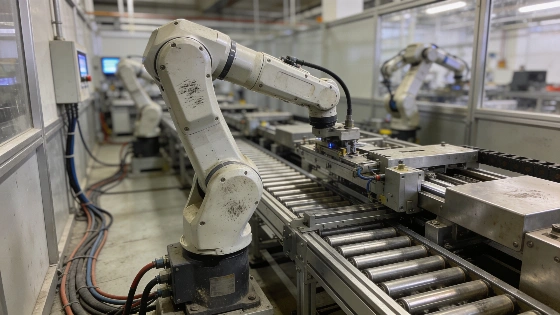
According to Interact Analysis, global shipments of collaborative robots are projected to reach about 57,000 units in 2025, with revenue exceeding $1.2 billion, but these figures remain far from the scale needed for a billion-robot economy.
The numbers behind the claim
The IMF forecasts global GDP to reach approximately $126 trillion in 2026. Doubling this figure by 2036 would require a compounding growth rate that the modern economy has not sustained outside of periods of extreme inflation or currency instability. Even when considering nominal growth-which includes inflation and currency fluctuations-the current global rate is close to 7% annually, but this is distinct from real, inflation-adjusted growth. If Musk's vision refers to real output, the required leap is unprecedented. If it refers to nominal terms, the gap is much narrower.
These forecasts are not merely theoretical; they influence investment strategies, educational planning, and workforce decisions. When a prominent figure like Musk sets a timeline for automation, it can shift corporate planning, affect perceptions of job security, and alter government budget priorities.
Robot reality check
Musk's public statement condensed a broader message delivered to G20 technology ministers, where he predicted at least one billion robots within a decade, each with productivity five times that of a human worker. However, as noted in a Reuters financial review, the IMF projects global economic growth to remain around 3% in 2026, with ongoing risks. This highlights the significant gap between current trends and the pace required to achieve Musk's scenario.
The IMF's July 2026 forecast for global growth stands at 3.0%, down from 3.1% in April, with average growth of 3.5% expected in 2024 and 2025. This trajectory is far below what would be required to double global output within a decade.
To close the gap, annual robot shipments would need to increase at an extraordinary rate of 185% per year, resulting in hundreds of millions of new units produced annually. Even the most optimistic forecasts from major financial institutions fall short by several orders of magnitude. The constraints are not limited to manufacturing; electricity supply is also a critical factor. Musk himself cautioned G20 ministers that AI chip production is outpacing global power generation, with a projected shortfall of 15 gigawatts by 2027.
Impact on jobs and portfolios
The labor market is already experiencing the effects of automation. In the U.S., artificial intelligence was cited in over 116,000 announced job cuts through August, representing 22% of all layoffs this year, according to Challenger, Gray and Christmas. These reductions are occurring while global humanoid robot shipments remain in the tens of thousands, not millions. Anticipation of automation is influencing decisions well before widespread deployment of robots.
For shareholders in companies such as Tesla, the implications are direct. Musk's compensation is linked to milestones for Optimus robot production-targets that remain distant. Investors banking on a rapid, robot-driven economic surge are relying on a scenario not yet supported by current production or infrastructure trends.
What the math means for your money
At a 3% annual growth rate, global GDP would reach about $170 trillion by 2036. Under Musk's scenario, that figure would rise to $252 trillion, nearly tripling the amount of new output available for wages, profits, and government revenue. This difference would affect everything from retirement returns to housing markets and public finances. However, unless robot shipments and power infrastructure accelerate at an unprecedented pace, the world is likely to follow its current trajectory rather than Musk's ambitious projection.
Investors should prioritize concrete indicators: annual robot shipments and the capacity of the electricity grid. If these metrics begin to shift significantly, the case for a robot-driven economic surge becomes stronger. If not, portfolios positioned for rapid growth may be exposed to greater risk. As previously reported, even the most influential investors are adjusting their strategies in response to evolving economic conditions.
According to the Bureau of Economic Analysis, U.S. real GDP grew at an annualized rate of 2.1% in the second quarter of 2026, while inflation measured by the Consumer Price Index remained above 3%. The Federal Reserve's benchmark interest rate is 5.25%, reflecting ongoing efforts to balance growth and inflation. These figures highlight the difficulty of achieving sustained high growth in a mature global economy.
When assessing automation forecasts, it is essential to distinguish between nominal and real growth. Nominal GDP includes the effects of inflation and currency changes, which can exaggerate the pace of expansion. Real GDP removes these effects, providing a clearer view of actual increases in goods and services produced. For investors and policymakers, understanding this distinction is critical when evaluating ambitious economic projections.