
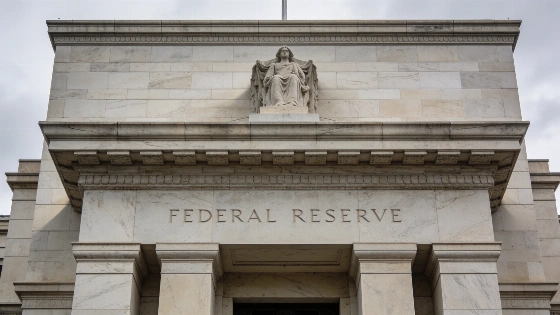
The Federal Reserve raised its benchmark rate to 3.50%-3.75% for the first time since 2023, sending stocks lower and pushing Treasury yields higher as investors brace for tighter borrowing conditions and potential further hikes.
Wall Street experienced a significant shift as the Federal Reserve increased its benchmark interest rate by 25 basis points, establishing a new target range of 3.75% to 4.00%. This marks the first rate hike since July 2023 and signals a more assertive stance on controlling inflation, with immediate effects across stocks, bonds, and commodities. The decision was unanimous, with all 12 voting members in agreement, according to a Reuters financial review.
Ahead of the September 2026 meeting, about 85% of economists surveyed by Reuters expected the Federal Reserve to raise rates by 25 basis points, reflecting broad market consensus.
Fed's Policy Shift and Market Impact
The Federal Reserve's decision, led by Chairman Kevin Warsh, highlights a renewed commitment to addressing inflation. By raising rates for the first time in three years, the central bank aims to slow price growth, even if it increases pressure on equities and risk assets. Higher rates typically raise borrowing costs for businesses and consumers, which can dampen economic activity and corporate profits. In its official post-meeting statement, the Fed noted that "inflation remains elevated" and emphasized that the rate hike is intended to support a faster return of inflation to its 2% target, as reported by CNBC.
Prior to the decision, market pricing for a 25 basis point hike surged to nearly 90% after stronger-than-expected inflation data, with major banks such as Goldman Sachs, JPMorgan, HSBC, and Deutsche Bank all forecasting this outcome.
Sector Moves and Tech Resilience
Industrials led the session's gains, while energy and financial services underperformed. Artificial intelligence stocks demonstrated resilience following the Fed's announcement. Dell, Intel, and Nvidia all closed in positive territory, with Intel benefiting from reports of a potential chip deal with SK Hynix-though SK Hynix clarified that no final decision has been made. Value buying contributed to stabilizing the tech sector, even as broader markets absorbed the implications of higher rates.
For investors focused on technology and growth stocks, the rate hike presents new challenges. Rising rates can reduce the present value of future earnings, a key consideration for high-growth companies. However, as noted in recent coverage, some tech firms have continued to deliver strong performance and even increase dividends despite a changing rate environment.
What Higher Rates Mean for Borrowers and Savers
The increase in the federal funds rate is likely to result in higher costs for mortgages, credit cards, and other variable-rate loans. Consumers with adjustable-rate debt may see payments rise, and prospective homebuyers could encounter steeper borrowing costs. Conversely, savers may benefit from improved yields on savings accounts, certificates of deposit, and money market products as banks adjust rates upward in response to the Fed's move.
For households and businesses, the new rate environment requires careful attention to debt levels, refinancing options, and cash management strategies. While the Fed's action is intended to curb inflation, it also raises the threshold for new borrowing and investment decisions. The balance between controlling price growth and sustaining economic momentum remains delicate, and future rate decisions will depend on incoming data regarding inflation, employment, and consumer spending.
Interest rates are a central tool of U.S. monetary policy, influencing the cost of credit and the return on savings. When the Federal Reserve raises its benchmark rate, the goal is to slow inflation by making borrowing more expensive and encouraging saving. The effects are uneven: borrowers may face higher loan costs, while savers could see increased yields. The pace and scale of future hikes will depend on how inflation and economic growth develop in the coming months, making it important for both investors and consumers to monitor policy signals and market changes.