Applied Materials stock has soared 127% in 2026, prompting Goldman Sachs to raise its price target to $645. The move reflects confidence in long-term chip equipment demand, but investors face new risks as the rally outpaces the broader market
Semiconductor equipment makers have spent years trying to predict when the current wave of chip industry investment might slow. Instead, the spending cycle has only intensified, and Applied Materials has become a focal point for Wall Street’s optimism—and caution—about how long the boom can last.
Goldman Sachs recently raised its 12-month price target for Applied Materials to $645 from $520, maintaining a buy rating, according to MarketScreener. The bank’s new target is based on a valuation of roughly 32 times normalized earnings of $20 per share, signaling a belief that the company’s growth is more than a short-term spike. Goldman’s approach reflects a willingness to pay for what it sees as durable demand, not just a single strong quarter.
Chip Equipment Demand Extends Into 2028
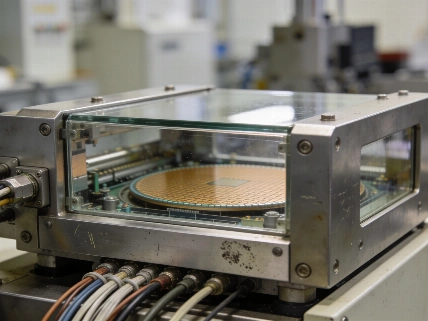
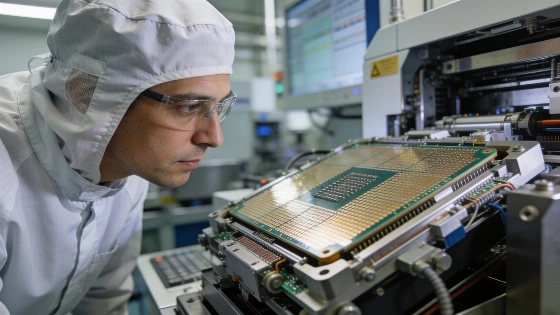
Applied Materials, which manufactures the machines used to deposit, etch, and package the layers inside advanced chips, is not a chip designer. Its fortunes are tied to capital spending across the semiconductor industry, rather than the success of any one chip product. This distinction means that when fabrication plants expand or upgrade, Applied Materials stands to benefit regardless of which chipmaker is leading the market.
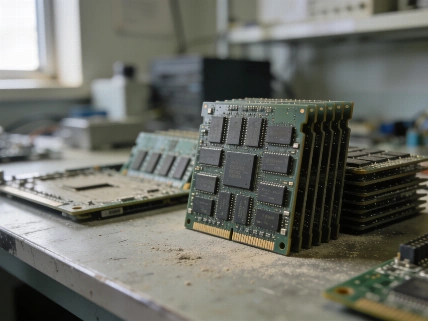
One of the main drivers behind the company’s recent momentum is demand for DRAM and high-bandwidth memory, both essential for powering artificial intelligence accelerators and data center servers. Applied Materials supplies the tools needed to build these memory chips, and Goldman expects the company to outpace its peers in growth through 2026. The bank notes that order visibility now stretches into 2028, with pricing gains potentially adding to future revenue.
In its most recent fiscal second quarter, Applied Materials reported record revenue of $7.91 billion, up about 20% from the prior year, and earnings of $2.86 per share, beating analyst estimates. Goldman now forecasts non-GAAP earnings of $14.15 per share for 2026, roughly 6% above the consensus tracked by StockAnalysis.
Stock Performance and Analyst Targets
Applied Materials shares have delivered extraordinary returns in 2026. As of July 9, the stock opened near $627, up about 6.8% on the session, and has climbed roughly 127% year to date. Over the past month alone, the stock is up about 22%, giving the company a market capitalization near $470 billion. For comparison, the S&P 500 has gained about 10% over the same period.
The rapid appreciation has prompted a series of target hikes from Wall Street analysts. TD Cowen raised its target to $700 from $525, while Mizuho moved to $650, according to Nikkei Asia. Despite these increases, Applied Materials remains about 18% below its 52-week high of $739.67. The average target among 29 analysts is now around $617, suggesting the stock has already surpassed the consensus view of fair value.
Long-Term Forecasts and Risks
CEO Gary Dickerson recently told Nikkei Asia that chipmakers are now providing equipment demand forecasts covering two years or more, with some plans extending as far as 2030. This shift gives suppliers like Applied Materials greater confidence to invest in capacity ahead of formal orders. Still, the company faces significant risks. New export restrictions on advanced chipmaking tools could hurt sales, especially since much of Applied’s equipment is sold to China, Taiwan, and Korea. In addition, domestic Chinese equipment suppliers are gaining market share, which could erode Applied’s addressable market over time.
Goldman Sachs highlights these regulatory and competitive risks as factors that are not fully reflected in the stock’s 127% gain this year. For the $645 target to hold, several conditions must be met: DRAM and high-bandwidth memory capacity plans need to stay on schedule, advanced packaging must achieve the 50% revenue growth management has guided for in 2026, export rules must remain stable, and hyperscaler capital spending should persist through the second half of the year.
What to Watch Ahead
Applied Materials is set to report its fiscal third-quarter results on August 13, with consensus estimates at $3.39 per share in earnings on $8.94 billion in revenue, according to Blockonomi. For long-term investors, the company’s exposure to structural trends in memory and advanced packaging may offer a different risk profile than chip designers. For new investors, the upcoming earnings report will be a key test of whether multi-year forecasts are translating into booked orders.
While buying a stock after it has more than doubled in a year is not inherently a mistake, it does reduce the margin for error. The current rally has left little room for disappointment, and any negative surprise—whether from regulation, competition, or a slowdown in capital spending—could trigger a sharp reaction.
According to Yahoo Finance, the Philadelphia Semiconductor Index has gained about 88% so far in 2026, compared to roughly 14% for the S&P 500. When a sector runs far ahead of the broader market, expectations rise, and even strong results may not be enough to sustain momentum.
Applied Materials’ business model is fundamentally different from that of chip designers. The company’s revenue depends on the capital expenditure cycles of its customers, not on the sales of individual chips. This makes its stock sensitive to changes in industry investment plans, regulatory shifts, and global supply chain dynamics. Investors considering exposure to the semiconductor equipment sector should weigh these factors carefully, especially after such a rapid run-up in share price.