Alphabet's stock tumbled after its earnings report, but a top analyst now sees AI momentum outweighing short-term cash flow concerns-even as the company's 2026 spending plans raise new questions for investors
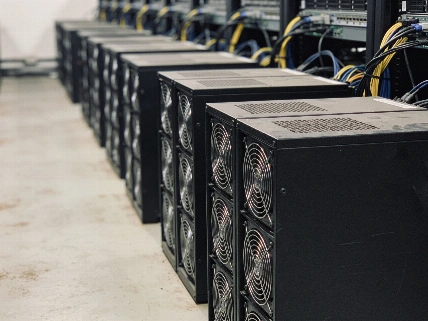
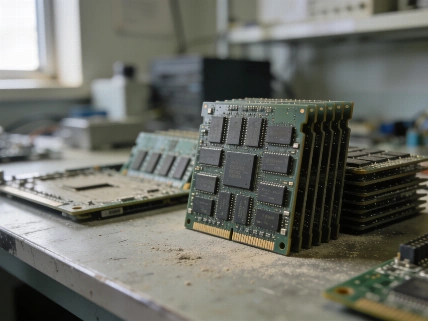
Alphabet's latest earnings report triggered a sharp market reaction, with shares falling more than 7% in a single session after the company revealed aggressive capital spending plans and its first-ever negative free cash flow quarter. While revenue and earnings per share exceeded expectations, and Google Cloud posted an 82% year-over-year jump, investors balked at the company's guidance for $195 billion to $205 billion in capital expenditures by 2026. The scale of Alphabet's investment in artificial intelligence infrastructure, including custom chips and data centers, has raised concerns about near-term profitability and cash generation.
Yet not all analysts are convinced the market's reaction reflects the company's long-term prospects. Five days after the earnings drop, Phillip Securities analyst Serena Lim Yi Qi upgraded Alphabet's stock to Buy from Accumulate, even as she trimmed her price target to $425 from $450. According to Investing.com, Lim argues that Alphabet's vertically integrated AI ecosystem-spanning custom Tensor Processing Units, optimized data centers, and the Gemini AI models deployed across Search, Cloud, and other products-gives the company a structural advantage that is beginning to show up in its financial results.
AI Investment and Valuation
Lim's upgrade is rooted in the belief that Alphabet's AI momentum now outweighs the risks of sitting on the sidelines, even as the company's free cash flow temporarily turns negative. She views the current cash flow dip as a byproduct of heavy AI investment, not a sign of structural weakness. The raised capex guidance signals that Alphabet's infrastructure buildout is far from complete, but Lim sees this as laying the groundwork for stronger long-term growth. Her revised forecasts for 2026 revenue and net income are 2% and 4% lower, respectively, reflecting margin pressures from ongoing supply chain constraints in AI hardware. Still, she believes the company's long-term direction is improving, justifying the Buy rating despite a lower price target.
At a recent price of $319.74, Alphabet trades at a price-to-earnings (P/E) ratio of 16.04 and a price/earnings-to-growth (PEG) ratio of just 0.14, according to TipRanks. A PEG ratio below 1.0 typically suggests a stock is undervalued relative to its growth rate; at 0.14, Alphabet stands out as particularly cheap by this measure. This valuation, combined with the company's AI-driven growth, underpins the analyst's more bullish stance.
Cloud and Advertising Growth
Google Cloud's 82% year-over-year revenue growth is a standout figure, reflecting surging demand for enterprise AI products and services as businesses scale up their AI workloads. Such rapid expansion from a business already generating tens of billions in annual revenue is rare and signals that Alphabet's AI investments are translating into real customer demand. Meanwhile, advertising revenue grew 14% year over year, buoyed by the integration of Gemini AI into Search and increased monetization of Shorts and connected TV. This performance has helped ease concerns that AI would erode Alphabet's core advertising business, at least for now.
Other analysts remain divided. Barclays has maintained an Overweight rating and a $425 target, citing the company's new TPU-as-a-service model, which allows customers to purchase access to Alphabet's custom chips directly. Citizens Bank is even more bullish, keeping a Market Outperform rating and a $515 target, emphasizing the company's AI growth potential. On the other hand, Bernstein SocGen lowered its price target to $385 and kept a Market Perform rating, pointing to the negative free cash flow and the scale of the capex increase as reasons for caution. The debate highlights the uncertainty around when Alphabet's massive investments will begin to deliver proportional returns.
Market Reaction and Analyst Divergence
Phillip Securities' decision to upgrade Alphabet just days after a steep post-earnings selloff signals a contrarian view: the firm believes the market is undervaluing the company's long-term AI opportunity in favor of short-term cash flow concerns. The timing of the upgrade suggests that the analyst sees the recent drop as an overreaction, creating a more attractive entry point for investors willing to look beyond the next few quarters. This kind of analyst divergence is not unusual in the current AI-driven market, where companies like Alphabet, Nvidia, and AMD are making massive bets on future growth. For example, a recent analysis of AMD's AI server strategy shows how Wall Street is wrestling with similar questions about investment scale, margin pressure, and long-term payoff.
For Alphabet shareholders, the key question is whether the company's AI investments will ultimately justify the near-term hit to cash flow and margins. With the stock trading at a discount to its growth rate and cloud revenue surging, the bull case is gaining traction among some analysts. But the risks remain real: if AI adoption slows, or if capital spending fails to deliver the expected returns, Alphabet's valuation could come under further pressure.
Alphabet reported total revenue of $320.5 billion for the full year 2025, up 15% from the prior year, according to its latest annual filing. Google Cloud contributed $54.2 billion, while advertising revenue reached $220.7 billion. The company's operating margin narrowed to 23.1% from 25.4% a year earlier, reflecting the impact of higher capital expenditures and increased R&D spending. Free cash flow for the fourth quarter of 2025 was negative $2.8 billion, marking the first time Alphabet has reported a negative figure for this metric since going public.
Capital expenditures, or capex, represent the money a company spends on long-term assets such as buildings, equipment, and technology infrastructure. For technology giants like Alphabet, capex is a key indicator of future growth potential but also a source of risk if investments do not generate sufficient returns. High capex can pressure free cash flow and margins in the short term, making it harder for companies to return cash to shareholders through buybacks or dividends. Investors often debate whether aggressive spending is a sign of confidence in future demand or a warning that profitability could be squeezed if growth falls short of expectations.