
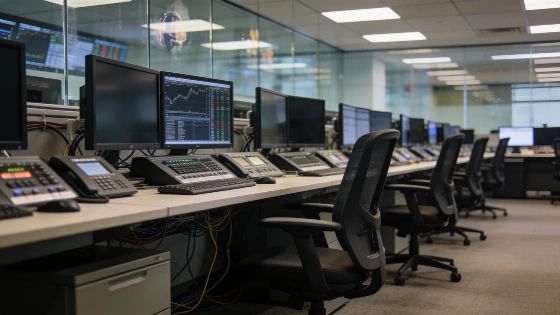
Millennium Management runs 340 trading teams making millions of trades daily, using advanced risk controls and arbitrage. While retail investors can't replicate this scale, diversified portfolios remain a proven path to long-term gains
Millennium Management, led by Israel Englander, stands out in the hedge fund world for its sheer scale and complexity. With 6,800 employees organized into 340 trading teams, the firm executes an average of 13 million trades each day. This approach is a sharp contrast to the concentrated stock portfolios favored by some of the market's most prominent investors, such as Warren Buffett and Bill Ackman, who typically hold fewer than 50 stocks at a time. Instead, Millennium's strategy is built on diversification across thousands of positions, rapid trading, and a sophisticated risk management infrastructure that aims to generate steady returns regardless of market conditions.
For individual investors, the scale and resources of Millennium are out of reach. The fund is not publicly traded, and minimum investment commitments often run into the millions. In 2025, Goldman Sachs began offering access to Millennium for clients willing to commit between $1 million and $20 million, underscoring the exclusivity of such institutional strategies. Attempting to mimic Millennium's methods without its infrastructure and expertise is not practical for retail investors, who lack the technology, personnel, and access to complex financial instruments that underpin the fund's operations.
How Millennium's Model Works
Millennium describes itself as a "diversified alternative investment firm," employing a range of strategies to manage risk and seek returns. Its teams use fundamental equity analysis, equities arbitrage (profiting from price inefficiencies), active trading in fixed income securities, and commodities trading. The firm's portfolio is vast-at the end of the first quarter of 2026, Millennium reported holdings in 5,622 stocks, though this number fluctuates constantly as positions are opened and closed. The rapid turnover and breadth of holdings make it difficult for outsiders to determine which stocks Millennium is most bullish on at any given moment.
This multi-strategy approach is designed to reduce reliance on any single market or asset class. By spreading risk across thousands of positions and employing specialized teams, Millennium aims to smooth out volatility and capture opportunities wherever they arise. The firm's longevity-it has operated since 1989-reflects its ability to adapt and refine its methods through changing market cycles.
Retail Investors and Diversification
While Millennium's scale is unique, the principle of diversification is relevant for individual investors. Most retail investors do not have access to the tools or capital required to run a hedge fund-style operation, but they can still benefit from spreading risk across a broad portfolio. Many successful investors, including Warren Buffett at Berkshire Hathaway and Greg Abel, have managed portfolios with 30 to 50 stocks, while others like Bill Ackman prefer even more concentrated bets. For most individuals, a diversified portfolio-whether built from individual stocks or through index funds-remains a practical way to pursue long-term growth while managing risk.
For those interested in systematic investing, funds that track major indexes like the S&P 500 offer broad exposure and have historically delivered solid returns over time. As discussed in a related analysis on how regular investments in the Invesco QQQ ETF can compound over decades, consistent, diversified investing can be a powerful tool for building wealth, even without access to hedge fund strategies.
Market Data and Practical Implications
According to the Securities and Exchange Commission, the number of registered hedge funds in the U.S. surpassed 3,800 in 2025, with total assets under management exceeding $5 trillion. Millennium Management is among the largest, with assets estimated at over $60 billion as of early 2026. The firm's daily trading volume and breadth of holdings are unmatched by most peers, reflecting both its operational scale and the complexity of its risk management systems. For retail investors, the key takeaway is not to replicate Millennium's tactics, but to understand the value of diversification and disciplined risk management in any investment strategy.
Hedge funds like Millennium operate with significant resources, advanced technology, and access to markets and instruments unavailable to most individuals. Their success is built on specialization, constant adaptation, and the ability to manage risk across thousands of positions. For individual investors, the lesson is not to chase complexity, but to focus on building a diversified portfolio that matches their goals, risk tolerance, and time horizon. Diversification helps reduce the impact of any single investment's performance on overall returns, and while it cannot eliminate risk, it remains a cornerstone of sound investing practice.