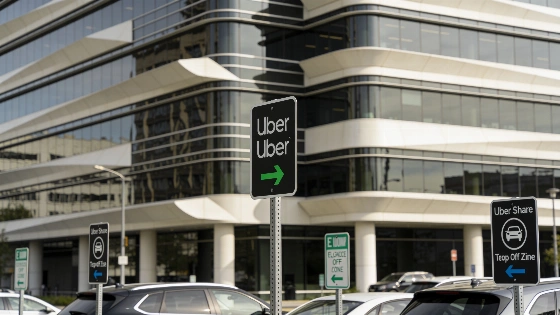
Uber shares have lagged the S&P 500 in 2026, but strong earnings growth and new partnerships have some market watchers, including Jim Cramer, calling it a potential long-term value play
Uber Technologies has become a lightning rod for debate among investors, regulators, and consumers alike. While the company's ride-hailing and delivery services are widely used, its stock performance in 2026 has disappointed many shareholders. Yet some market commentators, including "Mad Money" host Jim Cramer, argue that the recent pullback could present a buying opportunity for those with a long-term outlook.
Uber's stock traded at $74.66 as of mid-August, down 8.6% year-to-date and more than 20% over the past 12 months, according to Yahoo Finance. This underperformance stands in sharp contrast to the S&P 500, which has posted gains over the same period. The gap has prompted renewed scrutiny of Uber's fundamentals and valuation, especially as the company continues to report robust growth in key business metrics.
Financial Momentum
Uber's second-quarter 2026 results, released August 5, showed the company's core business accelerating. Gross bookings climbed 24% year-over-year to $58 billion, while total trips rose 18% to 3.9 billion. Revenue increased 12% to $14.2 billion, and adjusted EBITDA-a measure of operating profitability-jumped 33% to $2.8 billion. The company also reported $2.8 billion in free cash flow for the quarter and a 35% increase in non-GAAP earnings per share to $0.81.
CEO Dara Khosrowshahi highlighted that Uber added more first-time users in the past year than in any period since 2021, signaling ongoing customer acquisition rather than a plateauing user base. For the third quarter, Uber projected gross bookings between $58.25 billion and $60.25 billion, representing 18% to 22% year-over-year growth on a constant-currency basis.
Despite these gains, Uber's valuation has compressed. The stock now trades at roughly 22 times forward earnings, a level some analysts see as attractive given the company's scale and growth rate. Uber's market capitalization stands at $153 billion, with trailing 12-month revenue of $55.23 billion and a return on equity of 37.2%.
Competitive Position and Market Share
Uber's platform advantage remains a central part of the investment case. According to CSIMarket data through the first quarter of 2026, Uber controls about 34.8% of total market revenue in its competitive set and nearly 48% of the U.S. professional ride-hailing market. Its closest U.S. competitor, Didi, holds just under 30%, while Lyft trails at under 6%. Brand awareness for Uber in the U.S. reached 89% in late 2025, based on Statista research.
These figures suggest that Uber's network effects and brand recognition continue to provide a moat, even as the company faces regulatory scrutiny and evolving competition. The company's ability to generate billions in free cash flow and maintain high market share sets it apart from many tech peers that have struggled to achieve sustained profitability.
Autonomous Vehicles and Strategic Partnerships
One of the key debates among investors is whether Uber's platform will remain essential as autonomous vehicle (AV) technology matures. In 2026, Uber has announced a series of partnerships aimed at integrating AVs and expanding its delivery capabilities. Recent deals include collaborations with Wayve in London, Pony.ai in Europe, Hinomaru Kotsu in Tokyo, and Zipline for drone delivery in the U.S. Earlier partnerships with Ulta Beauty, Ace Hardware, GameStop, and Ahold Delhaize have also broadened the Uber Eats platform.
Some investors worry that AV developers like Waymo or Tesla could eventually bypass Uber's network. Yet each new partnership suggests that building a large-scale consumer distribution network remains a significant barrier to entry. Uber's 3.9 billion quarterly trips provide a distribution channel that AV companies may find difficult to replicate independently.
For now, Uber's strategy appears to be leveraging its platform to remain relevant regardless of which companies lead in autonomous technology. The company's willingness to partner broadly may help it capture value as the transportation landscape evolves, though the long-term outcome remains uncertain.
Valuation and Investor Perspective
Uber's current valuation reflects both skepticism and opportunity. The company's forward price-to-earnings ratio of 22.4 is lower than many high-growth tech peers, despite strong free cash flow and double-digit revenue growth. For investors willing to look past recent stock declines and ongoing debates about the future of mobility, Uber's fundamentals may offer a case for long-term value.
Still, risks remain. Regulatory changes, competitive threats, and the uncertain economics of autonomous vehicles could all affect Uber's trajectory. Investors should weigh these factors alongside the company's financial momentum and market position before making any decisions.
According to Uber's second-quarter 2026 earnings release, the company's adjusted EBITDA margin improved to 4.9%, up from 4.5% a year earlier. This margin expansion, combined with robust cash generation, signals progress toward sustainable profitability-a key concern for many shareholders.
Uber's evolution from a cash-burning startup to a maturing platform business is reflected in its financials. The company's ability to generate free cash flow, expand its user base, and maintain a dominant market share will likely remain central to investor debates as the industry continues to change.
For investors considering Uber, the stock's recent underperformance may be less about current business fundamentals and more about uncertainty over the company's long-term role in a rapidly shifting transportation sector. As always, suitability depends on individual risk tolerance, time horizon, and investment goals.
Uber's second-quarter 2026 report showed gross bookings of $58 billion, revenue of $14.2 billion, adjusted EBITDA of $2.8 billion, and free cash flow of $2.8 billion. The company's market capitalization was $153 billion as of August 2026, with a forward P/E ratio of 22.4 and a return on equity of 37.2%.
Valuing a company like Uber requires understanding both its current financial performance and the strategic risks it faces. While traditional valuation metrics such as price-to-earnings ratios and free cash flow yield are important, investors must also consider the impact of emerging technologies, regulatory shifts, and changing consumer behavior. In sectors undergoing rapid transformation, the ability to adapt and maintain a strong network can be as critical as near-term profitability.