The Keystone Pipeline operator will pay nearly $27 million in penalties and invest $40 million in safety upgrades after a 2022 oil spill in Kansas, raising questions about pipeline oversight and environmental risk for U.S. communities
The operator of the Keystone Pipeline has agreed to pay $26.9 million in civil penalties and commit an estimated $40 million to future safety improvements following a major oil spill in Kansas in December 2022. The proposed settlement, announced by the U.S. Environmental Protection Agency (EPA), comes after nearly 13,000 barrels—about 543,000 gallons—of heavy crude oil leaked into a rural creek in Washington County, Kansas. The spill was the largest onshore crude pipeline incident in the United States in nearly a decade, surpassing the combined total of all previous spills on the Keystone system, according to federal data.
South Bow Faces Penalties and Safety Upgrade Costs
The settlement, which still requires court approval after a 30-day public comment period, would resolve allegations by the EPA, Department of Justice, and the state of Kansas that the pipeline’s operator, Canada-based South Bow, violated federal and state clean water laws. In addition to the federal penalty, South Bow would pay Kansas more than $3 million for environmental restoration projects in the affected area. The company is also required to implement new measures aimed at preventing future accidents, with the EPA estimating these upgrades will cost around $40 million.
The Spill Caused Extensive Environmental Damage
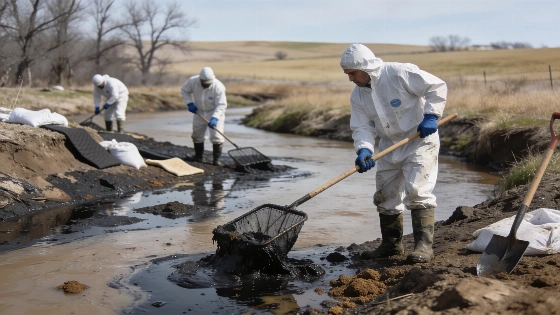
No injuries to workers or local residents were reported, and public water supplies were not affected, according to officials. However, the environmental impact was significant: more than 2,700 animals were harmed or killed, and the spill devastated the local waterway, which is home to the endangered long-eared bat. Cleanup efforts, which began before formal directives from U.S. authorities, were completed in early 2024. The pipeline’s original builder, TC Energy, spun off South Bow as a separate company after the cleanup concluded.
Engineering Review Identified Longstanding Pipeline Problems
An engineering review commissioned by the U.S. government found that the section of pipeline that ruptured had been overstressed since its installation in 2010, likely due to construction-related changes to the surrounding land. Soil beneath the pipe was improperly compacted, and although the site was re-excavated in 2013, the problematic section was not replaced. The Keystone system, stretching 2,689 miles, transports Canadian tar sands oil to refineries in Illinois, Oklahoma, and Texas. The spill has renewed scrutiny of pipeline safety and regulatory oversight, especially as new pipeline projects remain a contentious issue in U.S. energy policy.
According to the U.S. Department of Transportation’s Pipeline and Hazardous Materials Safety Administration, there were 614 significant pipeline incidents in the United States in 2022, resulting in over $1 billion in property damage. The Keystone Pipeline has experienced multiple spills since its launch in 2010, with the 2022 Kansas incident being the largest. Federal regulators have since increased inspections and enforcement actions targeting aging and high-risk pipeline infrastructure.
What the Keystone Settlement Means for Energy Infrastructure
The Keystone Pipeline case highlights the complex trade-offs between energy infrastructure, environmental protection, and regulatory enforcement. While pipelines remain a critical part of U.S. energy supply chains, their operation carries risks that can result in costly environmental damage and legal consequences. For investors, communities, and policymakers, the incident underscores the importance of rigorous maintenance, transparent reporting, and robust oversight to manage both financial and environmental risks associated with large-scale energy projects.