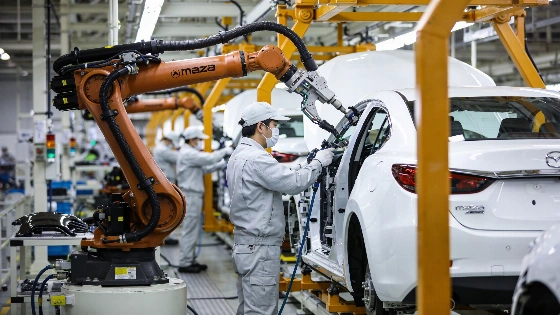
Mazda is moving sedan production out of Mexico and cutting EV spending after U.S. tariffs slashed its operating income by over 70%. Here's how these changes could affect car buyers and the company's future in the U.S. market
For decades, automakers have optimized their global supply chains to minimize costs and maximize margins, often building lower-priced vehicles in countries with cheaper labor and favorable trade agreements. That strategy worked for Mazda until recent U.S. tariffs upended the math, forcing the company to rethink where and how it builds cars for American buyers.
Tariffs Reshape Mazda's U.S. Strategy
Mazda, the smallest of Japan's major car exporters, has long relied on imports to supply the U.S. market. In 2024, more than half of its U.S. sales-about 235,700 vehicles-were shipped from Japan, with most of the rest coming from a single Mexican plant. But when the U.S. imposed a 25% tariff on vehicles built in Mexico, the economics of that approach changed overnight. For a compact sedan with a sticker price near $25,000 and slim profit margins, the new duty could erase nearly all earnings from each sale.
According to reporting by TheStreet, Mazda's operating income fell 72.3% to 51.6 billion yen (about $326 million) in the fiscal year ending March 31, 2025, as tariffs subtracted nearly $1 billion from its results. Net income dropped by a similar percentage. Unlike larger rivals such as Toyota and Honda, Mazda's smaller global sales volume means it cannot spread these costs as widely, making each percentage point of tariff more painful to its bottom line.
Production Moves and Model Changes
In response, Mazda has shifted production of its sedans out of Mexico and back to Japan, despite higher labor costs there. The company's Salamanca plant in Mexico, which built nearly 25,000 Mazda3 units in 2025, will now focus on crossovers and other models less affected by tariffs. Japanese-built cars still face a 15% U.S. tariff, but that's significantly less than the 25% rate on Mexican vehicles, making the move a calculated trade-off rather than a cost-saving measure.
At the same time, Mazda is adjusting its product roadmap. The company has delayed the launch of its first dedicated electric vehicle platform to 2029, marking its second postponement in less than a year. Instead, Mazda is redirecting investment toward gasoline-electric hybrids, cutting planned electrification spending through 2030 by about 40%-from 2 trillion yen to 1.2 trillion yen. This pivot reflects both the financial strain of tariffs and shifting U.S. emissions regulations, which have recently become less aggressive in pushing automakers toward full electrification.
Impact on Car Buyers
For U.S. consumers, these changes are likely to show up in higher prices and fewer electric options at Mazda dealerships. Hybrids typically cost several thousand dollars more than their gasoline-only counterparts, and when combined with import duties, the price of a compact crossover that once sold for $30,000 could approach $34,000. The loss of the federal EV tax credit for many imported models further reduces incentives for buyers considering electrified vehicles.
While Mazda's Mexican plant remains open-employing over 5,200 workers and building models like the CX-30 and CX-3-the company is now more selective about which vehicles it exports to the U.S. from each location. The goal is to protect margins without ceding too much market share, but the risk is that delays in hybrid and EV launches could leave Mazda lagging behind competitors if consumer demand for electrification rebounds.
Financial Outlook and Risks
Mazda forecasts net sales of 5.5 trillion yen and operating income of 150 billion yen for the fiscal year ending March 2027, but these targets depend on the tariff environment remaining stable and the company's hybrid rollout staying on schedule. If further delays occur, or if U.S. trade policy shifts again, Mazda could face additional earnings pressure. Investors and analysts will be watching closely to see whether the company's Alabama joint venture with Toyota can ramp up output and whether the Salamanca plant can replace lost sedan volume with other models.
According to Mazda's latest filings, the company's global sales volume remains around 1.3 million vehicles annually, far below the scale of its largest Japanese rivals. This limits its ability to absorb regulatory and trade shocks, making its U.S. strategy especially sensitive to policy changes and consumer trends.
For the fiscal year ending March 31, 2025, Mazda reported operating income of 51.6 billion yen (about $326 million), down from 186.2 billion yen the previous year. Tariffs accounted for a 154.9 billion yen ($981 million) hit to earnings, according to company disclosures. The company's U.S. sales in 2024 totaled 429,000 vehicles, with 55% imported from Japan and the remainder primarily from Mexico and its Alabama plant.
Automakers' decisions about where to build vehicles are shaped by a complex mix of labor costs, trade policy, and regulatory requirements. For companies like Mazda, which lack the scale of industry giants, even modest changes in tariffs or emissions rules can force major shifts in production strategy and investment priorities. As the U.S. continues to adjust its trade and environmental policies, car buyers may see more frequent changes in model availability, pricing, and technology options-especially from smaller import brands.