
Micron is raising its U.S. investment plan to over $250 billion by 2035, aiming to produce 40% of its DRAM chips domestically as persistent memory shortages drive up costs for major tech buyers and reshape the semiconductor supply chain
Micron Technology is sharply increasing its planned U.S. investment to more than $250 billion through 2035, according to a report from Seeking Alpha. The move comes as the company accelerates construction of a massive new chip fabrication facility in Clay, New York, pouring concrete three months ahead of schedule. This latest commitment is $50 billion higher than Micron’s previous U.S. investment target, reflecting both the scale of current demand and the urgency to expand domestic production capacity.
Micron’s expansion is not a bet on hypothetical future demand. The company is responding to a memory chip shortage that shows no clear end in sight. In recent public comments, Micron’s CEO described the current environment as a “deep shortage,” with no timeline for when supply will catch up. The company has signed long-term supply agreements with 16 customers, some extending as far as 2030, signaling that buyers expect tight conditions to persist for years. Building a new megafab is a multi-year process, with Micron estimating three to four years from groundbreaking to first chip output, even under accelerated timelines.
Supply Chain Pressure
The memory crunch is already affecting major technology buyers. In late June, Apple raised prices on iPads, Macs, and other hardware by $100 to $200 per device, citing a surge in memory and storage costs. According to Reuters, memory manufacturers including Micron have prioritized orders from AI chipmakers such as Nvidia, leaving less supply for consumer electronics firms. This shift in allocation reflects the growing influence of artificial intelligence infrastructure on the semiconductor supply chain, with AI-related demand now setting the pace for investment and production decisions.
Micron’s new U.S. investment plan includes up to $3 billion for supply chain partners, such as $500 million in financing for GlobalWafers’ Texas wafer facility. This approach aims to secure both manufacturing capacity and raw material access within the United States, reducing exposure to overseas supply disruptions. The company’s goal is to produce 40% of its DRAM output domestically, with the Clay, New York, campus expected to create 50,000 jobs in the state, including 9,000 direct Micron positions. The investment is being framed by U.S. officials as a matter of national security, tying domestic chip production to broader technology leadership and economic resilience.
Market Reaction and Risks
Micron shares rose nearly 5% on July 9, according to CNBC, as investors responded to the company’s expanded investment and the broader implications for the semiconductor sector. Other chip equipment and design firms, including Applied Materials, KLA, Lam Research, and Arm Holdings, also rallied. Analysts at Citi recently placed Micron on an “upside catalyst watch,” citing expectations that DRAM prices could nearly triple by 2027. While these forecasts reflect optimism about sustained demand, they also highlight the risk that today’s supply shortages could eventually give way to another cycle of oversupply and price declines—a pattern that has repeatedly shaped the memory market. In 2023, Micron cut about 15% of its global workforce after memory prices collapsed, underscoring the volatility that can follow periods of rapid expansion.
For now, the shortage is real and has immediate consequences for both manufacturers and consumers. The company’s willingness to commit to a decade-long, $250 billion investment signals confidence that the current cycle will last, but it also raises the stakes if demand unexpectedly cools or new capacity comes online faster than anticipated. Investors and industry observers will be watching Micron’s upcoming earnings reports for any signs of a shift in the memory demand cycle or changes in customer behavior.
Strategic Shifts in Chipmaking
Micron’s strategy is part of a broader trend among U.S. chipmakers to reshore production and secure domestic supply chains in response to both market forces and geopolitical risk. The company’s partnership with GlobalWafers and its focus on U.S.-based manufacturing reflect a deliberate effort to reduce reliance on foreign suppliers and insulate operations from potential disruptions. Washington’s support for these investments, including framing them as national security priorities, signals a policy environment that favors domestic semiconductor capacity and supply chain resilience.
While Micron is not alone in making these moves, its scale and public commitment stand out. The key question is whether the memory shortage driving this wave of investment will persist long enough to justify the massive outlays. With construction already ahead of schedule and customer contracts stretching into the next decade, the company is betting that demand for memory—especially from AI and data center applications—will remain strong. But as history shows, the semiconductor industry is prone to sharp cycles, and the risk of overbuilding remains a real concern for investors and policymakers alike.
According to Micron’s most recent quarterly filing with the Securities and Exchange Commission, the company reported revenue of $6.81 billion for the quarter ended May 30, 2026, up from $5.82 billion in the same period a year earlier. Gross margin improved to 41.2%, reflecting stronger pricing and product mix, while capital expenditures for the fiscal year are projected to exceed $12 billion as the company ramps up its U.S. expansion.
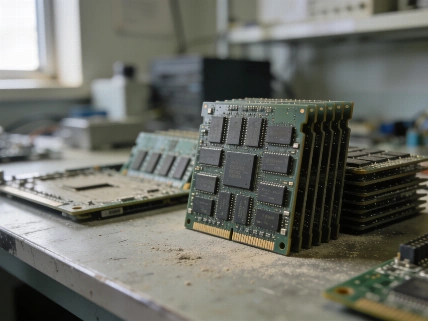
Memory chips, such as DRAM and NAND, are essential components in everything from smartphones and laptops to servers and AI hardware. Unlike logic chips, which process information, memory chips store data for quick access. The market for memory is notoriously cyclical, with periods of tight supply and high prices often followed by oversupply and sharp price declines. For consumers, these cycles can translate into higher prices for electronics during shortages and occasional price drops when supply outpaces demand. For manufacturers, managing capacity and investment timing is critical to avoiding costly swings in profitability.