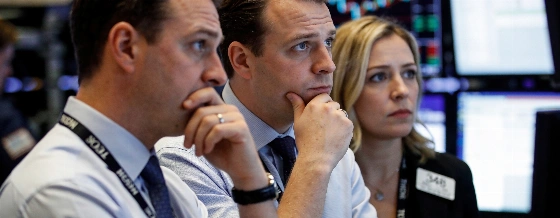
The Federal Reserve's shift away from clear guidance is making it harder for investors to anticipate policy moves, raising the risk of market volatility and economic disruption if surprises occur
Investors hoping for clarity on the Federal Reserve's next steps left the July 28-29 policy meeting with more questions than answers. The central bank kept its benchmark rate steady at 3.50%-3.75%, despite a split among officials, but the real shift was in how little guidance policymakers offered about what could prompt future rate changes. This new approach is drawing concern from market veterans who warn that less transparency could destabilize both markets and the broader economy.
Fed's Communication Shift
For years, the Fed has tried to signal its likely moves in advance, helping investors and businesses plan for changes in borrowing costs. Now, according to Moody's Analytics chief economist Mark Zandi, the central bank is deliberately pulling back on forward guidance. Zandi, who has a long track record of identifying economic turning points, argues that when investors can't anticipate which economic indicators matter most or how the Fed will balance inflation against employment, every policy meeting becomes a potential market-moving event.
Without a clear "reaction function"-the framework that explains how the Fed responds to changing data-traders are left guessing. This uncertainty can lead to sharper market swings if the Fed's decisions catch investors off guard. Zandi warns that if this pattern continues, a future meeting could trigger a significant sell-off, with ripple effects for the real economy.
Economic Risks and Market Fragility
While the U.S. economy is still expanding, Zandi sees signs of fragility. Growth remains below potential, the labor market is softening, and real household income has stalled. At the same time, consumers are feeling the pinch from tariffs, restrictive immigration policies, and persistent energy-driven inflation. Zandi estimates the risk of a recession in the next 12 months at 40%, well above the historical average of 15%.
He notes that strong investment in artificial intelligence and productivity gains are helping to offset some of these pressures, but the Fed's limited ability to support growth while inflation remains elevated leaves the economy exposed. If investors are repeatedly surprised by policy moves, the risk of a disorderly market reaction increases.
Fed Chair's New Approach
At the July meeting, Chairman Kevin Warsh made it clear that the Fed is intentionally avoiding forecasts and reducing forward guidance. While the 2% inflation target remains in place, Warsh emphasized flexibility and declined to specify which economic indicators would drive future decisions. He described the current environment as one of "watchful thinking," leaving nearly every policy option open.
This approach preserves the Fed's ability to respond to changing conditions but makes it much harder for investors to model likely outcomes. Even the choice of inflation measures was left vague, with Warsh suggesting a broader lens than the traditional PCE inflation gauge. As a result, market participants are left to interpret not just what the Fed says, but what it chooses not to say.
Rate Expectations and Market Impact
Market forecasts for the rest of 2026 remain divided. According to CME FedWatch, traders now see a 65.2% chance of a rate hike in September, down from 81% before the July meeting. Bank of America expects three quarter-point hikes by year-end, while JPMorgan sees a possible hike in December, and Goldman Sachs predicts no change until 2027. Citigroup stands out as the most dovish, projecting rate cuts later in 2026 and early 2027.
For investors, this means less confidence in consensus expectations and a greater need to prepare for surprises. Rate-sensitive sectors-such as technology, banks, housing, and utilities-could see sharper moves if the Fed's actions diverge from market assumptions. Long-duration growth stocks, whose valuations depend on future interest rates, are especially vulnerable to sudden changes in yields. Banks may benefit from higher rates in lending margins but could face weaker loan demand and increased credit stress if bond markets react sharply.
In this environment, investors may need to pay closer attention to what the Fed omits from its statements. The absence of guidance on inflation tolerance, labor market weakness, or future rate thresholds could itself become a market signal. Meeting minutes, economic projections, and even offhand remarks may carry more weight than usual.
Competing Views and Broader Context
Not all analysts share Zandi's level of concern. Some, like JPMorgan's Kriti Gupta, remain optimistic about the S&P 500's prospects, citing continued productivity gains from AI as a counterweight to inflation. Others, including Bank of America, warn of seasonal weakness in August and the potential for volatility. For a deeper look at how seasonal trends could affect stocks, see this analysis of August market risks from Bank of America: why some analysts expect headwinds for U.S. equities this summer.
According to the Bureau of Labor Statistics, the U.S. unemployment rate stood at 4.1% in June 2026, up from 3.7% a year earlier, while annual inflation measured by the Consumer Price Index was 3.4% in June, down from its 2025 peak but still above the Fed's 2% target. These figures highlight the delicate balance the Fed faces as it weighs the risks of persistent inflation against signs of a cooling labor market.
Central bank communication plays a critical role in shaping market expectations and financial stability. When the Fed provides clear guidance, investors can adjust portfolios gradually, reducing the risk of sudden market shocks. But when policymakers withhold their thinking, markets may become more volatile, and even routine meetings can trigger outsized reactions. For households and businesses, this means greater uncertainty around borrowing costs, investment decisions, and the broader economic outlook. Understanding how the Fed signals its intentions-and how markets interpret those signals-remains essential for anyone navigating today's financial landscape.